10. Figures
11. Index of sources and literature
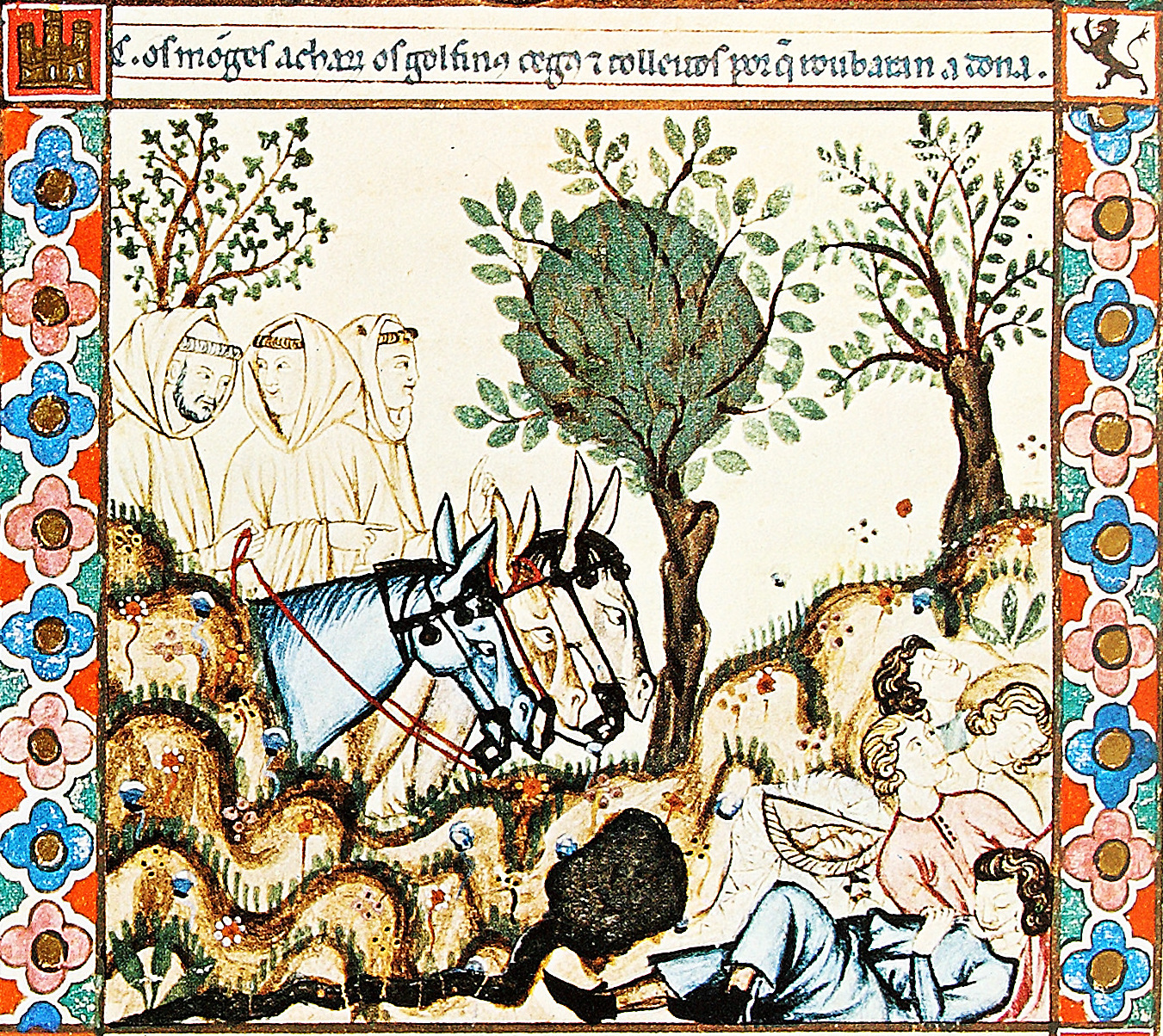
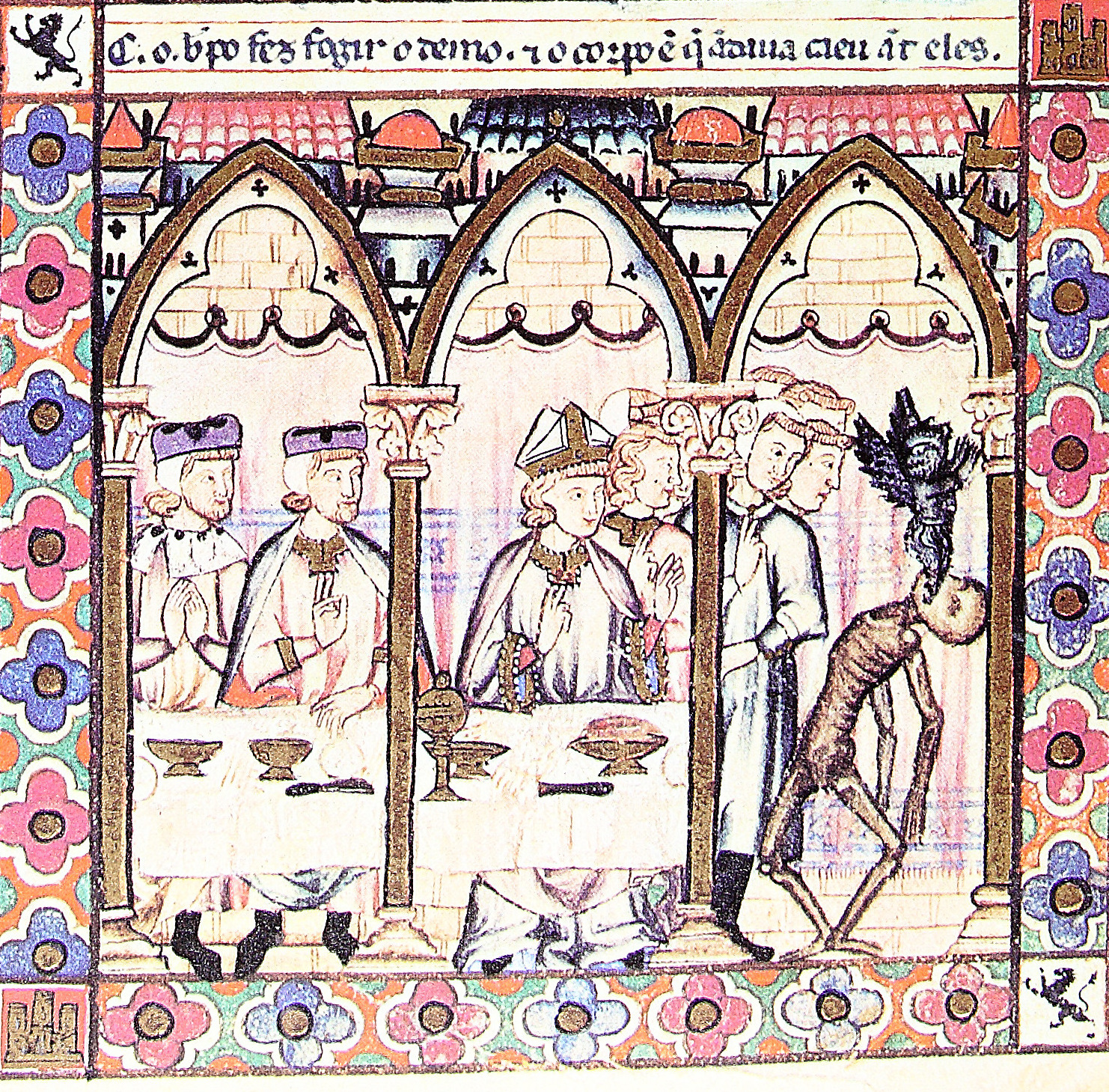
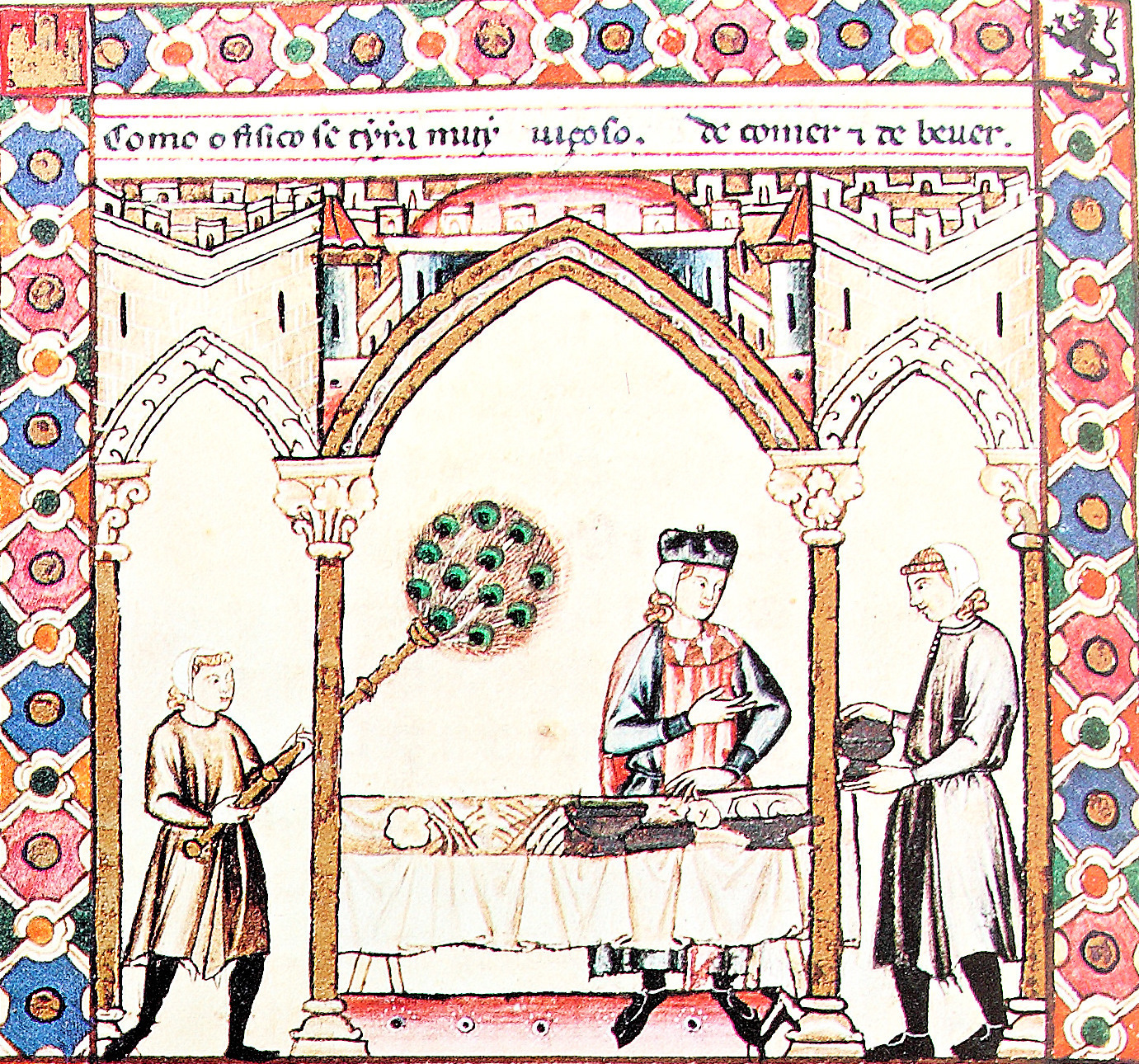
Fig. 11.3 [CSMT] 88-2, chicken in a bowl, bread, breadsticks
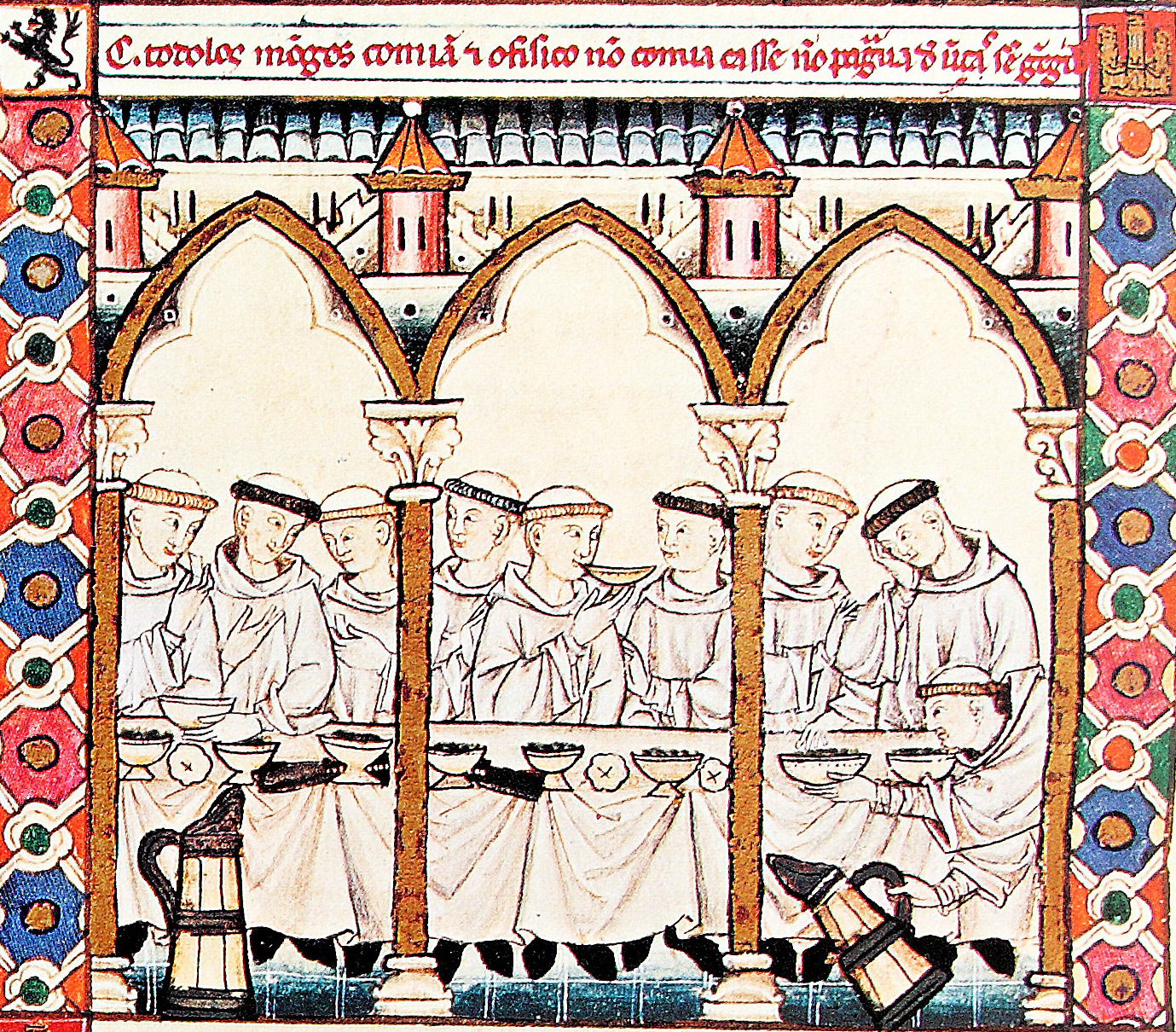
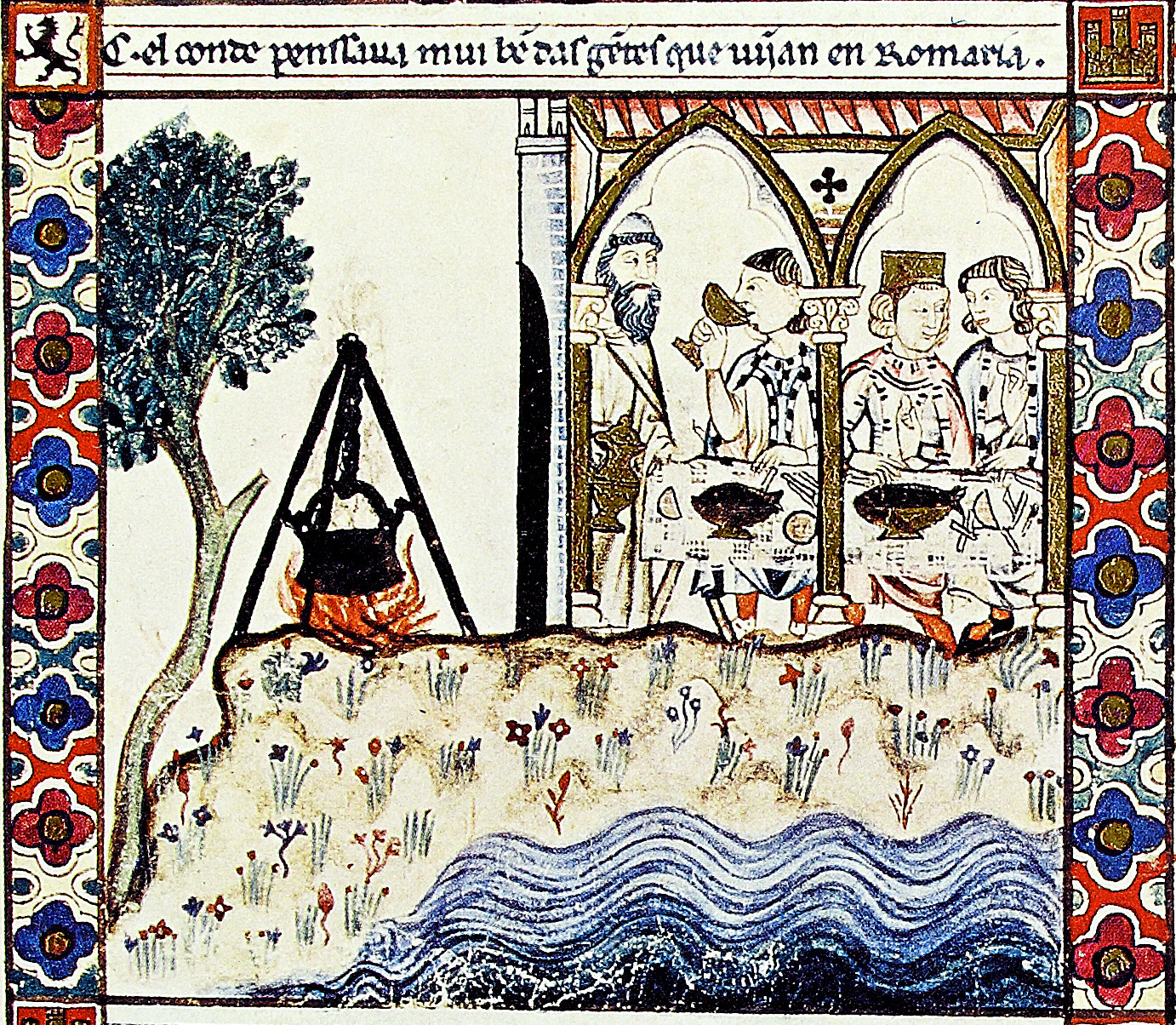
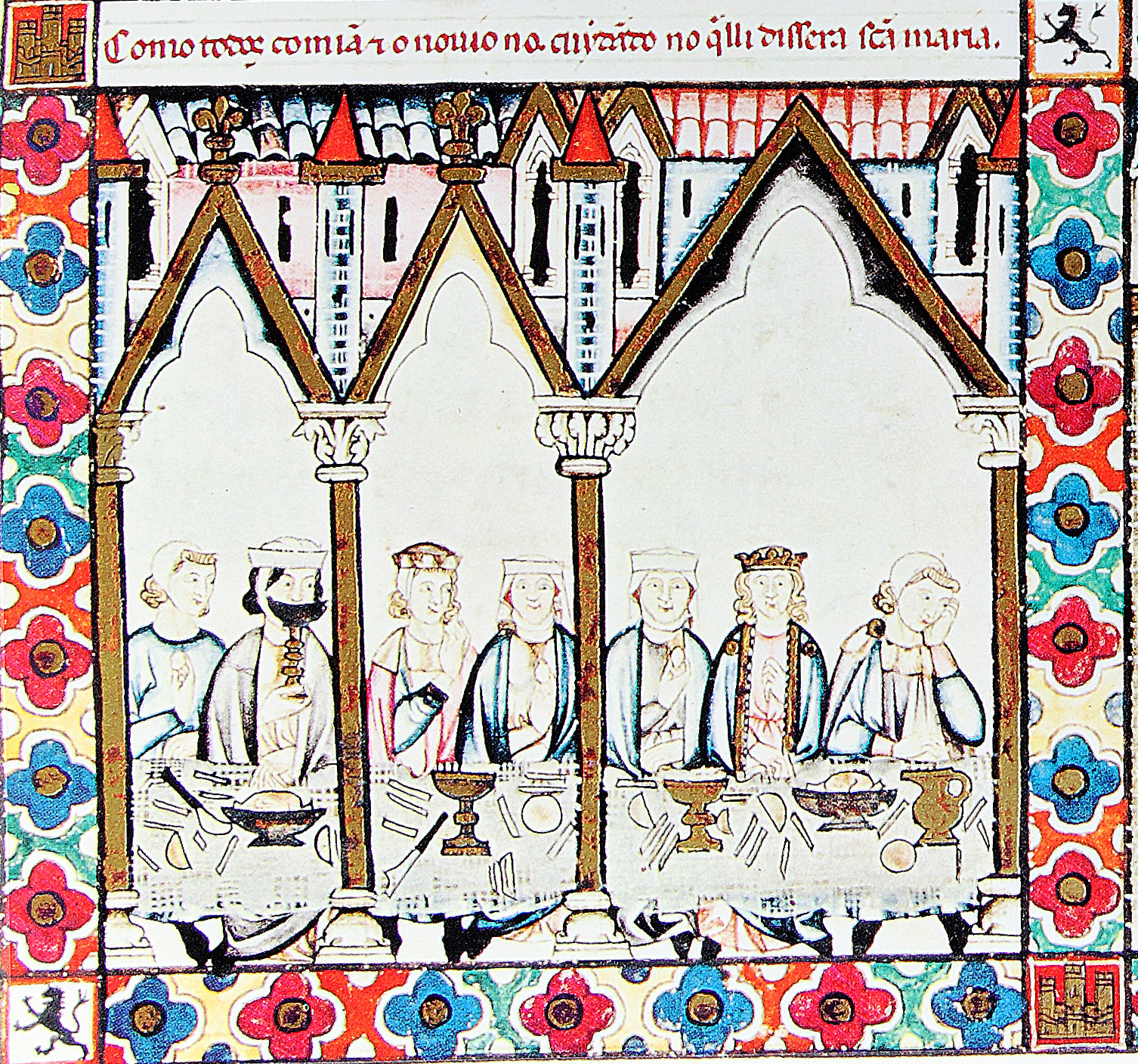
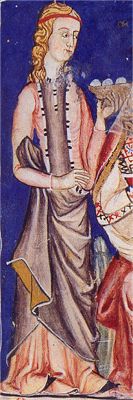
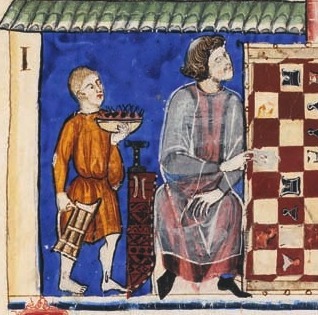
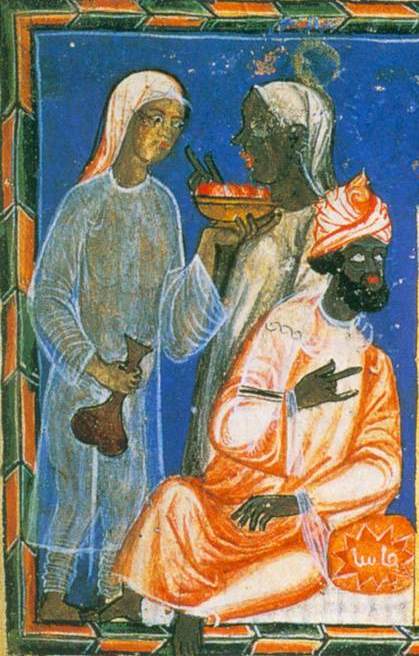
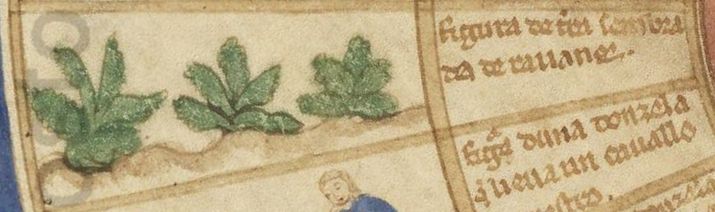
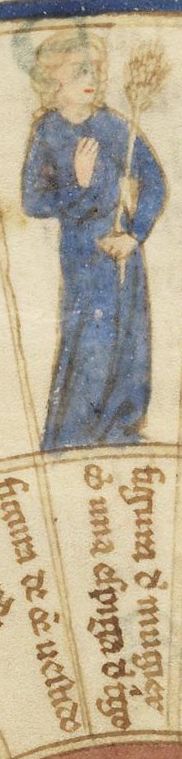
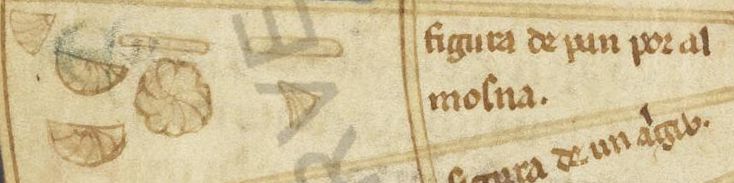
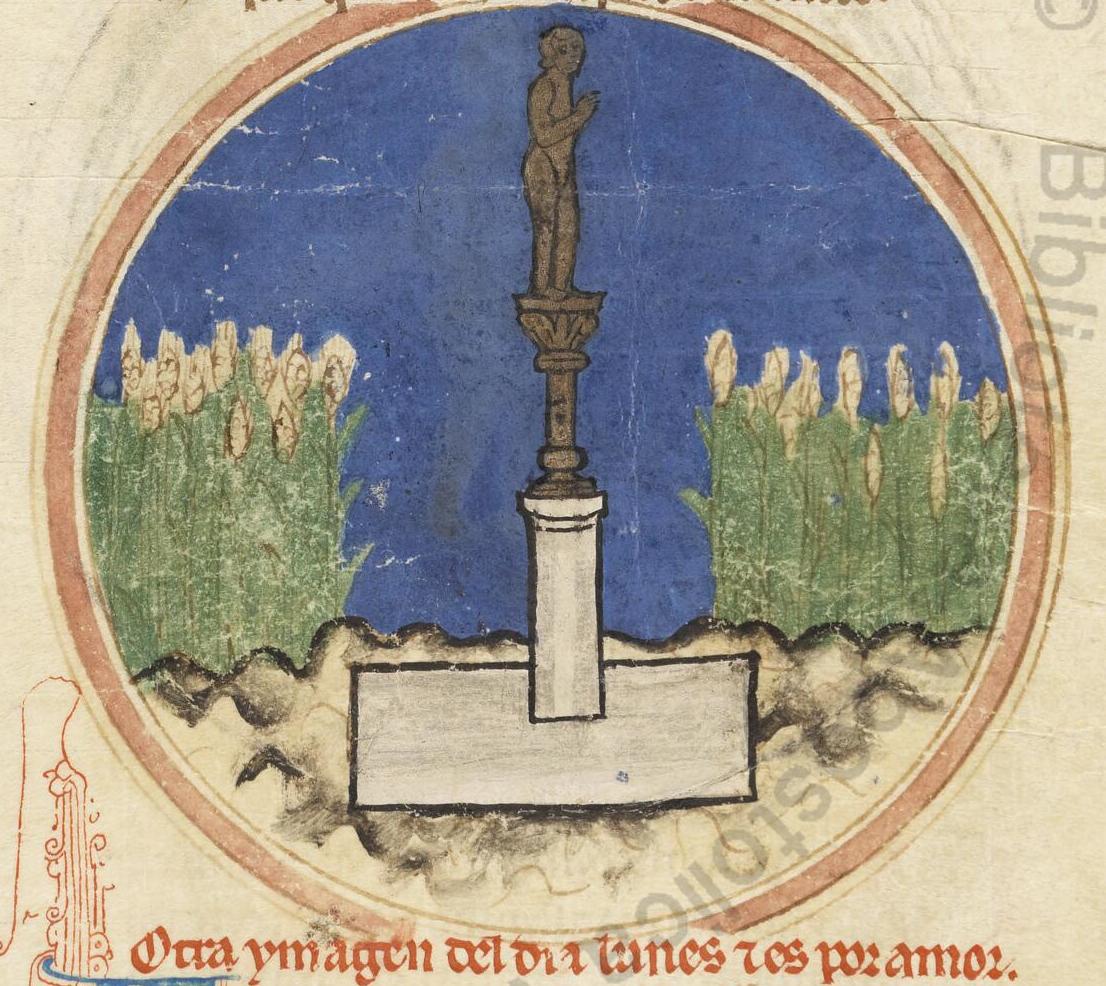
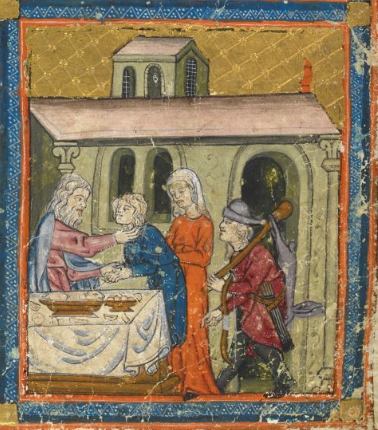
Fig. 11.16 [GLHG] f4v, lamb or hare in bowl, eggs in bowl, hunter with hare
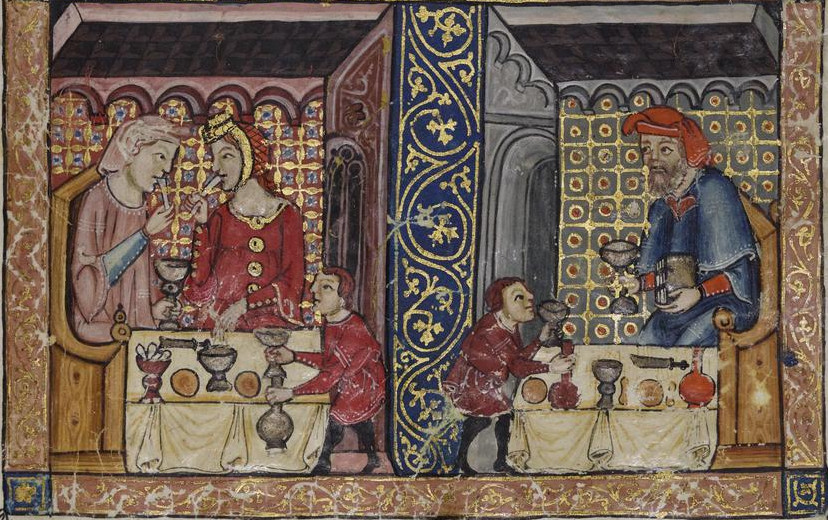
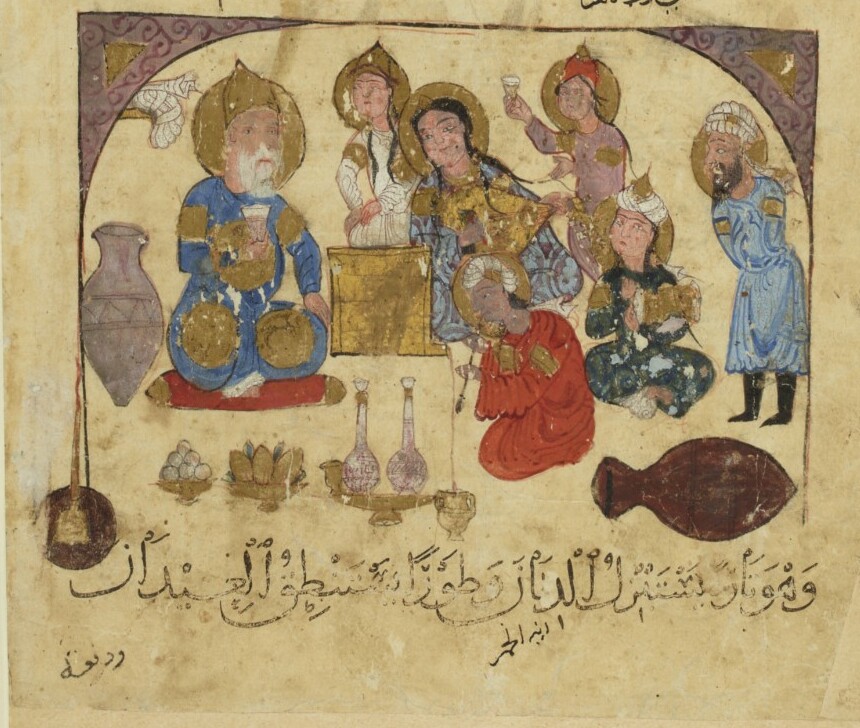
Fig. 11.18 [MQAH] page 082 wine, rice balls, flasks, glasses, bowls, footed trays, 2 amphoras, 2 tazza mugs, oud, darbouka, albogon
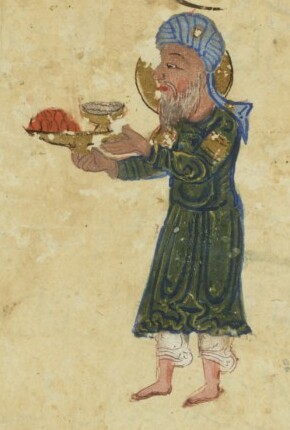
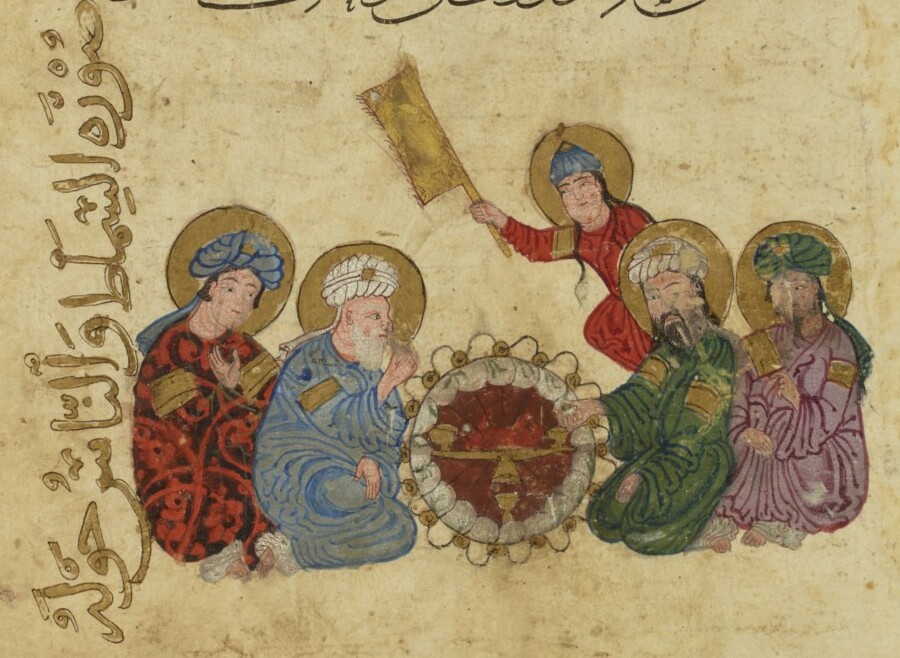
Fig. 11.20 [MQAH] page 253 meat, lamb?, flabellum rectangular, footed tray, 3 goblets
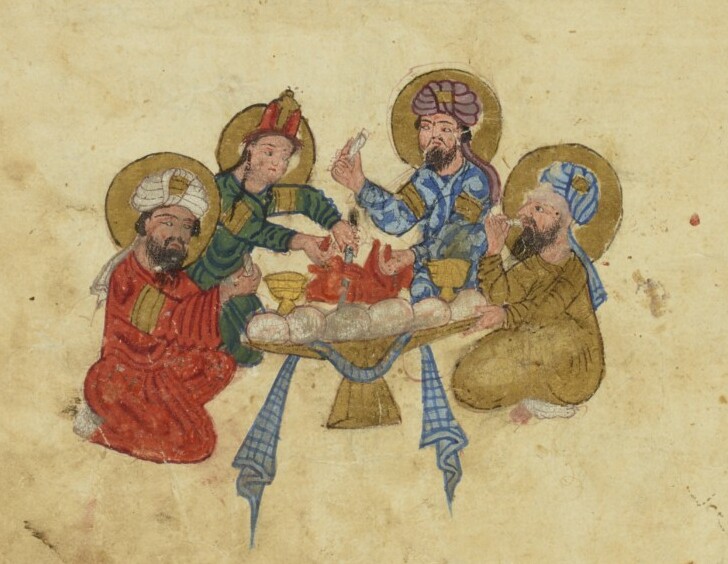
Fig. 11.21 [MQAH] page 311 bread, meat, lamb, feast, table on foot, knife, goblets, tablecloth or towel
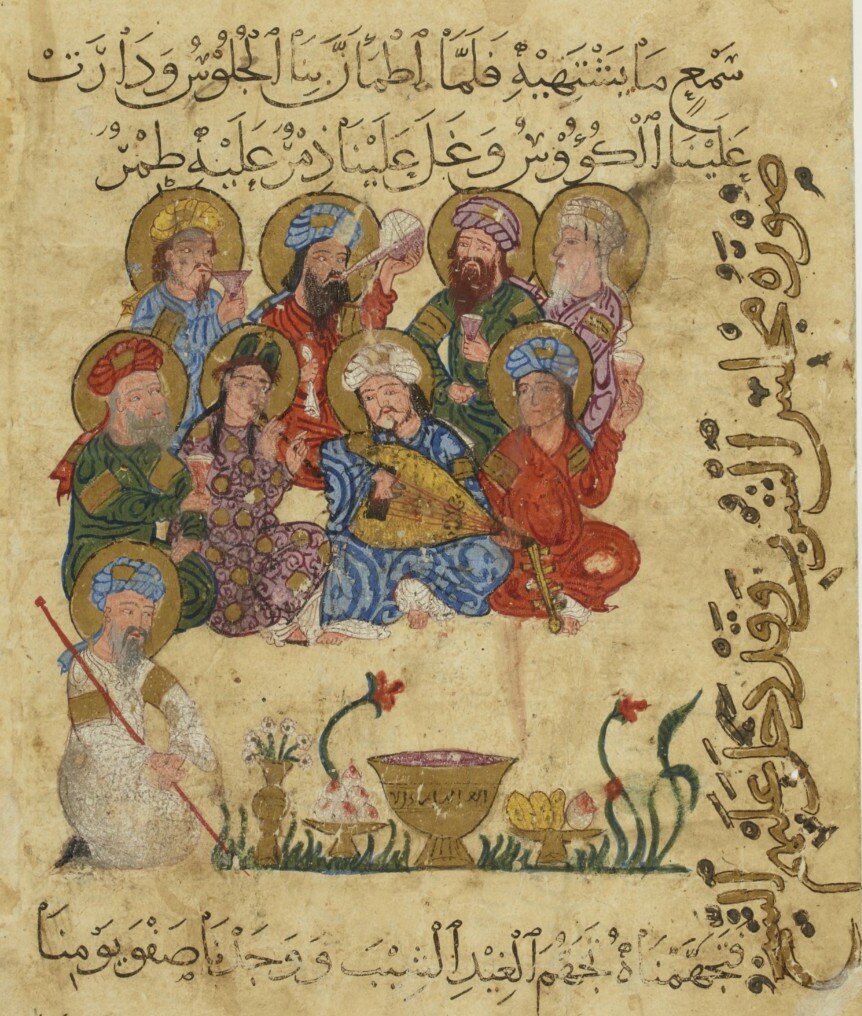
Fig. 11.22 [MQAH] page 344 wine, rice balls, feast, plates, vase, meal, glasses, flask, towel, oud, albogon
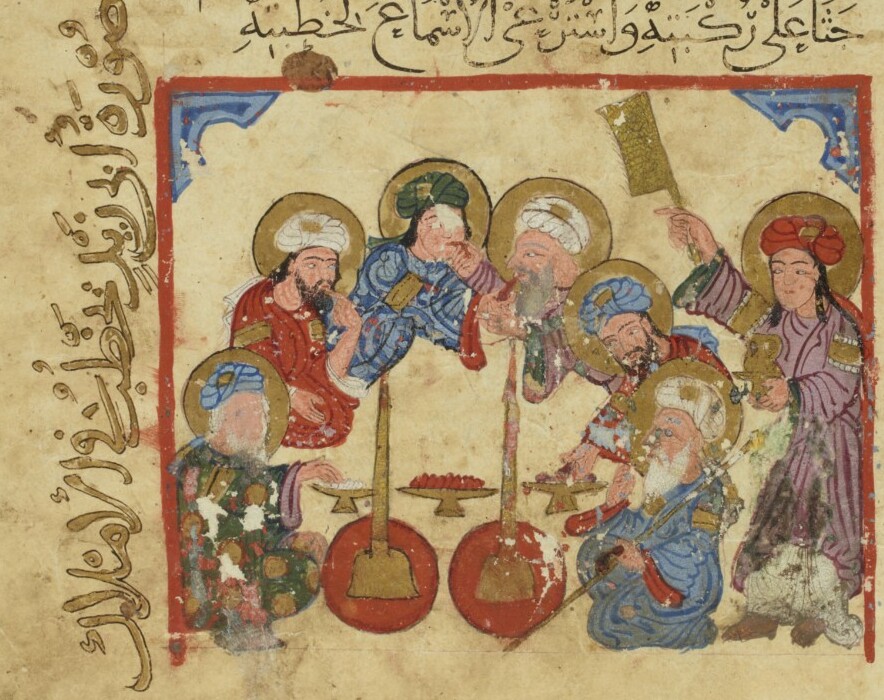
Fig. 11.23 [MQAH] page 371 feast, meat, food, candlestick, footed plate, flabellum rectangular, small plate, jug
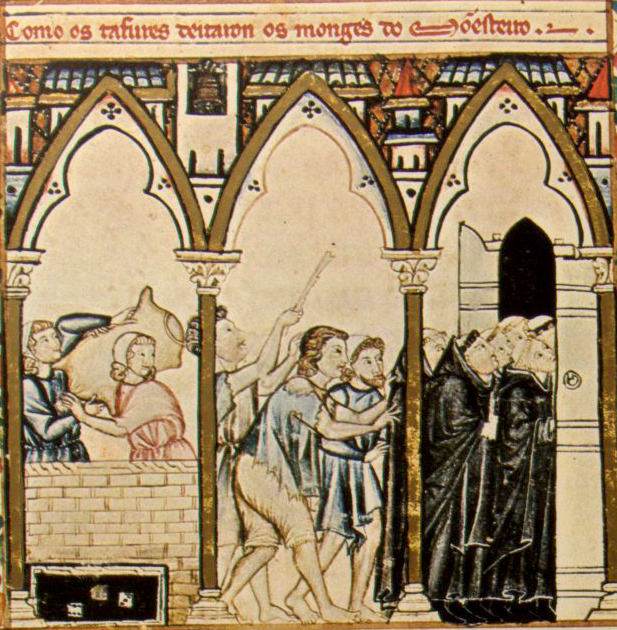
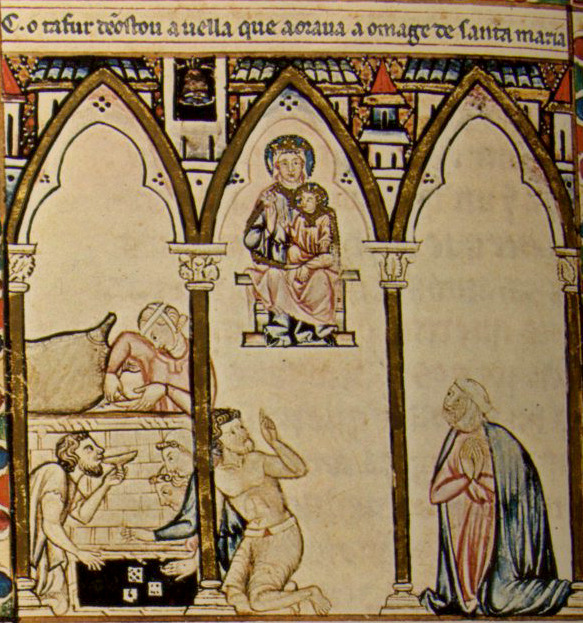
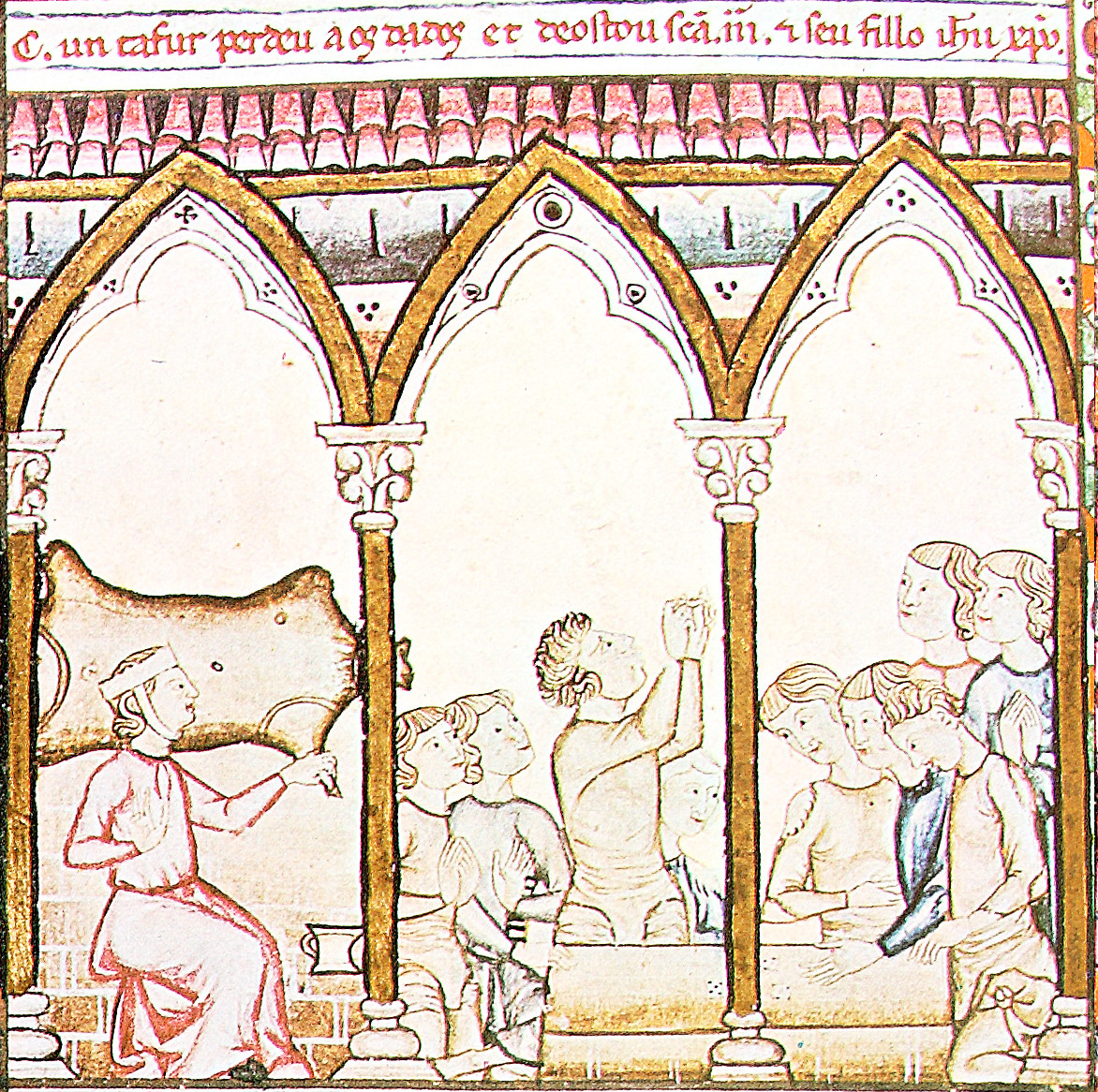
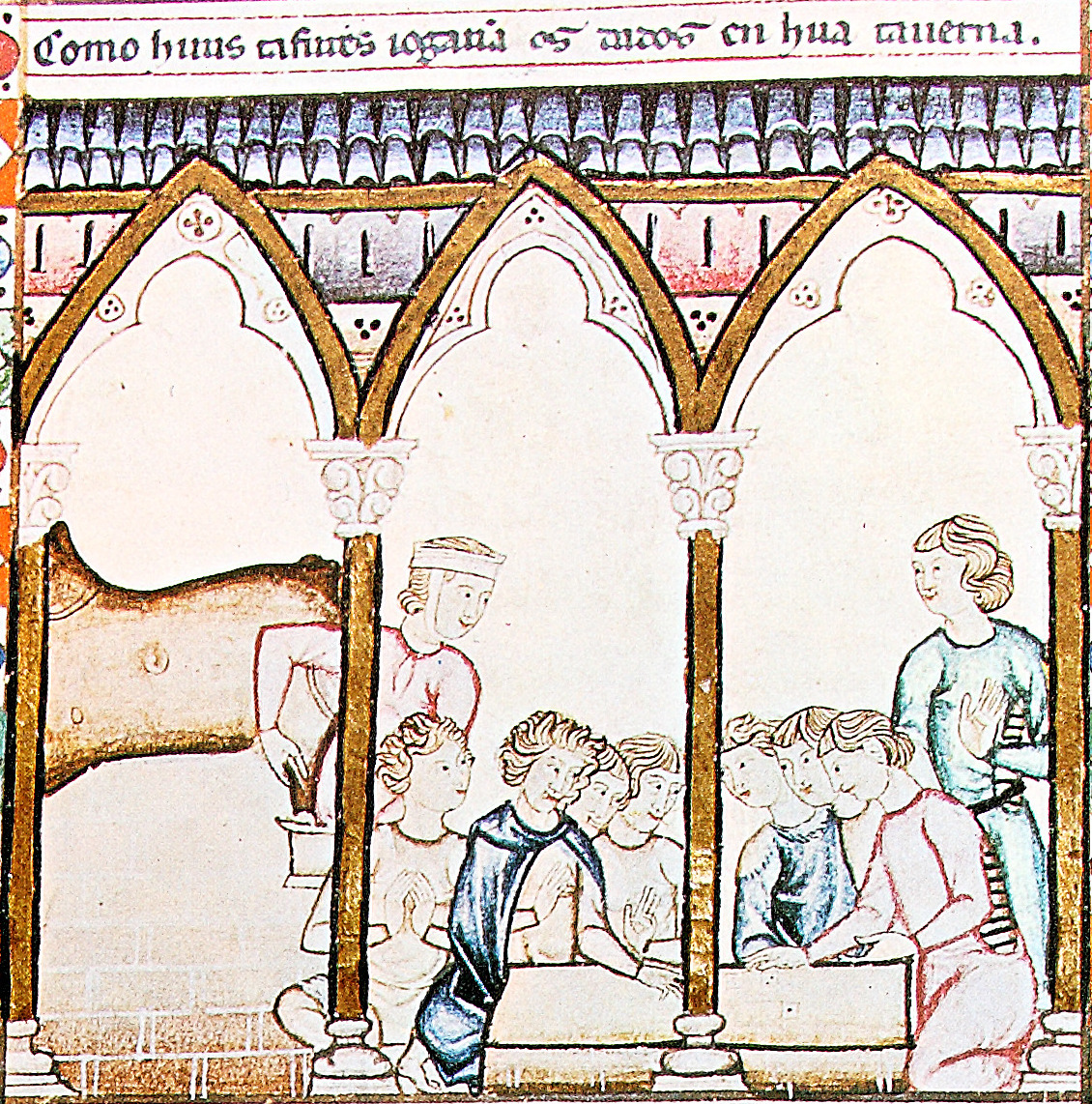
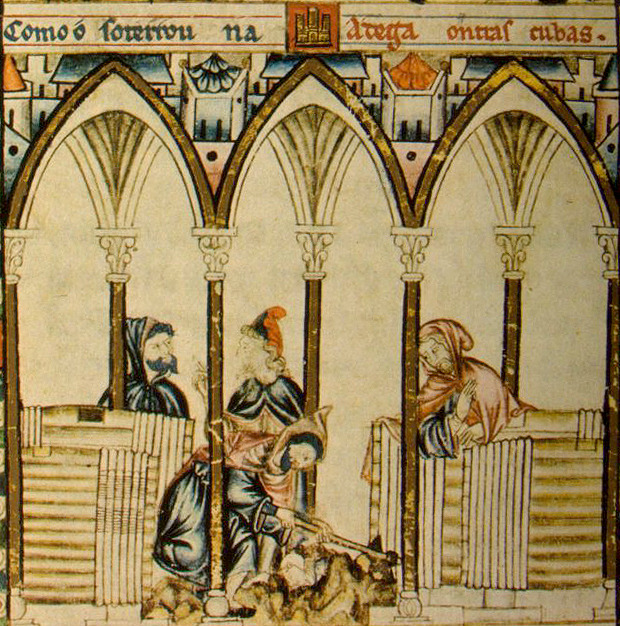
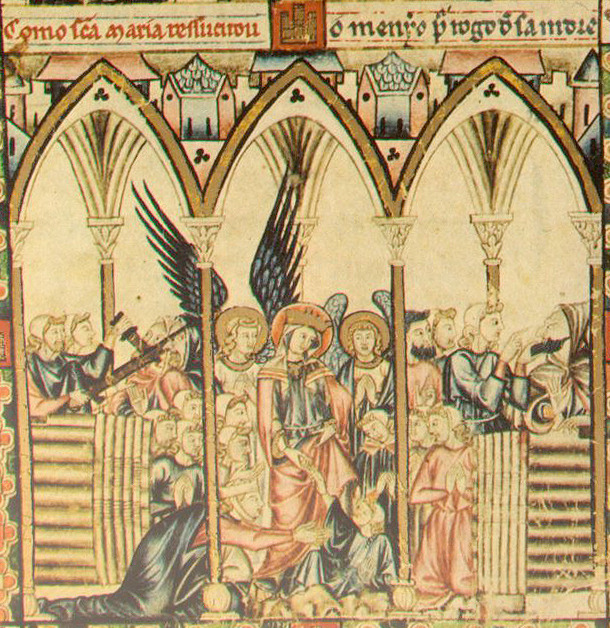
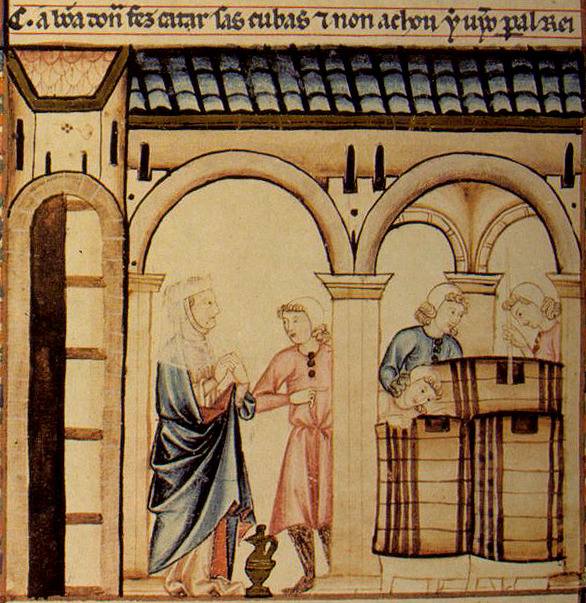
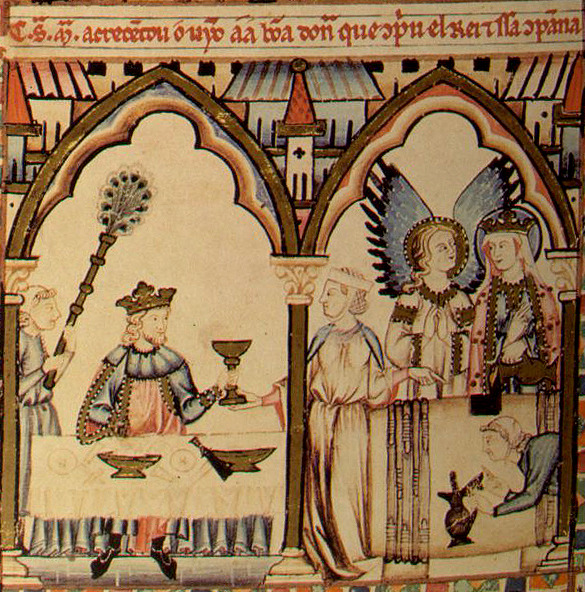
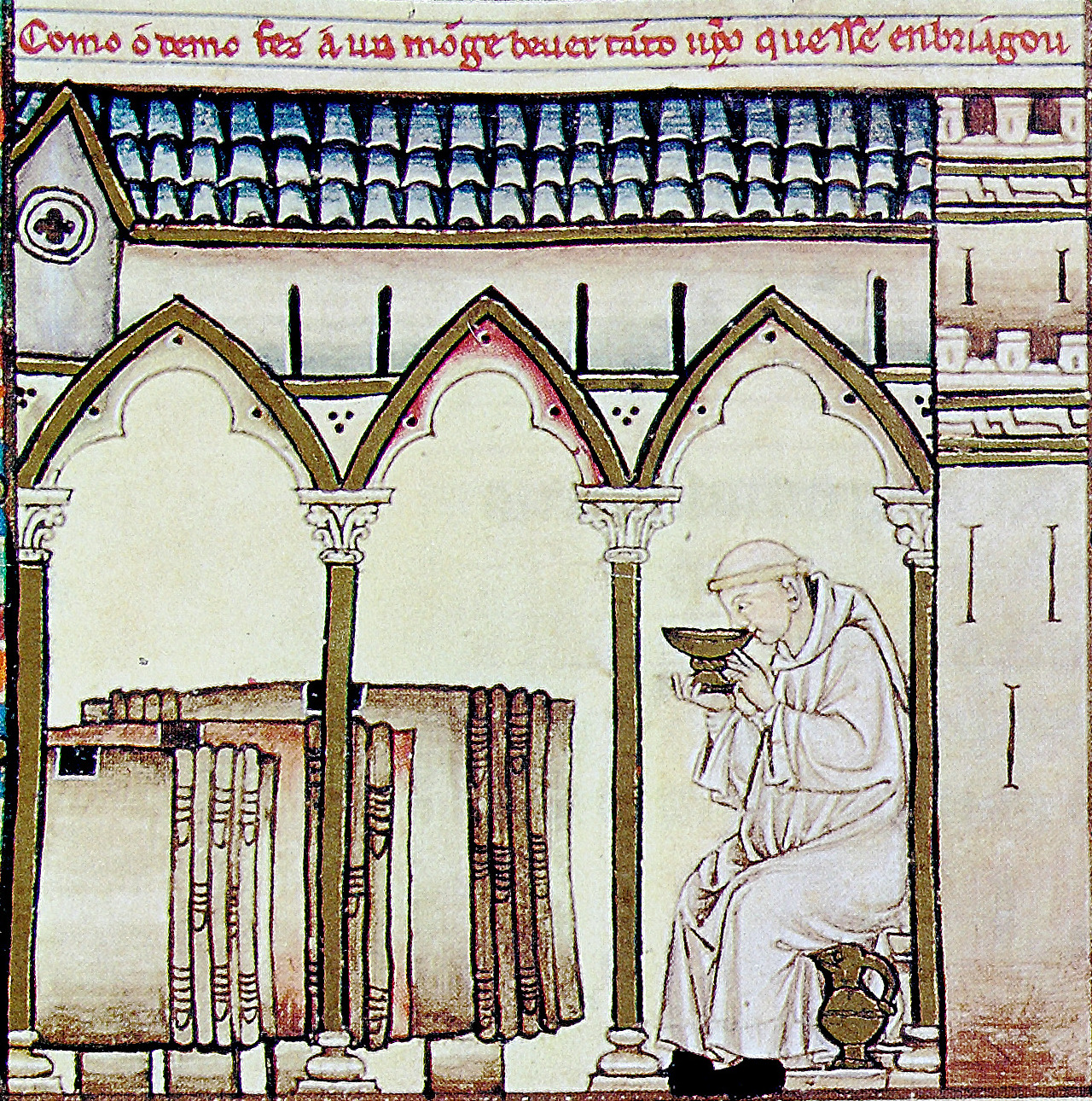
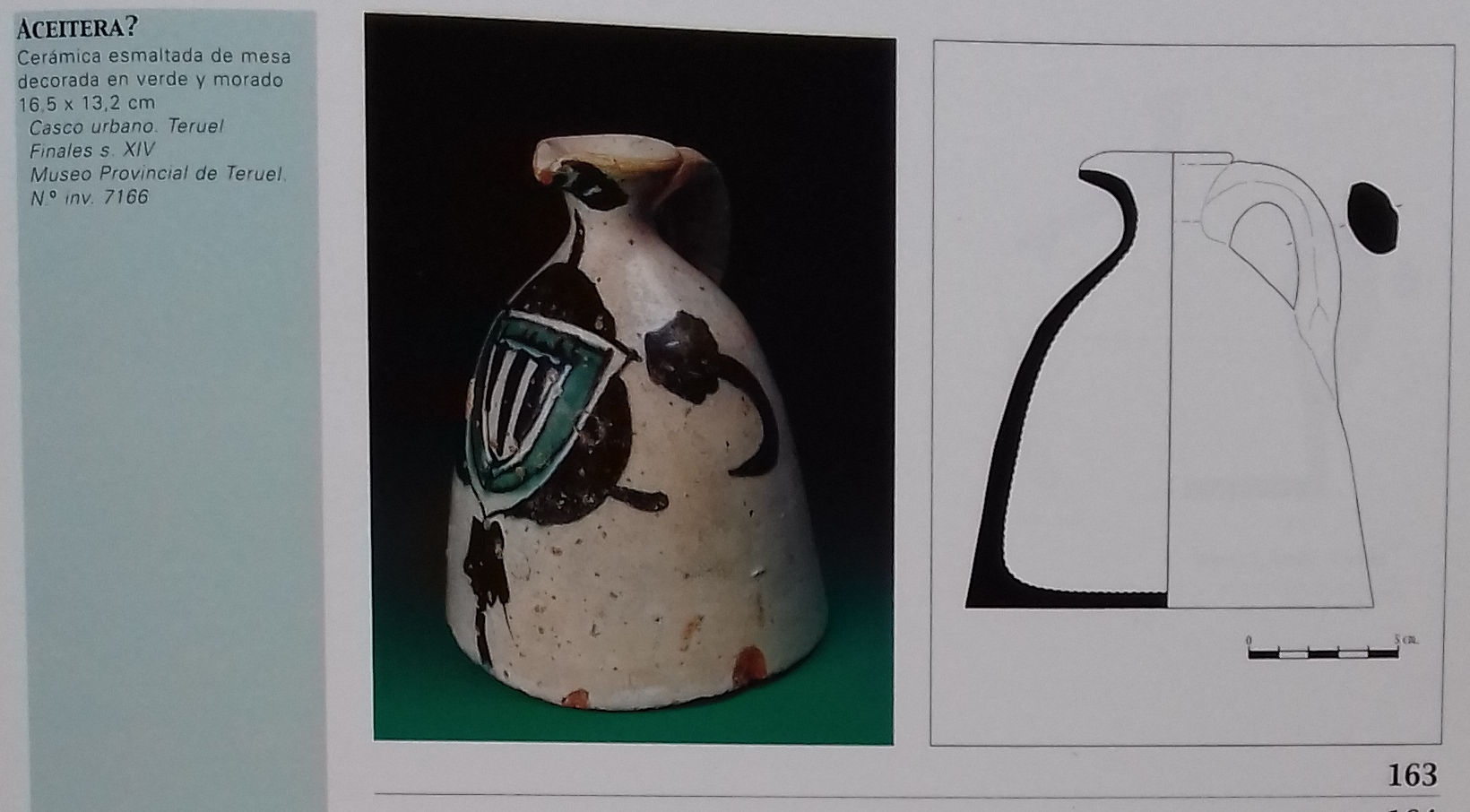
Fig. 11.39 [ORTEGA] page 293, presumed winegar vessel found in Teruel ceramic workshop
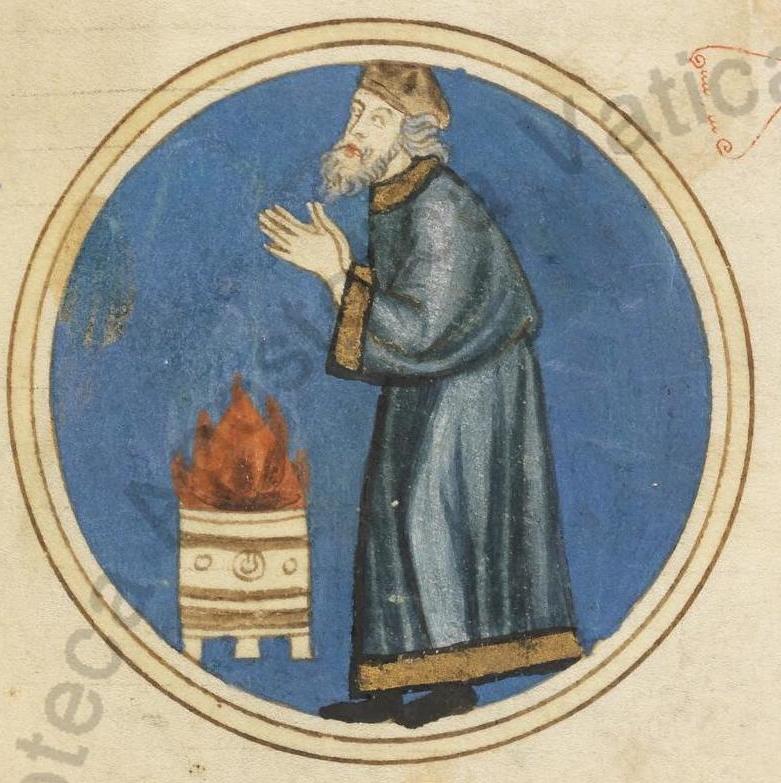
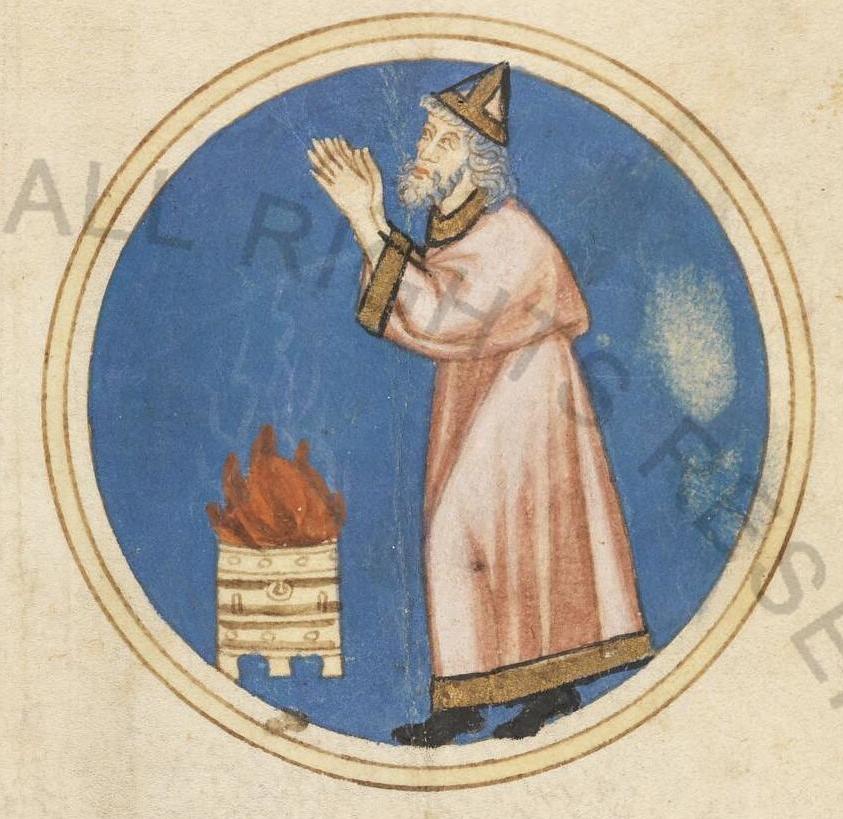
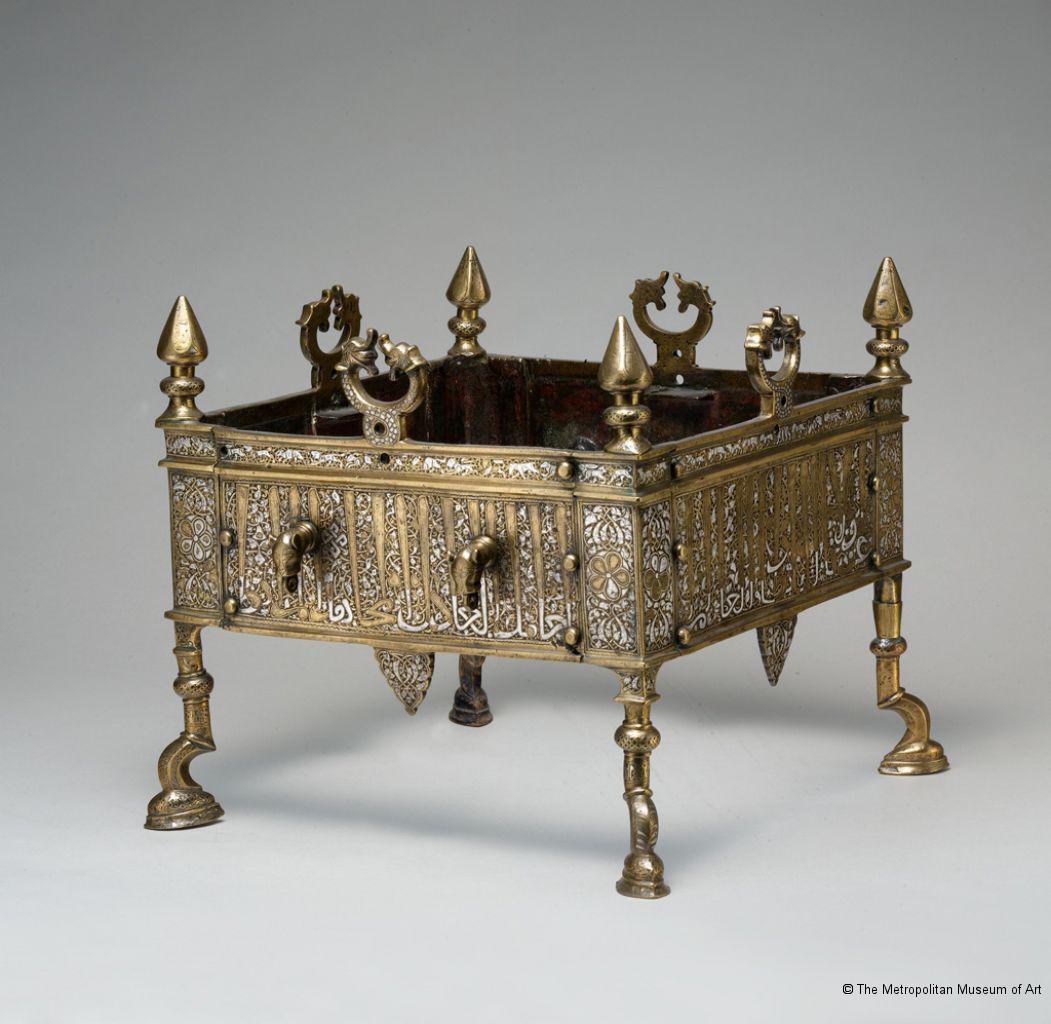
Fig. 11.42 Brazier of Sultan al-Malik al-Muzaffar Shams al-Din Yusuf ibn ‘Umar, 1250-1290, Egypt. Source: The Metropolitan Museum of Art, inventory number 91.1.540. Dimensions: H: 35.2cm, W: 39.4cm; Max. D: 41.6cm
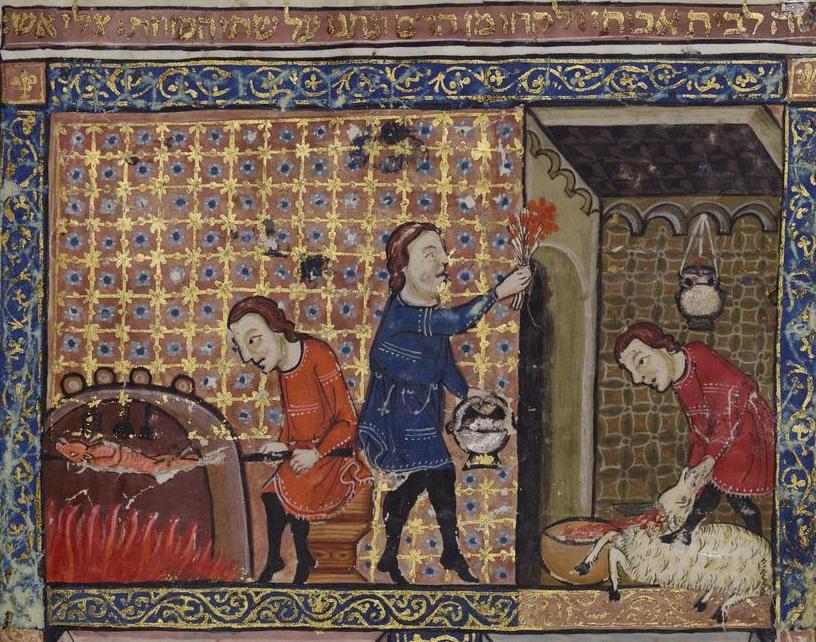
Fig. 11.43 [RLHG] folio 19b, spit roast, fireplace, roasting lamb with herbs
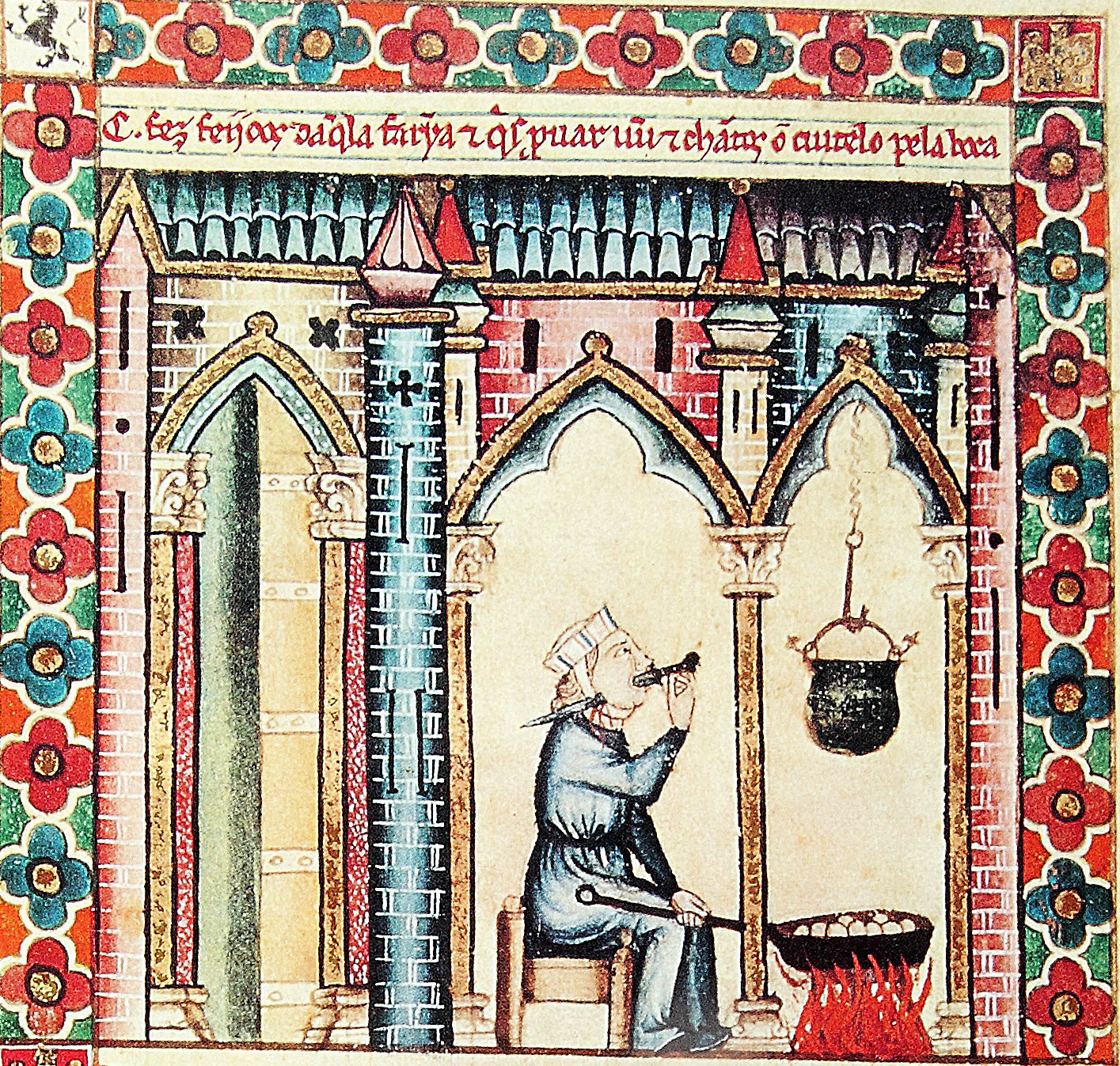
Fig. 11.44 [CSMT] Cantiga 157-2, frying doughnuts on pan with large handle, tripod, knife, cauldron , handle, suspension chain, hook, travelling water/wine skins
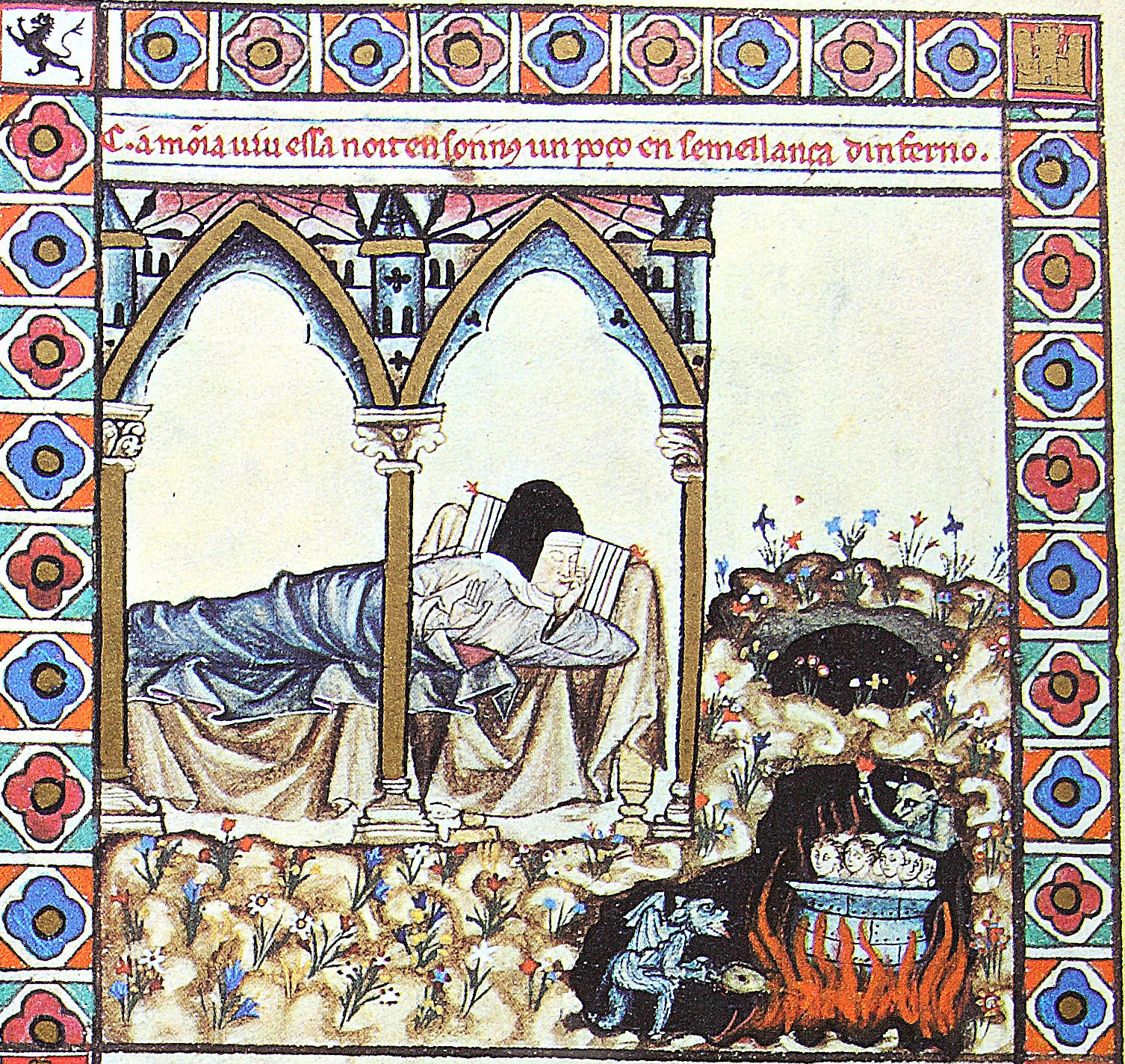
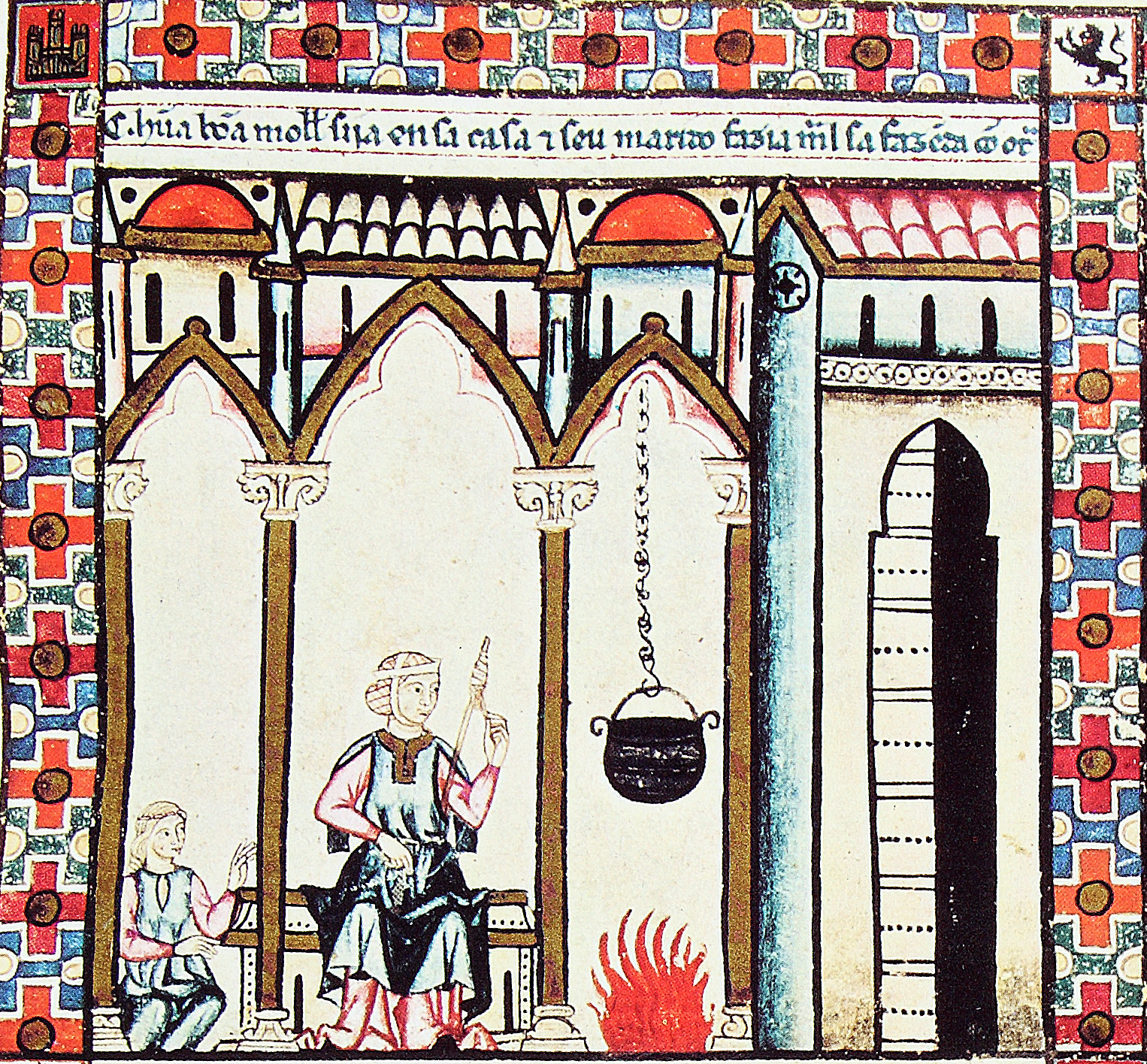
Fig. 11.46 [CSMT] Cantiga 68, cauldron with handle, suspension chain, hook
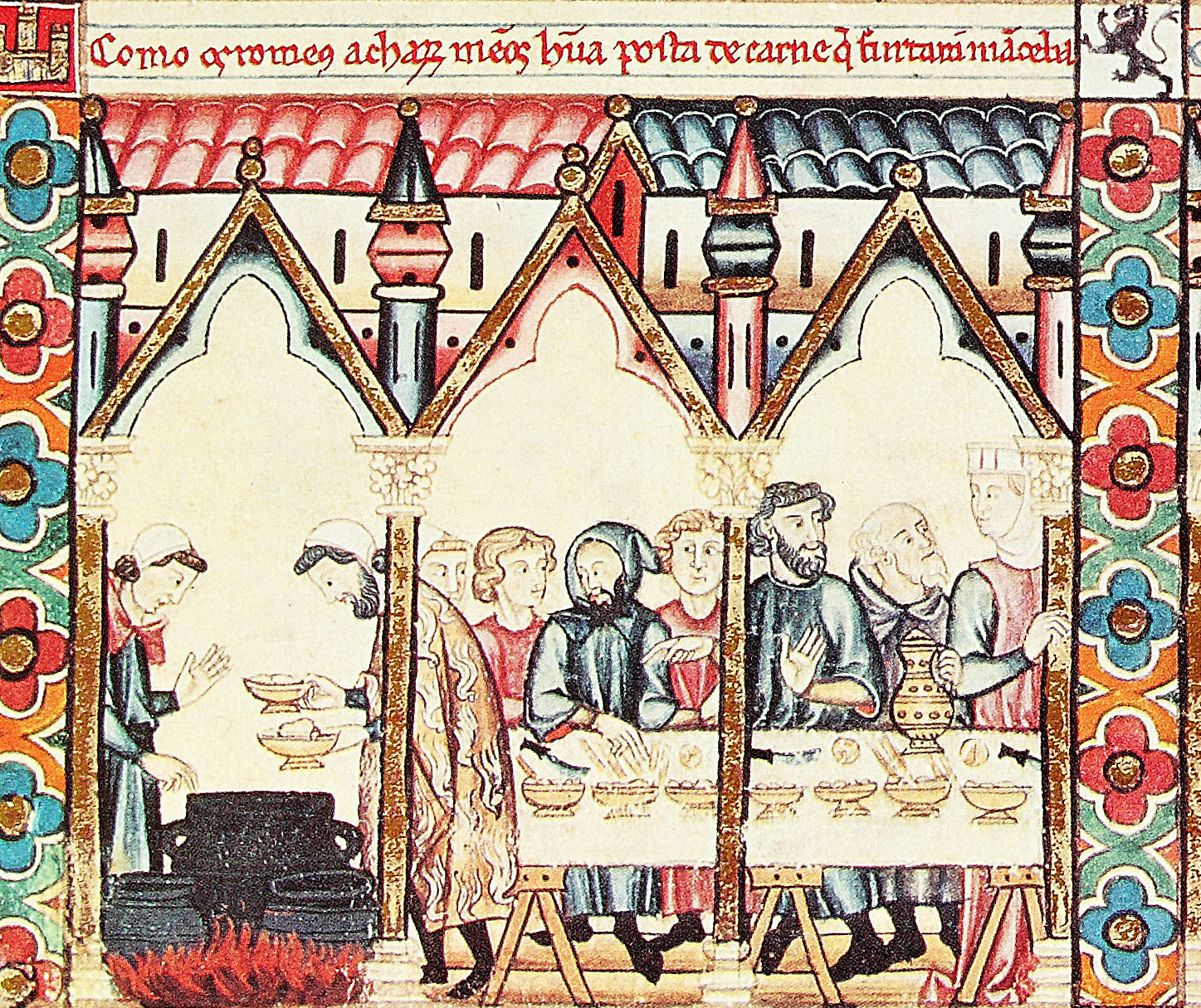
Fig. 11.47 [CSMT] Cantiga 159-3, cauldrons, cooking portions from beef ribs
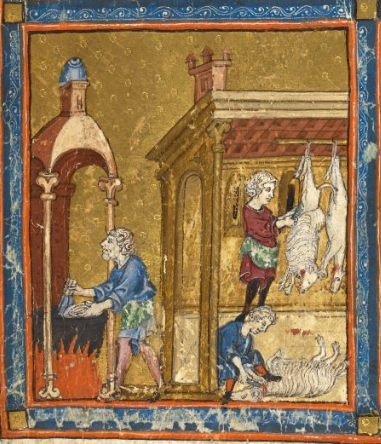
Fig. 11.48 [GLHG] folio 15r, cauldron, apron, butcher hook, knife, cooking lamb for Passover table
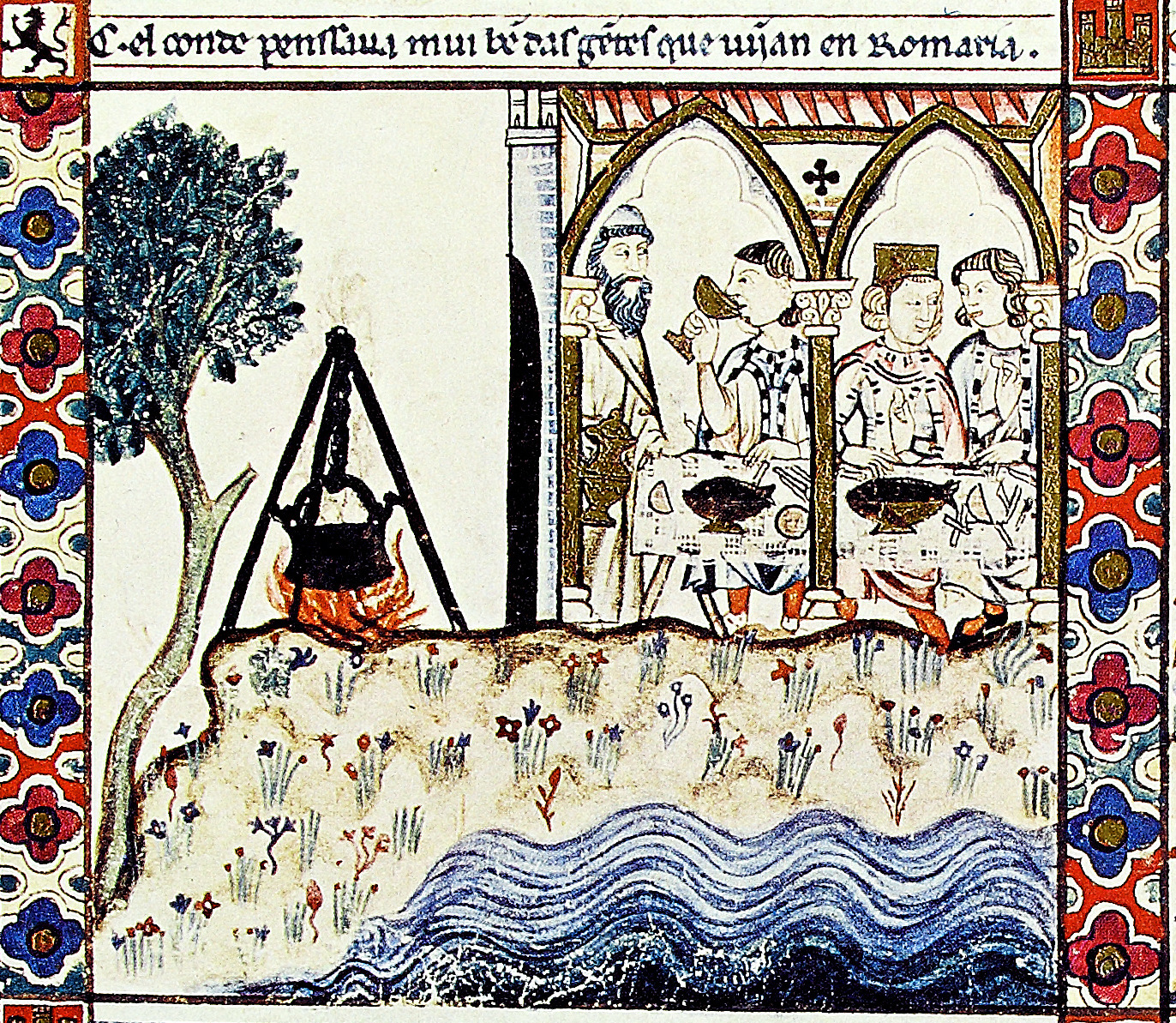
Fig. 11.49 [CSMT] Cantiga 95a, cauldron with handle, suspension chain, tripod
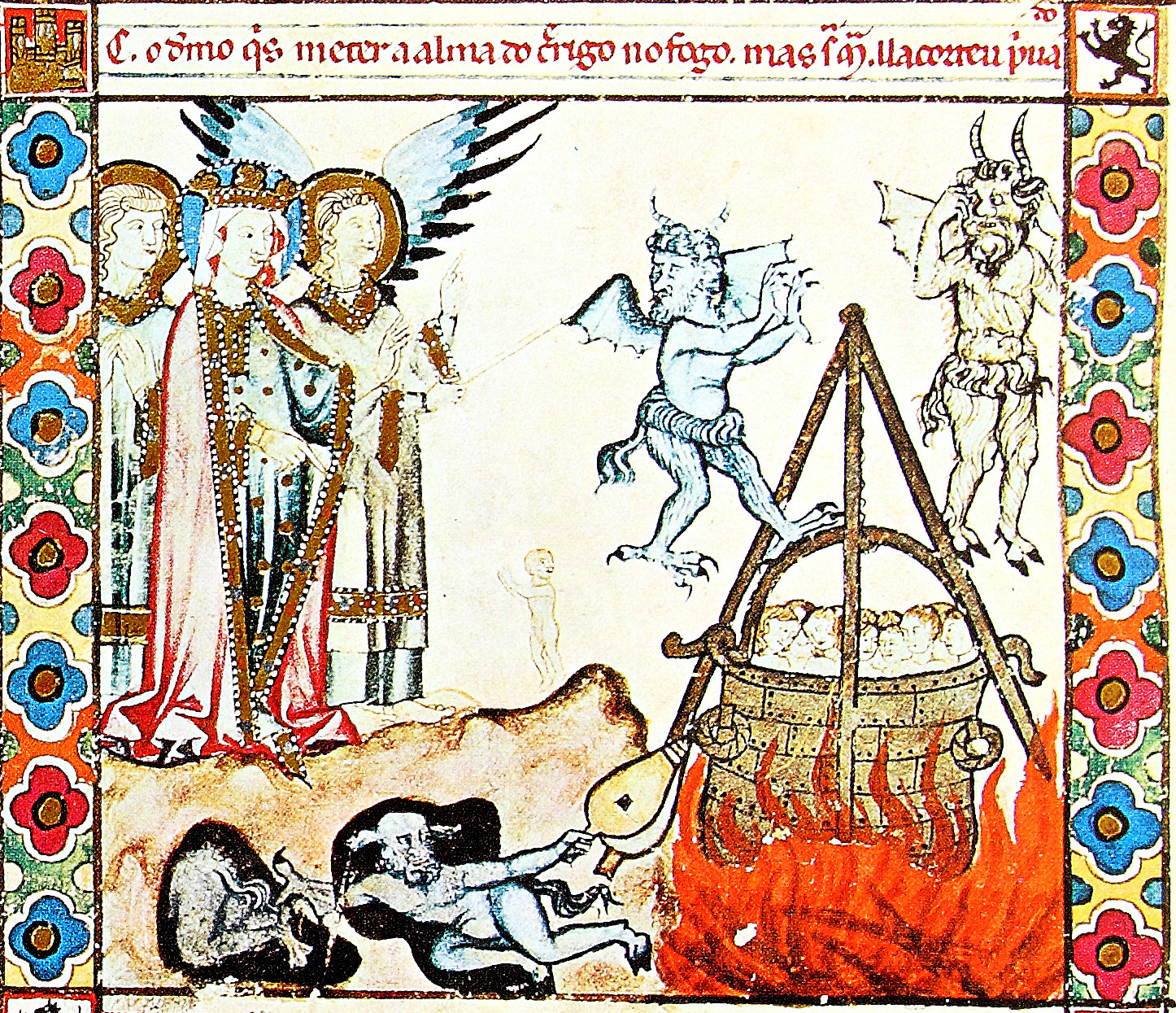
Fig. 11.50 [CSMT] Cantiga 111, riveted cauldron with handles, suspension chain, tripod, bellows
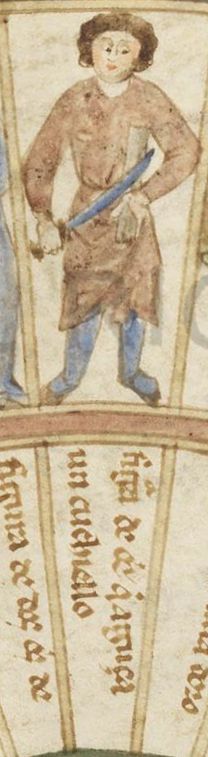
Fig. 11.51 [LAMG] Libro de astromagia, folio 4v, whetstone and knife
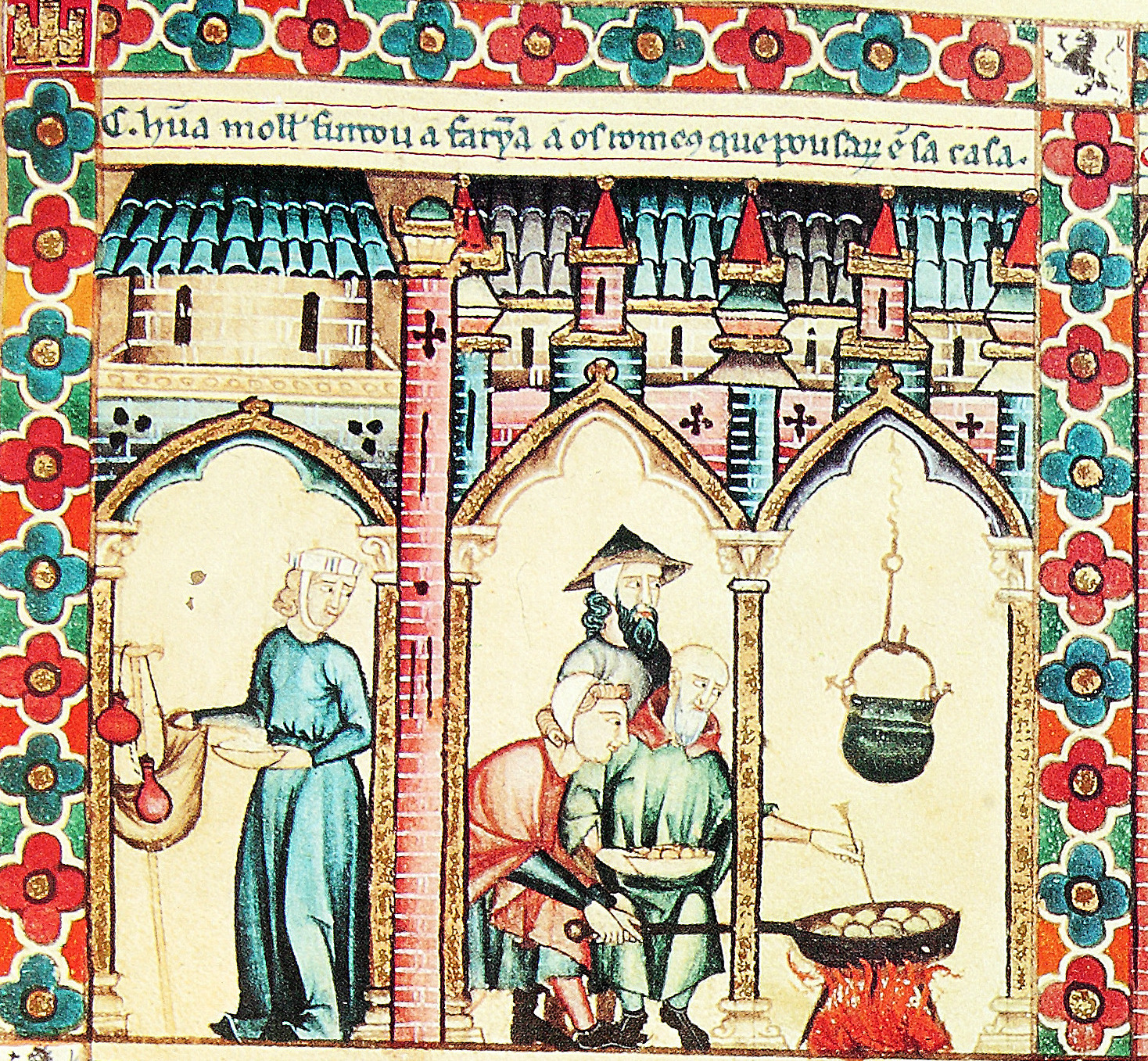
Fig. 11.52 [CSMT] Cantiga 157-1, pilgrims’ wineskins, frying doughnuts on pan with large handle, tripod, “trinchante” trinchador fork, knife, cauldron, handle, suspension chain, hook
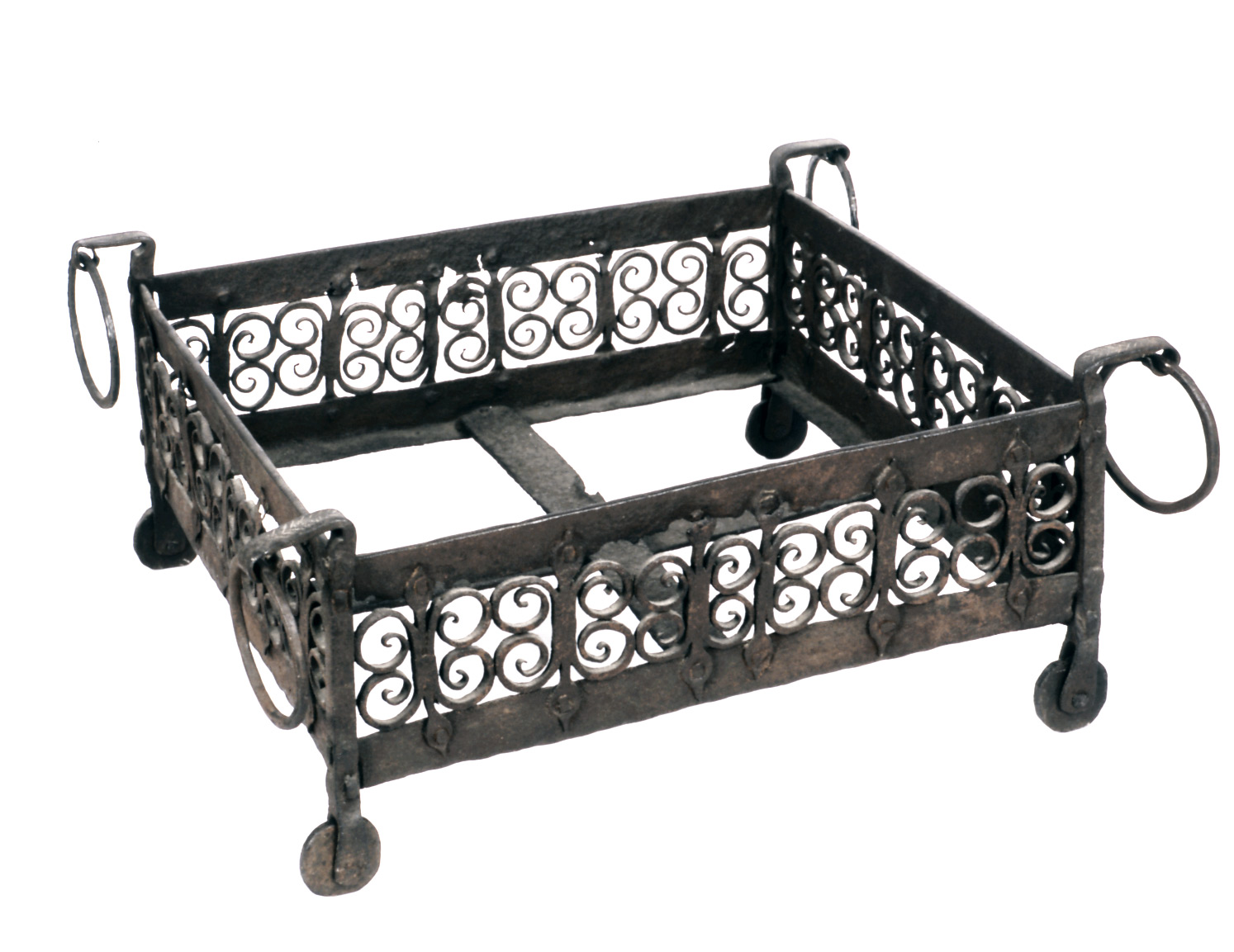
Fig. 11.53 Brazier, Catalan, 14th century, Museu Episcopal de Vic, Barcelona, https://www.museuepiscopalvic.com/ca/colleccions/forja/braser-mev-4465
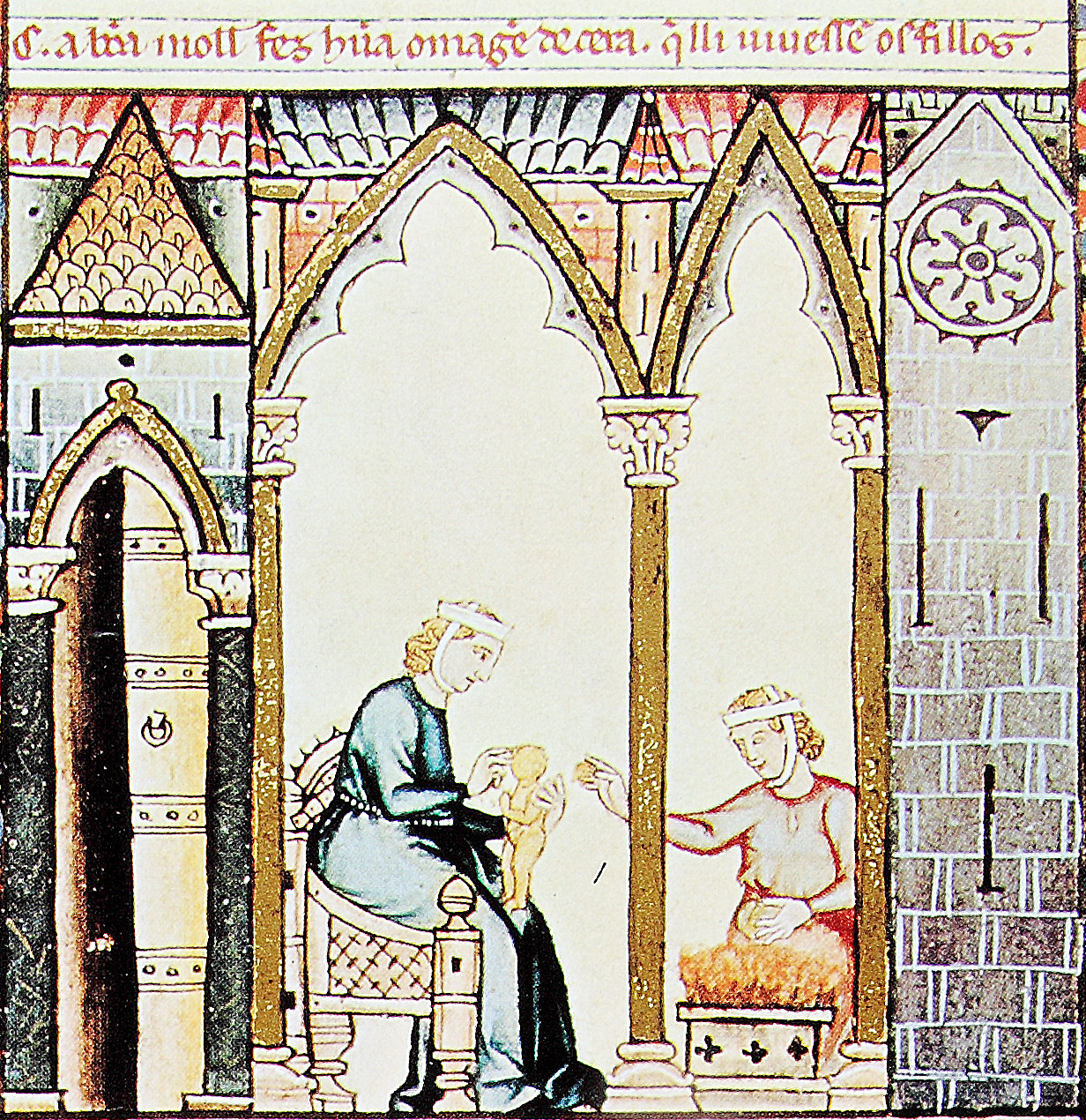
Fig. 11.54 [CSMT] Cantiga 118-2, brazier used to heat wax for creating wax figurine
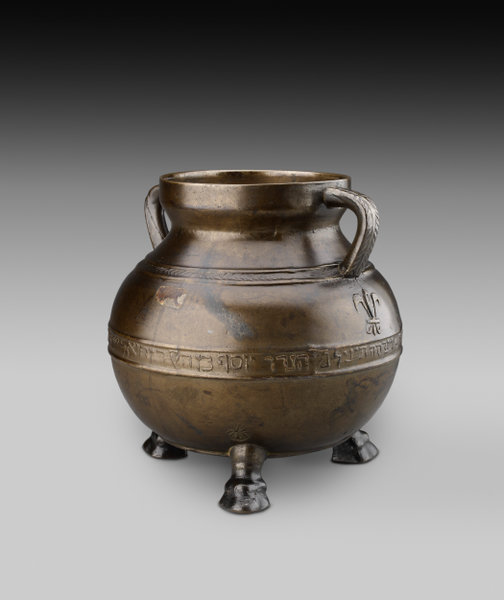
Fig. 11.55 Bodleian bowl of copper alloy, held in Ashmolean Museum, is a sample of cauldron of jewish origin from 1257, Paris, France, Accession Number: AN2009.10
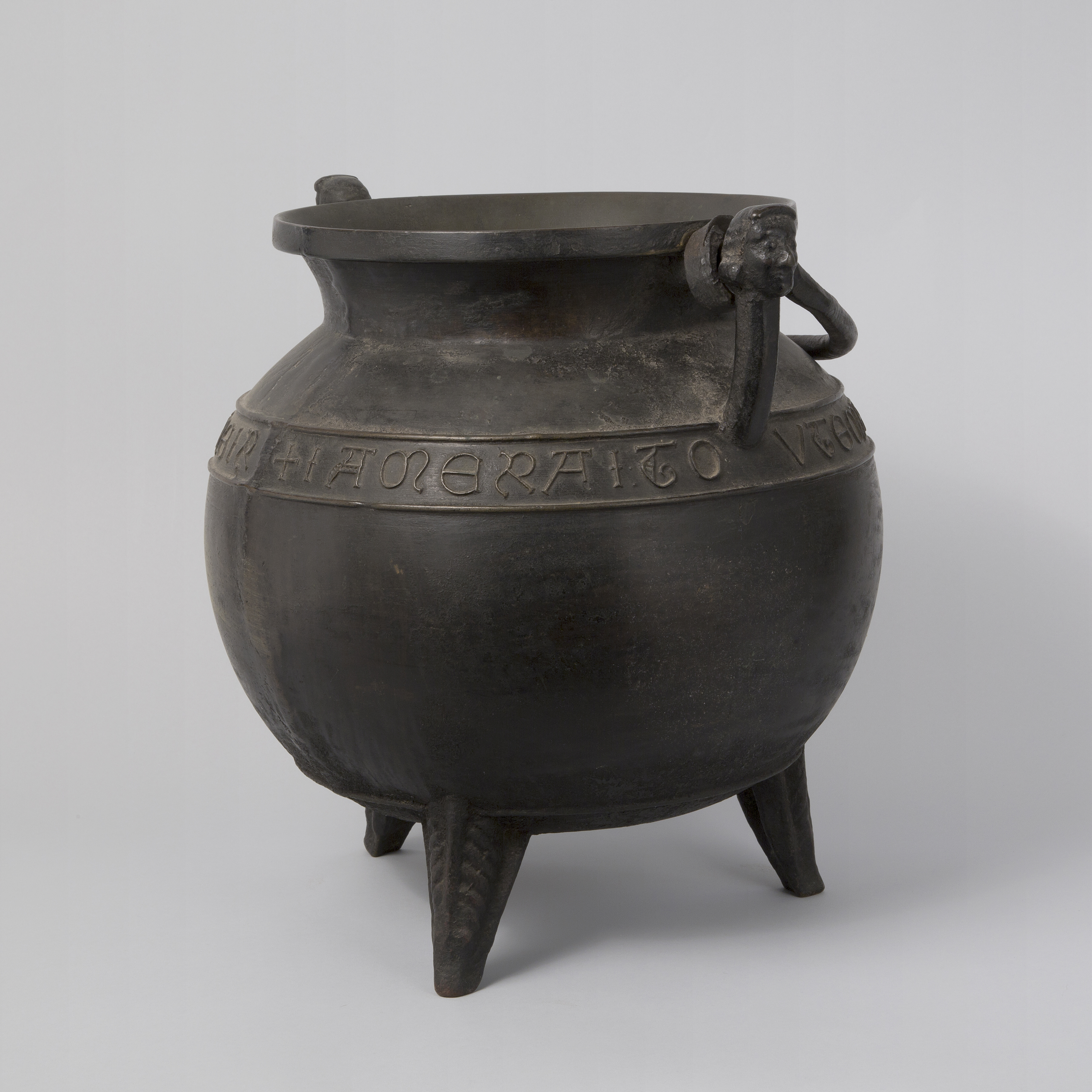
Fig. 11.56 Bronze cauldron of southern France or Netherlands origins is held at Metropolitan Museum of Arts, Accession Number: 49.69.6
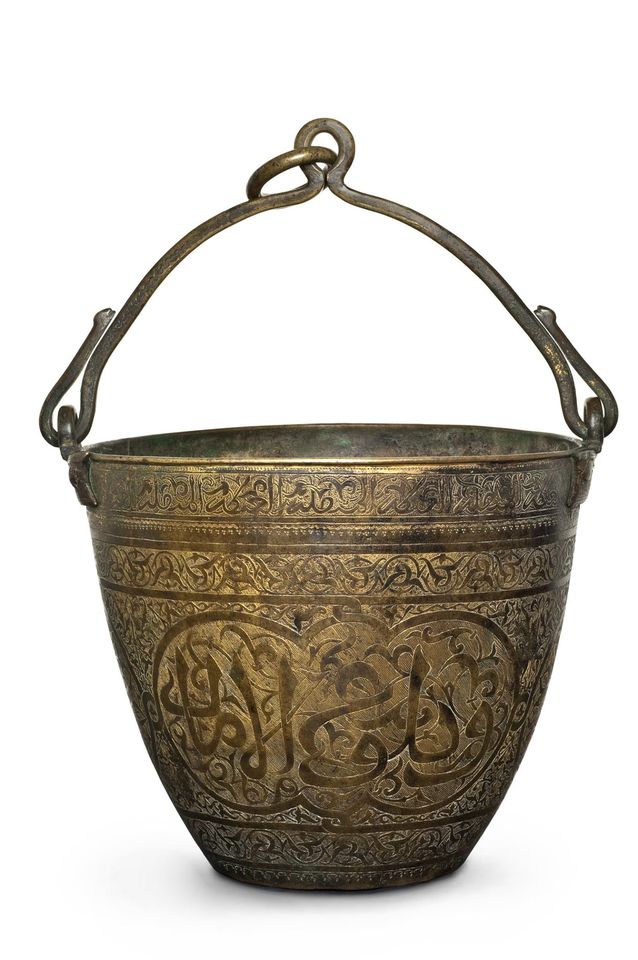
Fig. 11.57 Brass bucket from Granada, Alhambra, dates to 14th century.
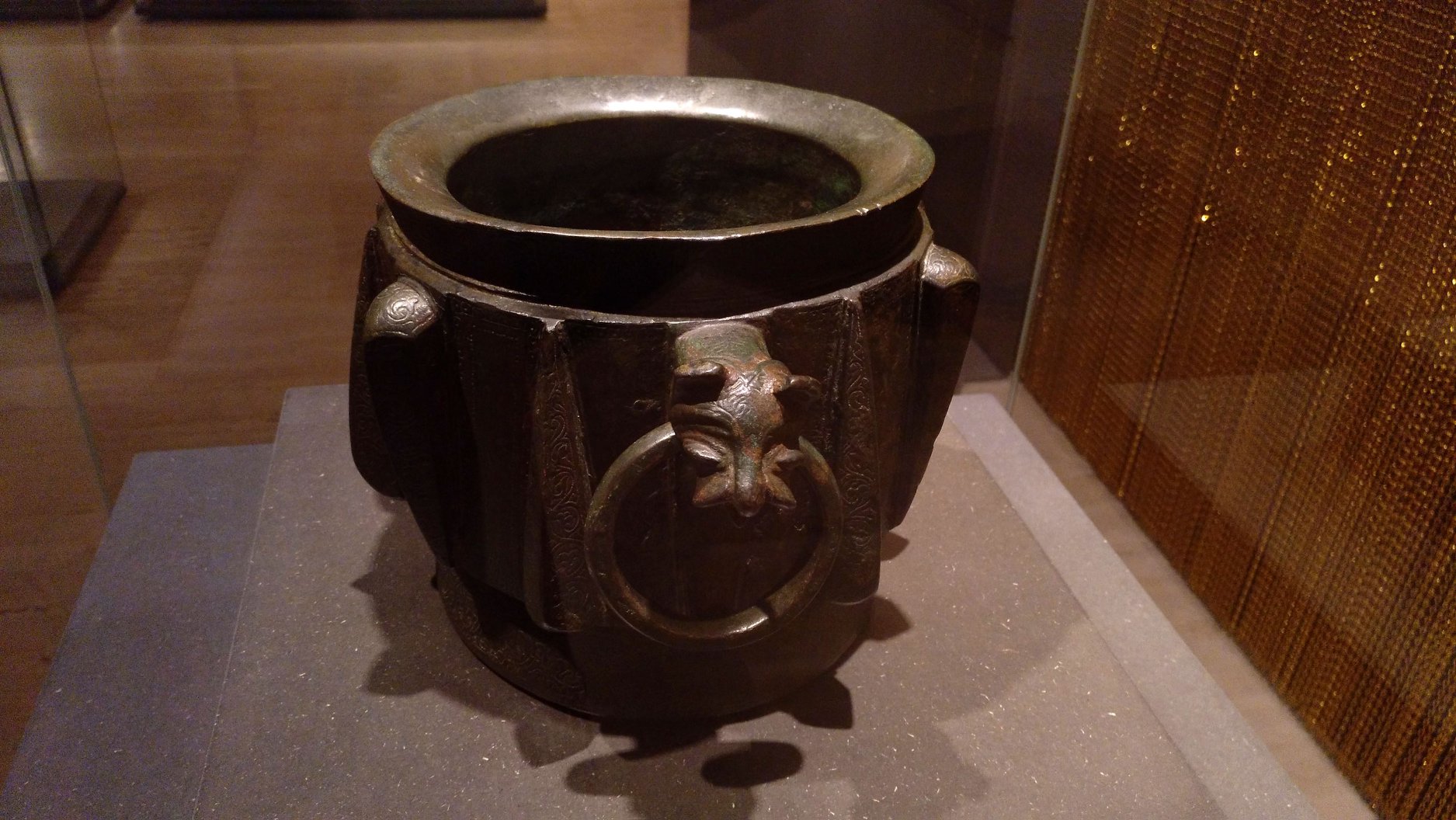
Fig. 11.59 Andalusian bronze mortar from Monzón de Campos, Palencia, is dated to 12th century. Museo Balaguer de Vilanova i la Geltrú.
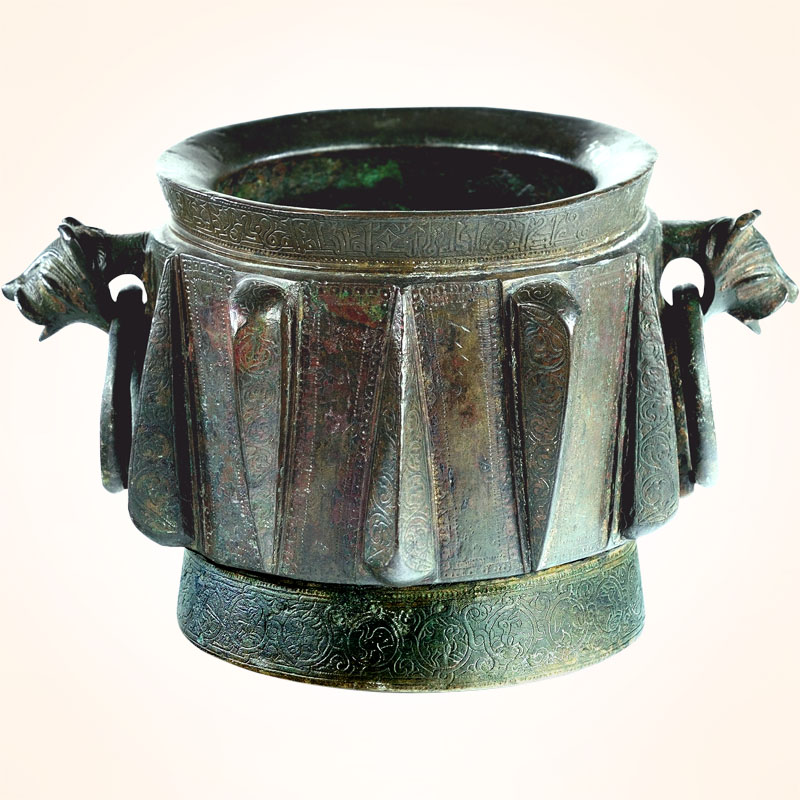
Fig. 11.60 Andalusian bronze mortar from Monzón de Campos, Palencia, is dated to 12th century. Museo Balaguer de Vilanova i la Geltrú.
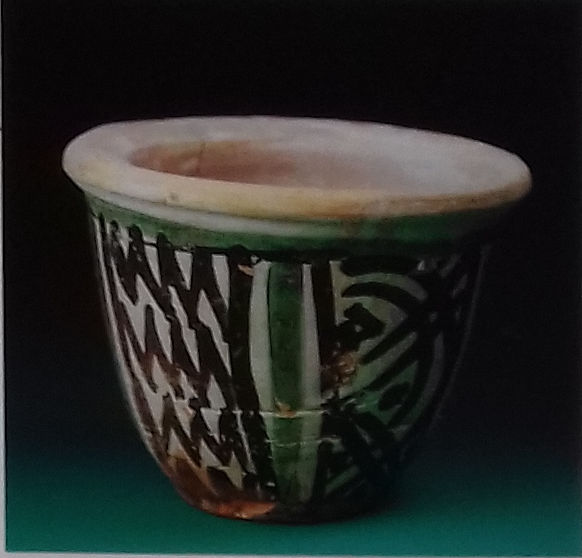
Fig. 11.61 [ORTEGA] page 261, ceramic mortar from the second quarter of 14th century findings from Teruel. 16cm diameter, 12.5cm height.
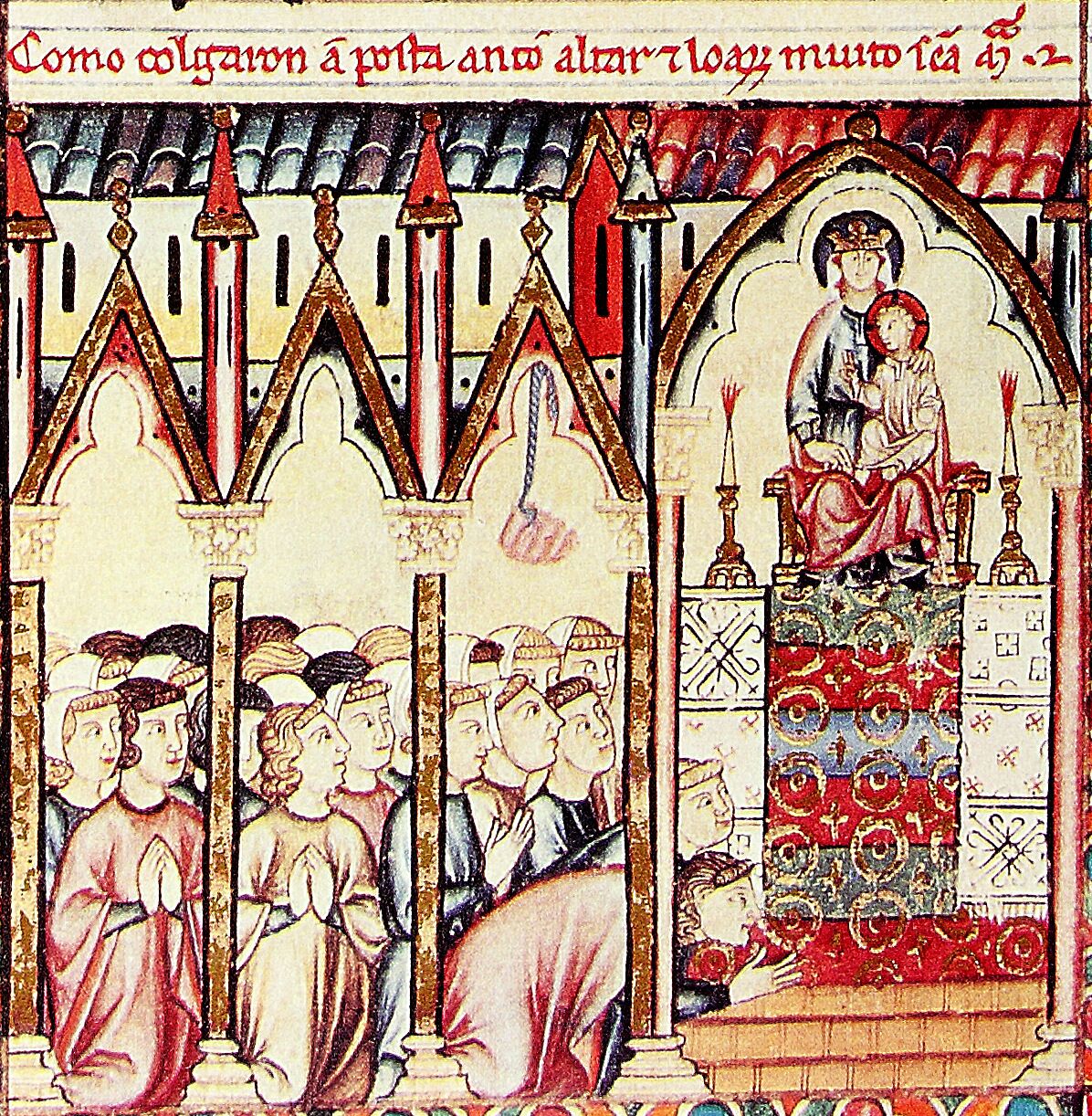
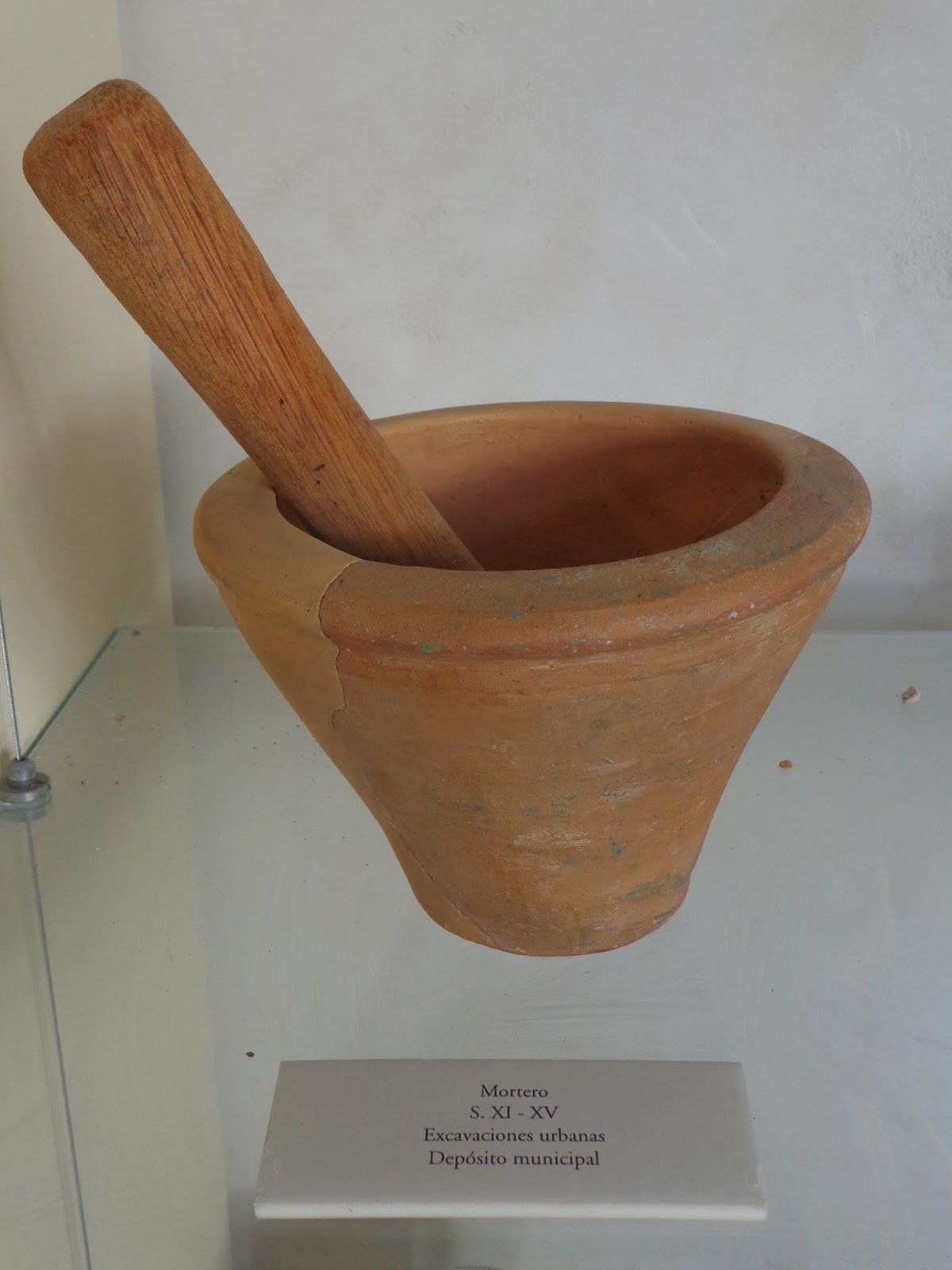
Fig. 11.63 Ceramic mortar from 11-15th century found during excavations in Málaga, source: http://legadonazari.blogspot.com/2014/01/ceramica-nazari.html?m=1
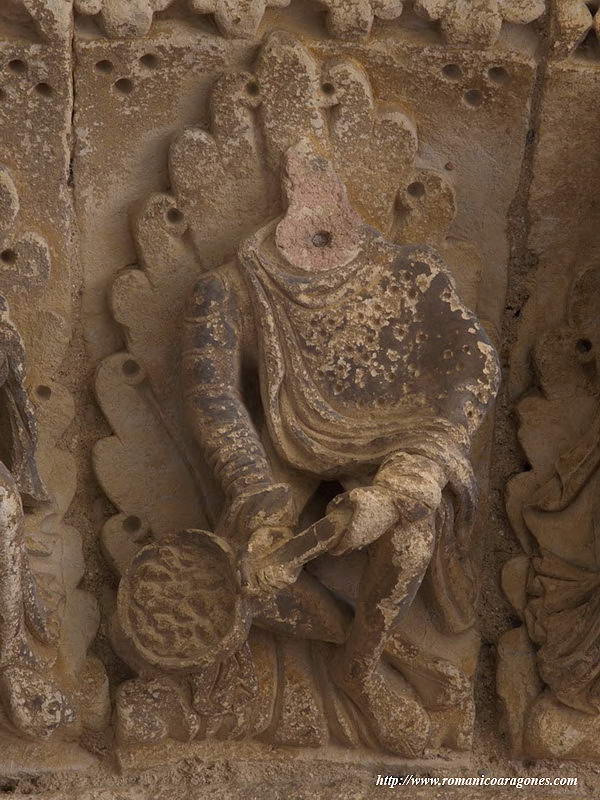
Fig. 11.64 Pan sculpted at Iglesia de Santiago, Carrión de los Condes, 1160-1180 AD.
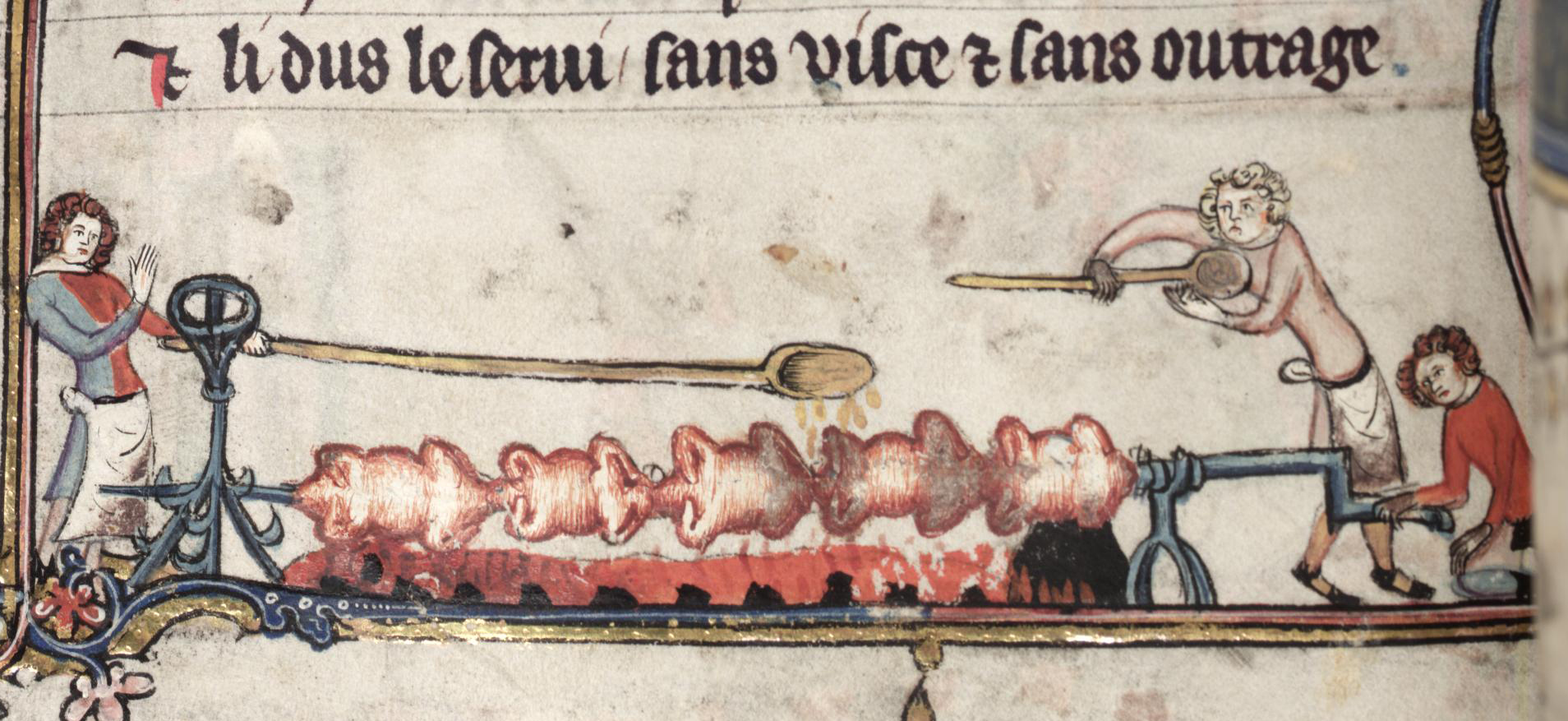
Fig. 11.65 1338-44, Bruges, Romance of Alexander: Chickens being roasted on a spit, The Bodleian Library Oxford MS 264 fol.170v
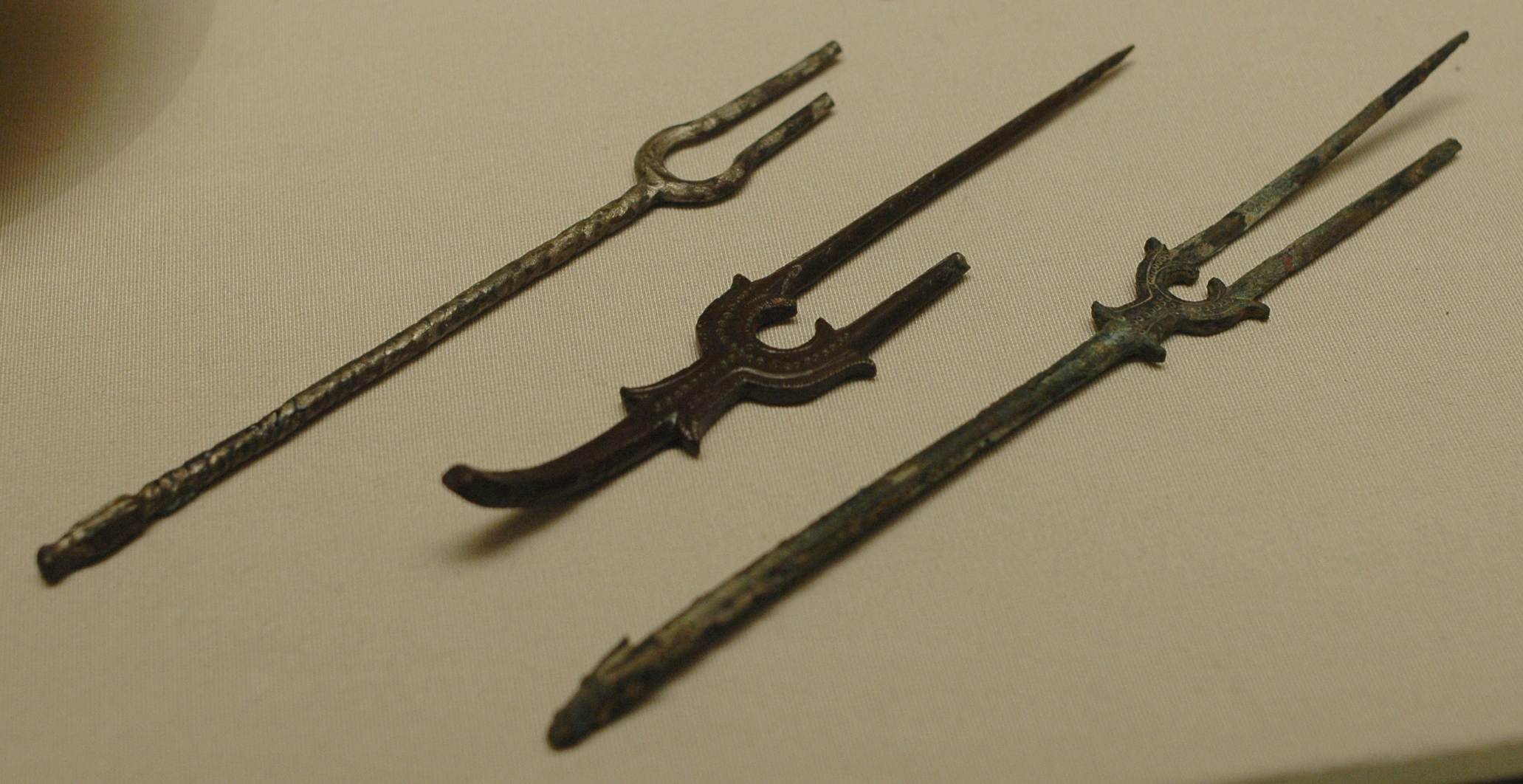
Fig. 11.66 Forks, 8th–9th centuries. Molded bronze with stamped decoration. Found in Susa (now in Iran). Musée du Louvre, Department of Islamic Art (MAO 421, MAO 422, MAO 431)
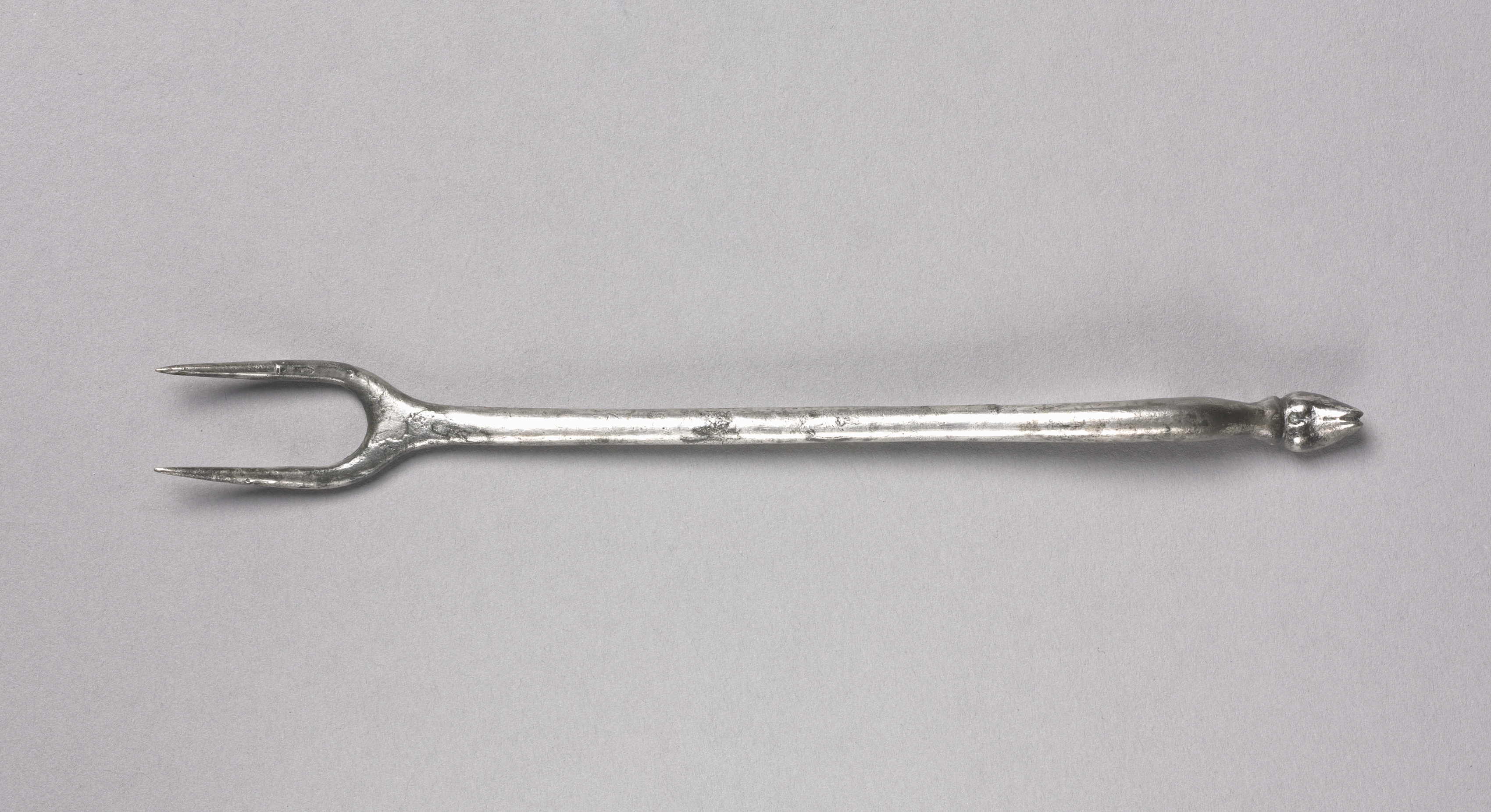
Fig. 11.67 Silver fork with Animal Hoof Finial (Ornament), Byzantium, Syria?, early Byzantine period, 4th century, Silver, Overall: 14.5 cm, Weight: 22.5g https://www.clevelandart.org/art/1952.7
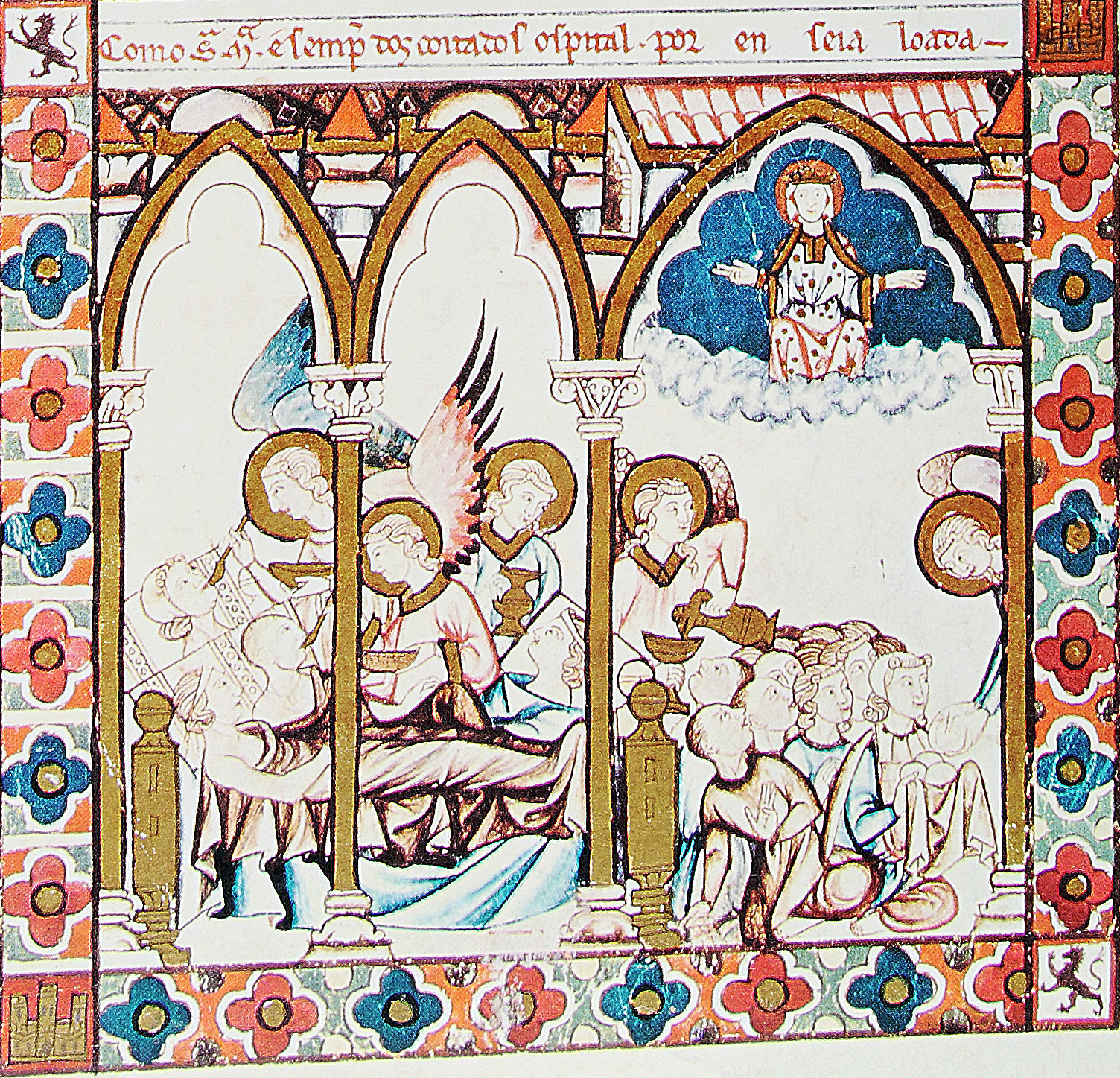
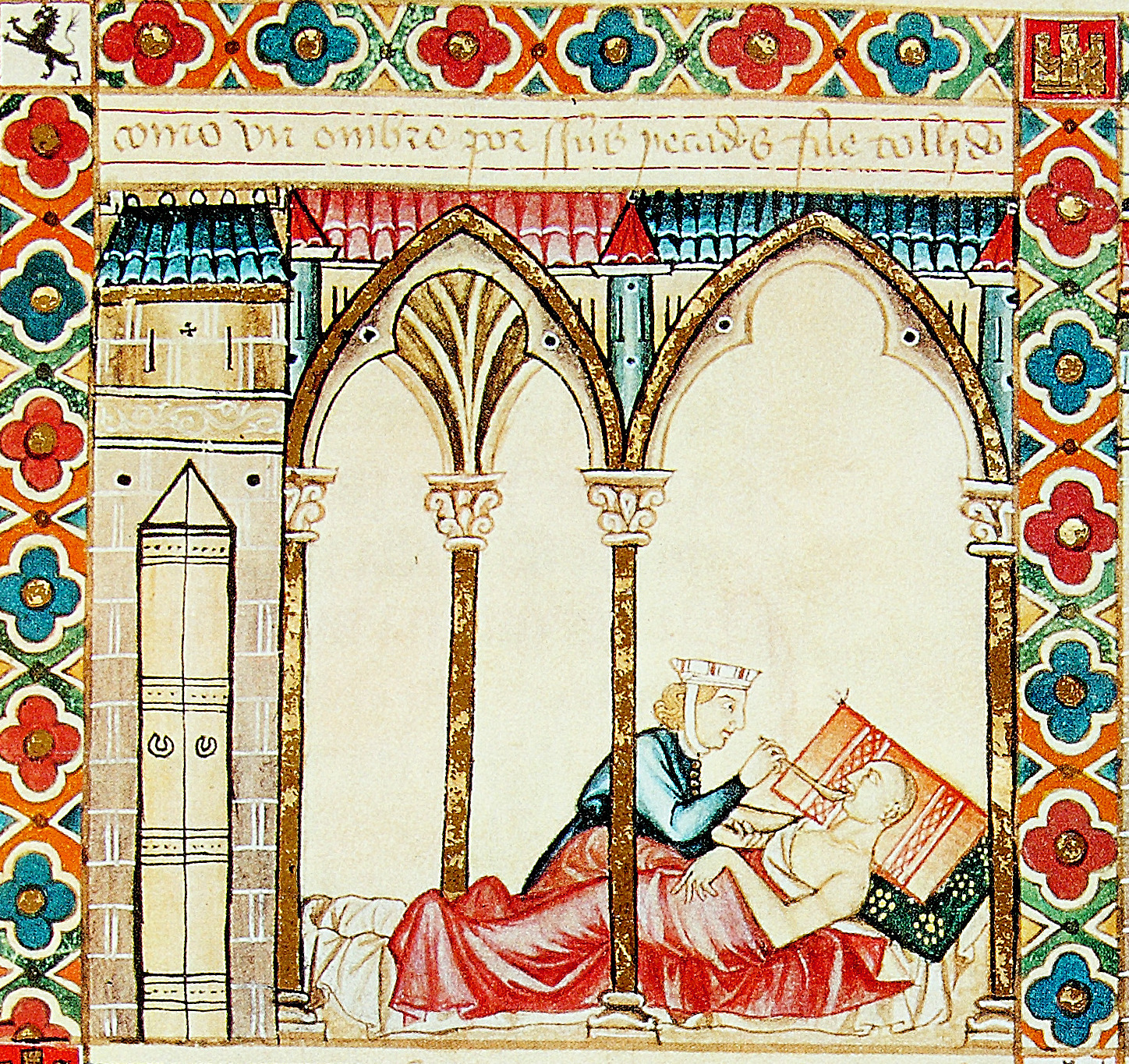
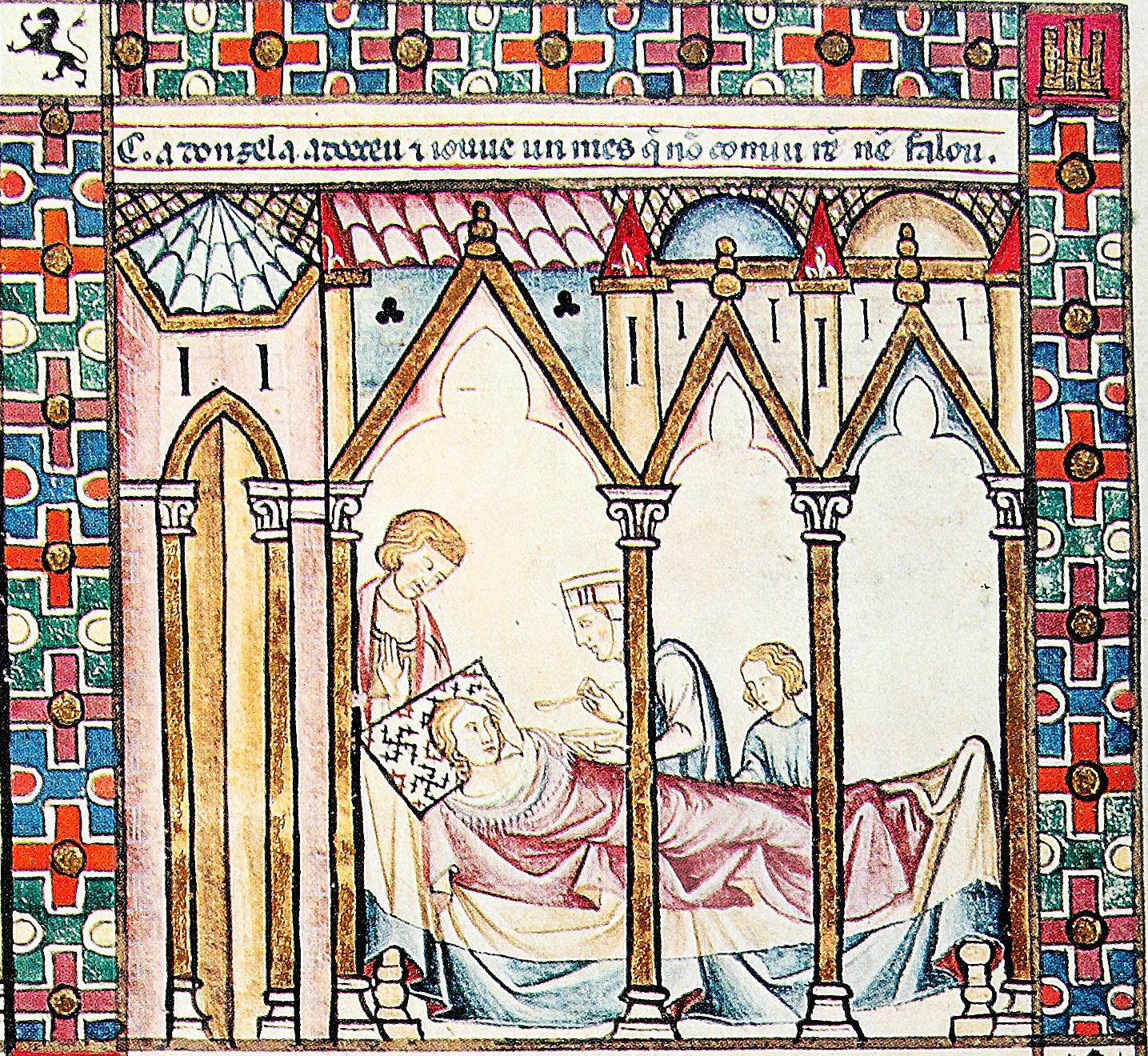
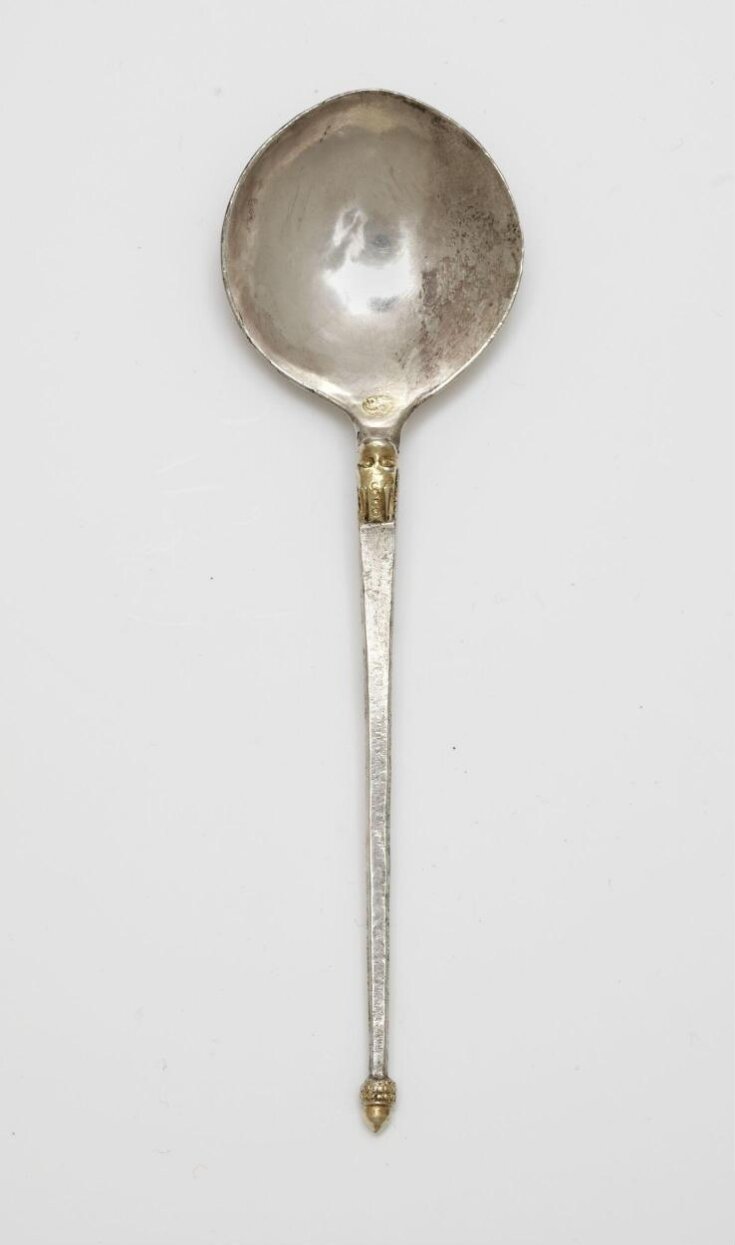
Fig. 11.72 Silver spoon, France, Rouen, 1350. V&A Museum Accession Number 110-1865
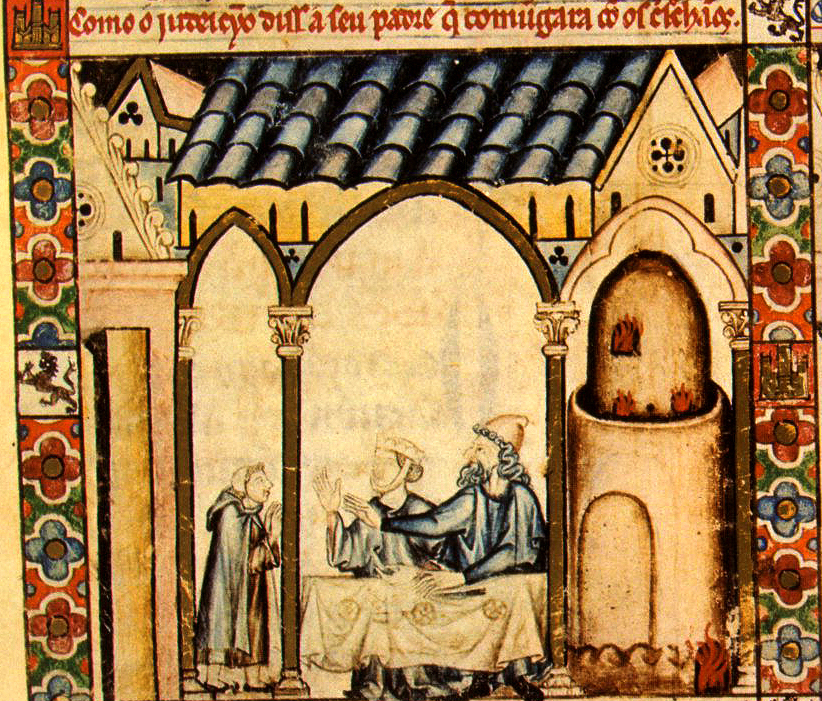
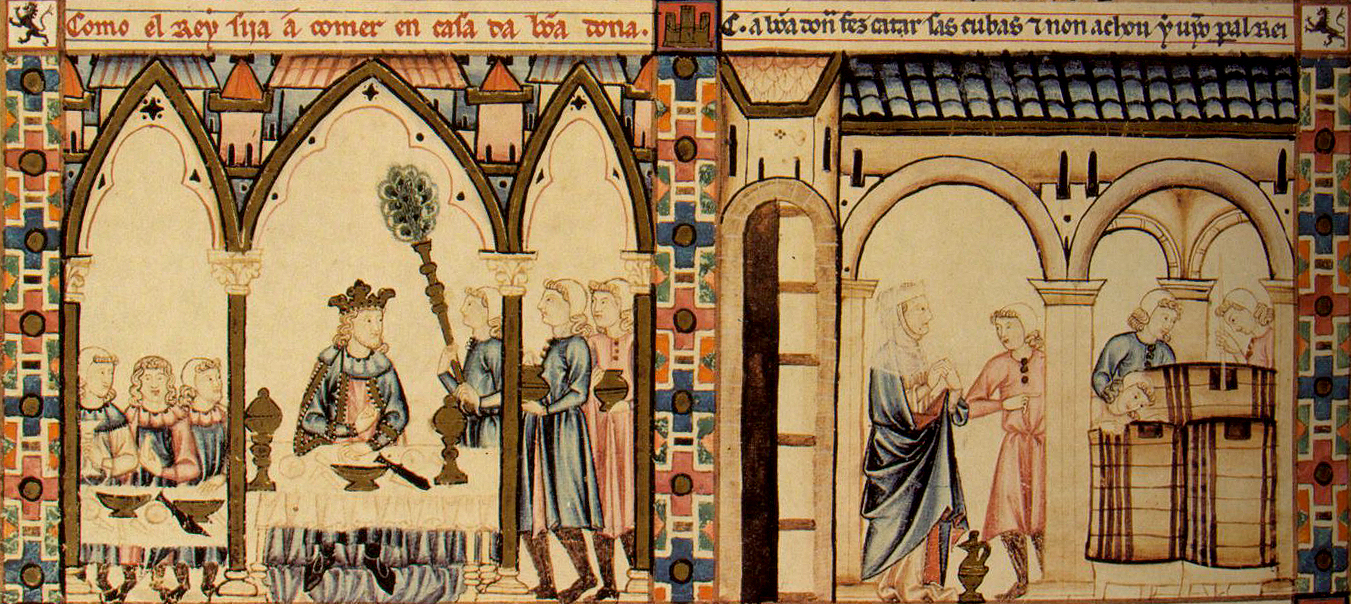
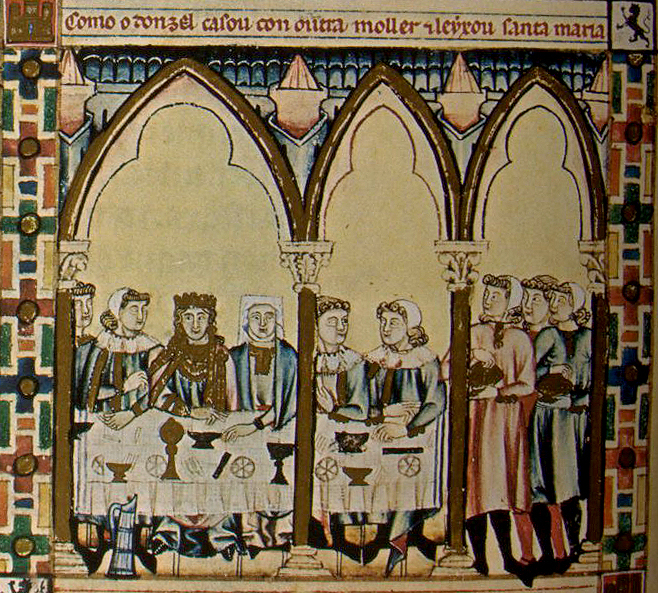
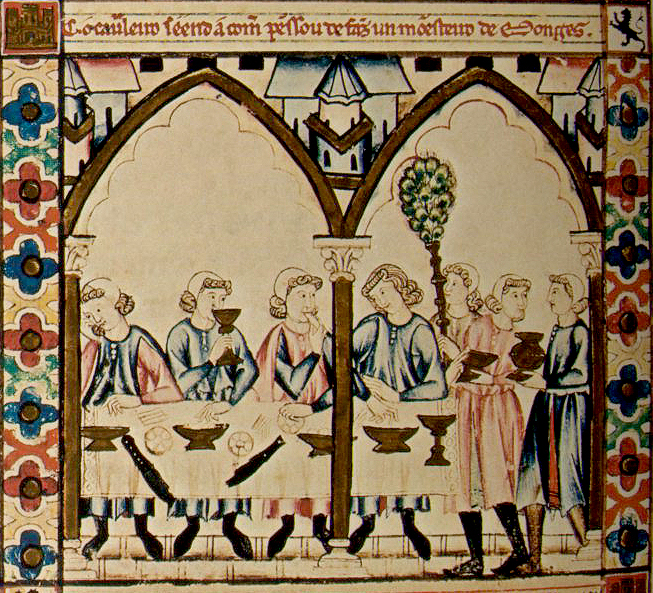
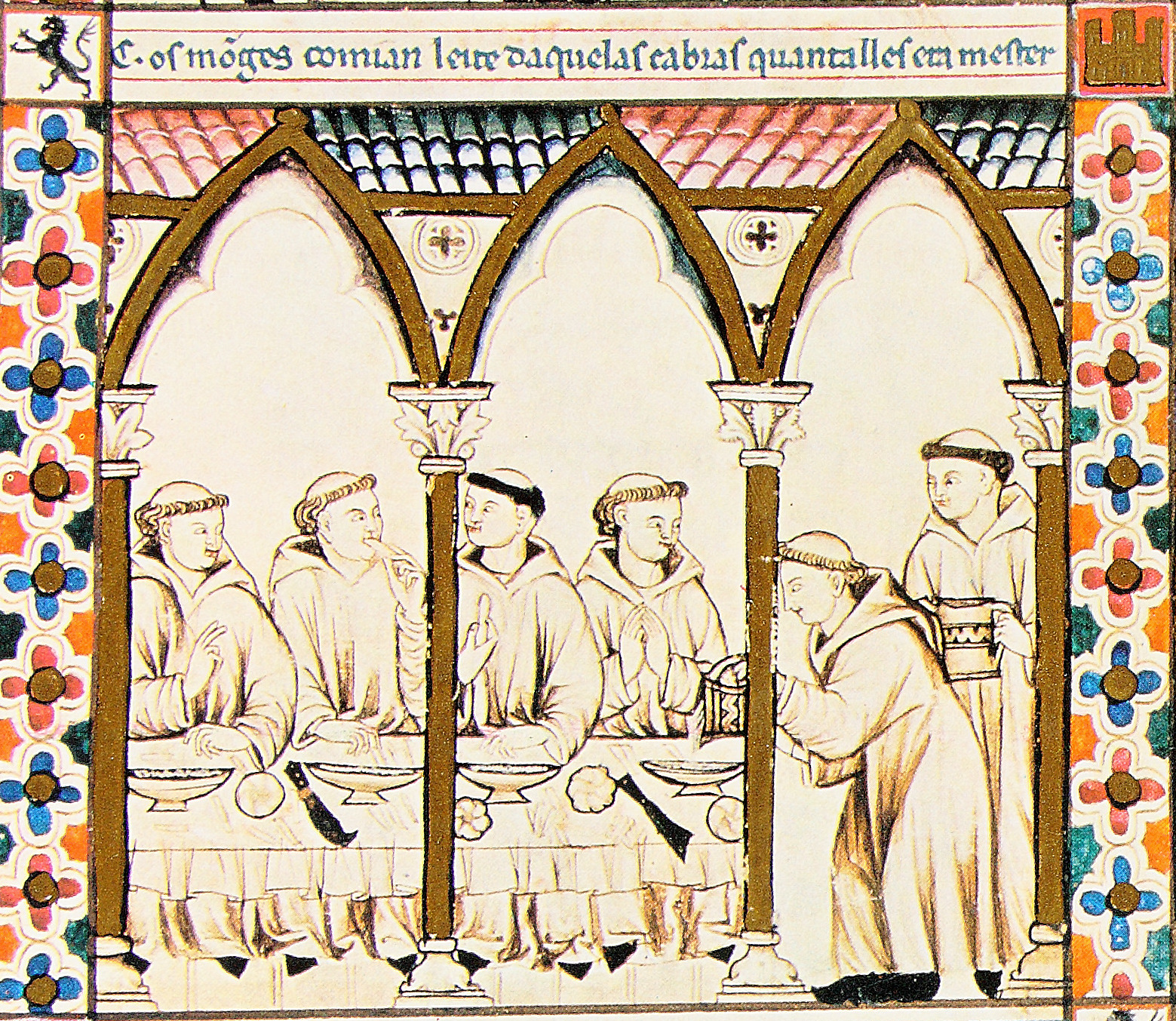
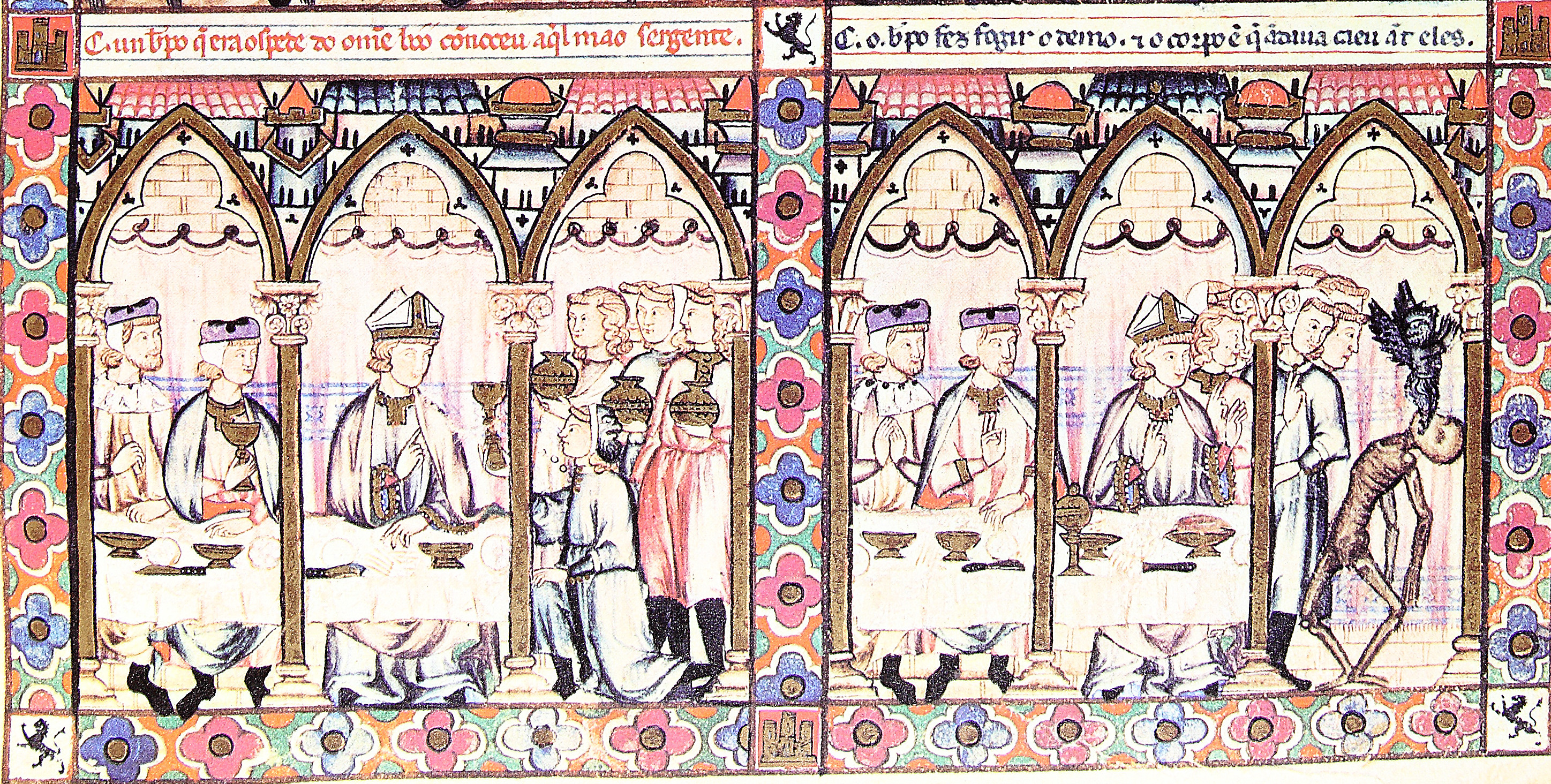
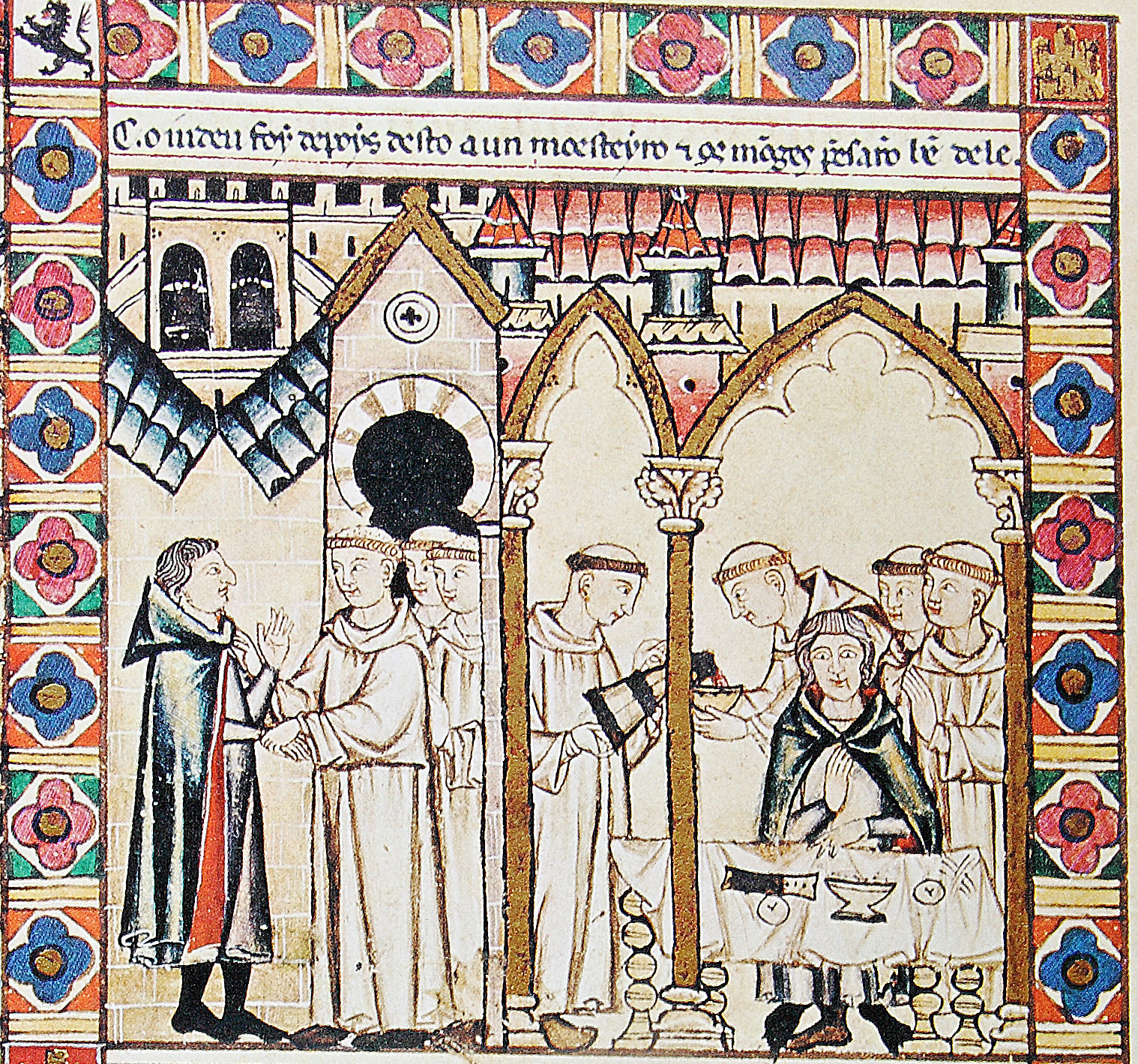
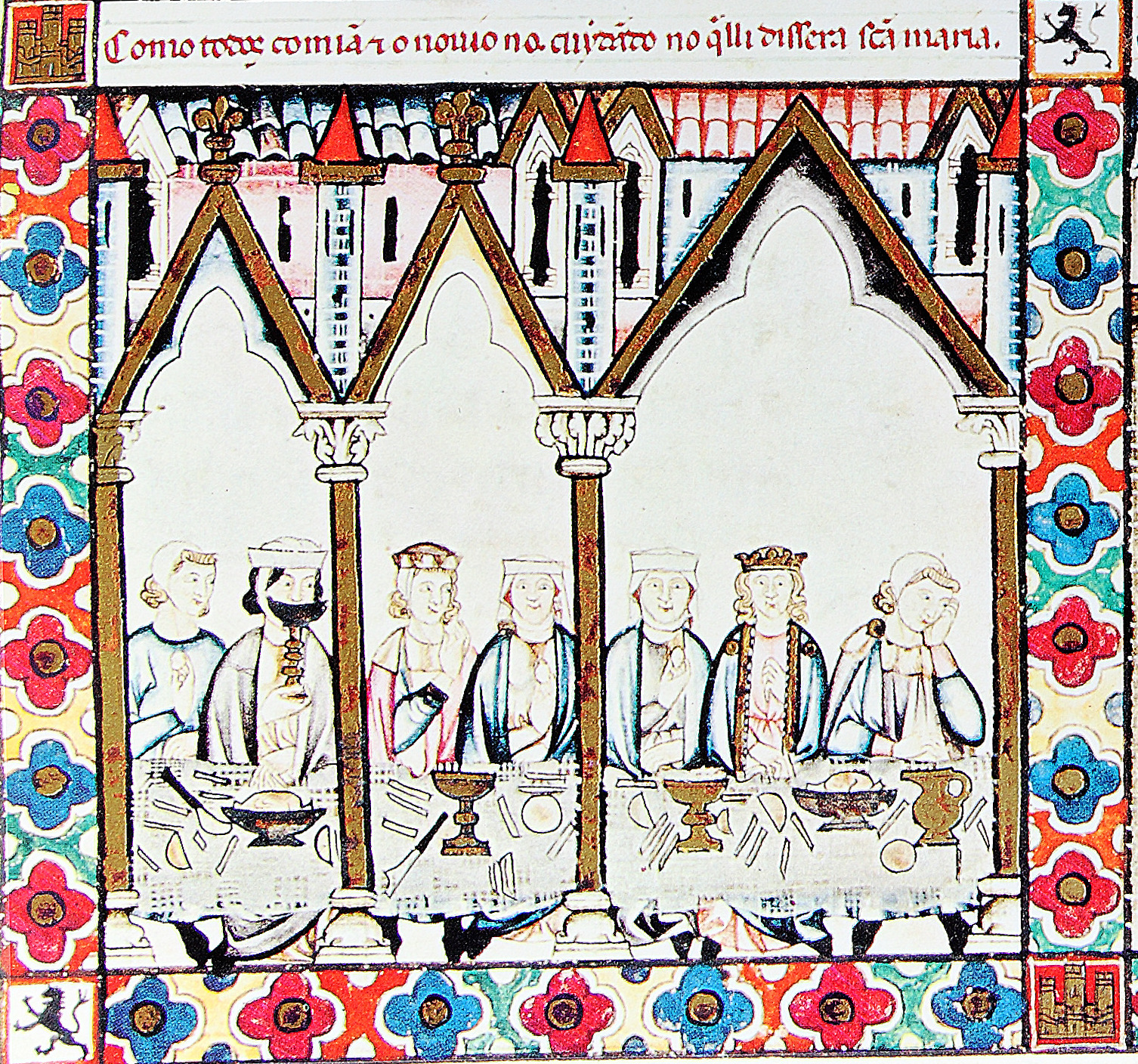
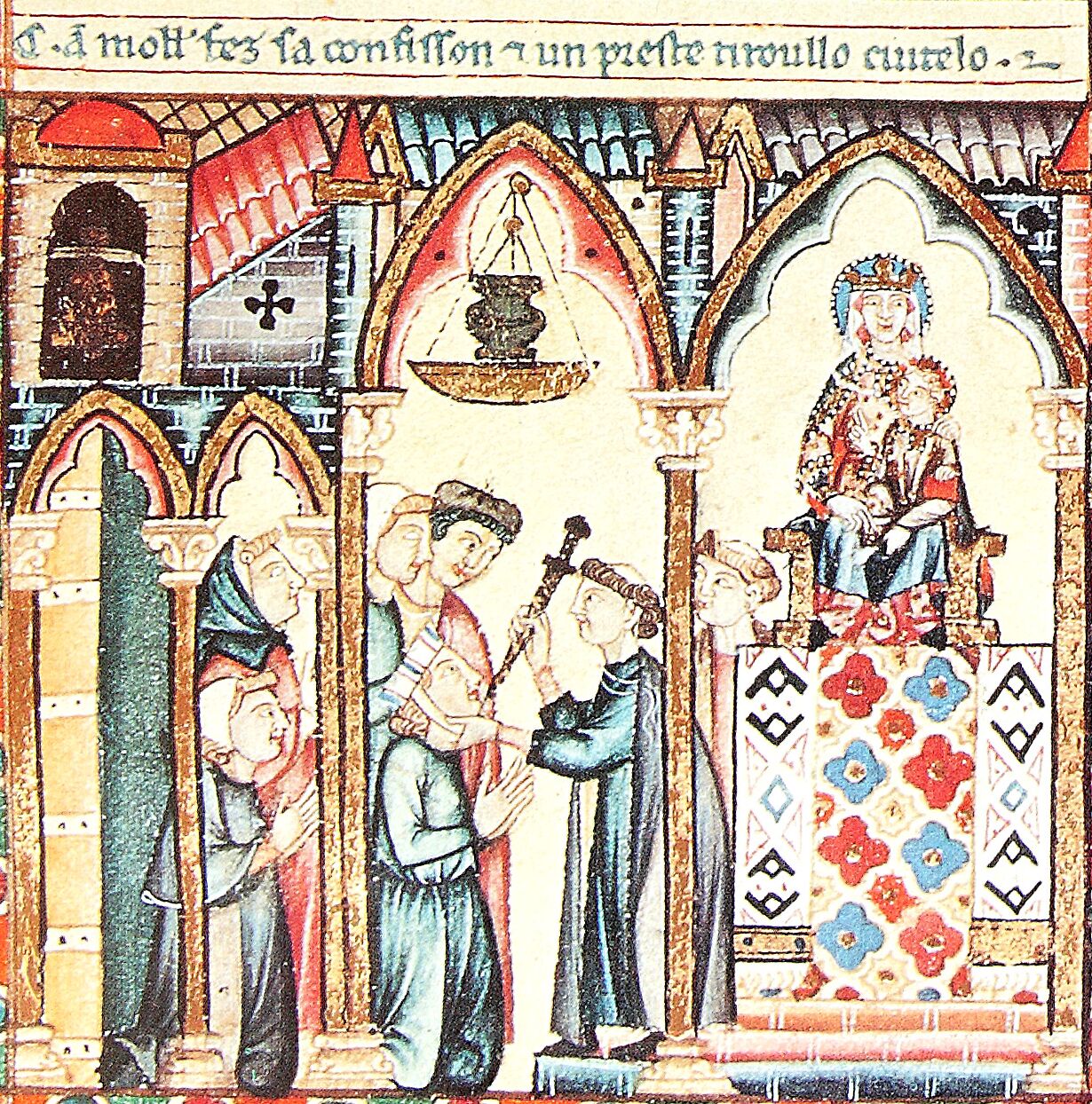
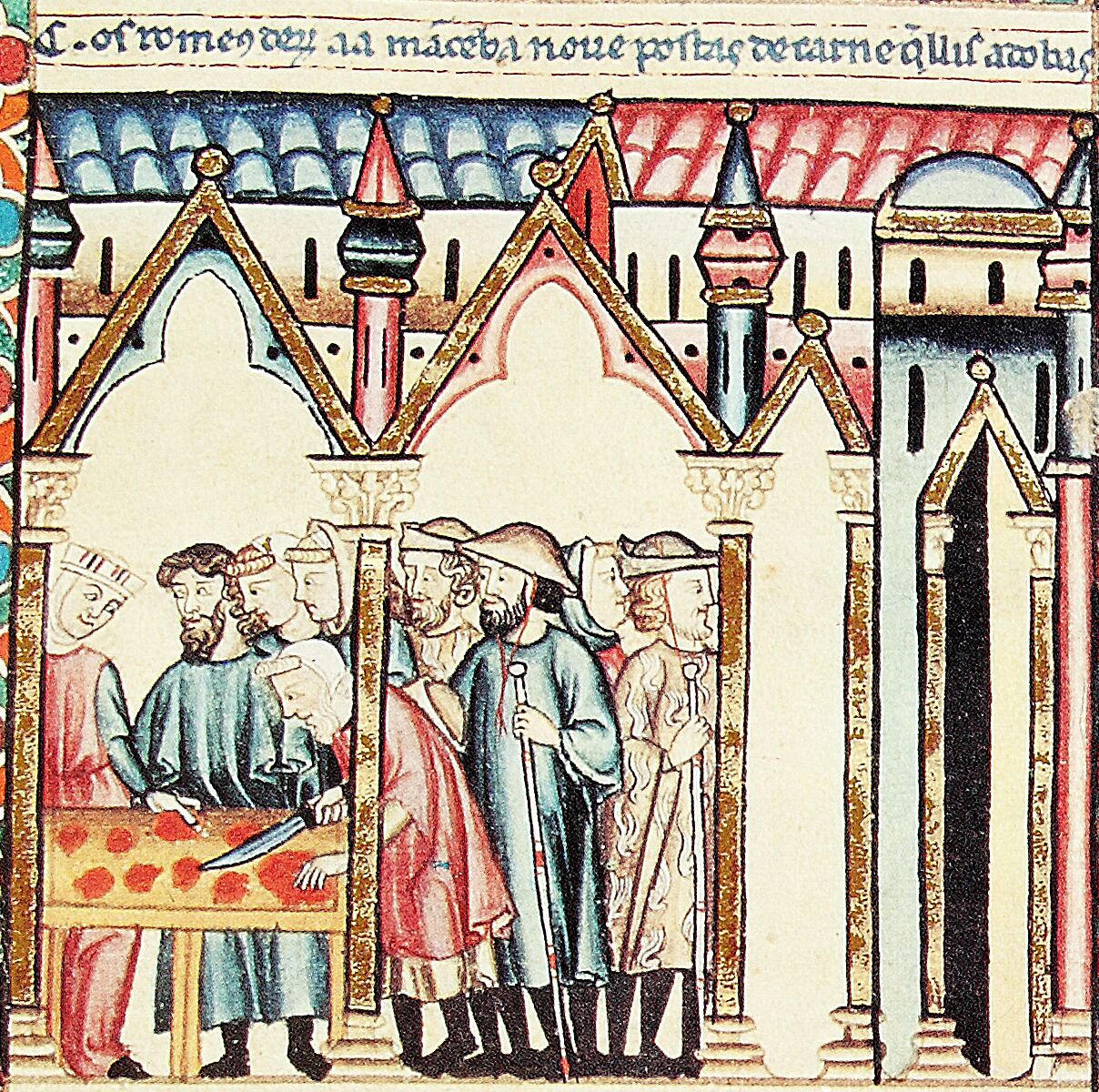
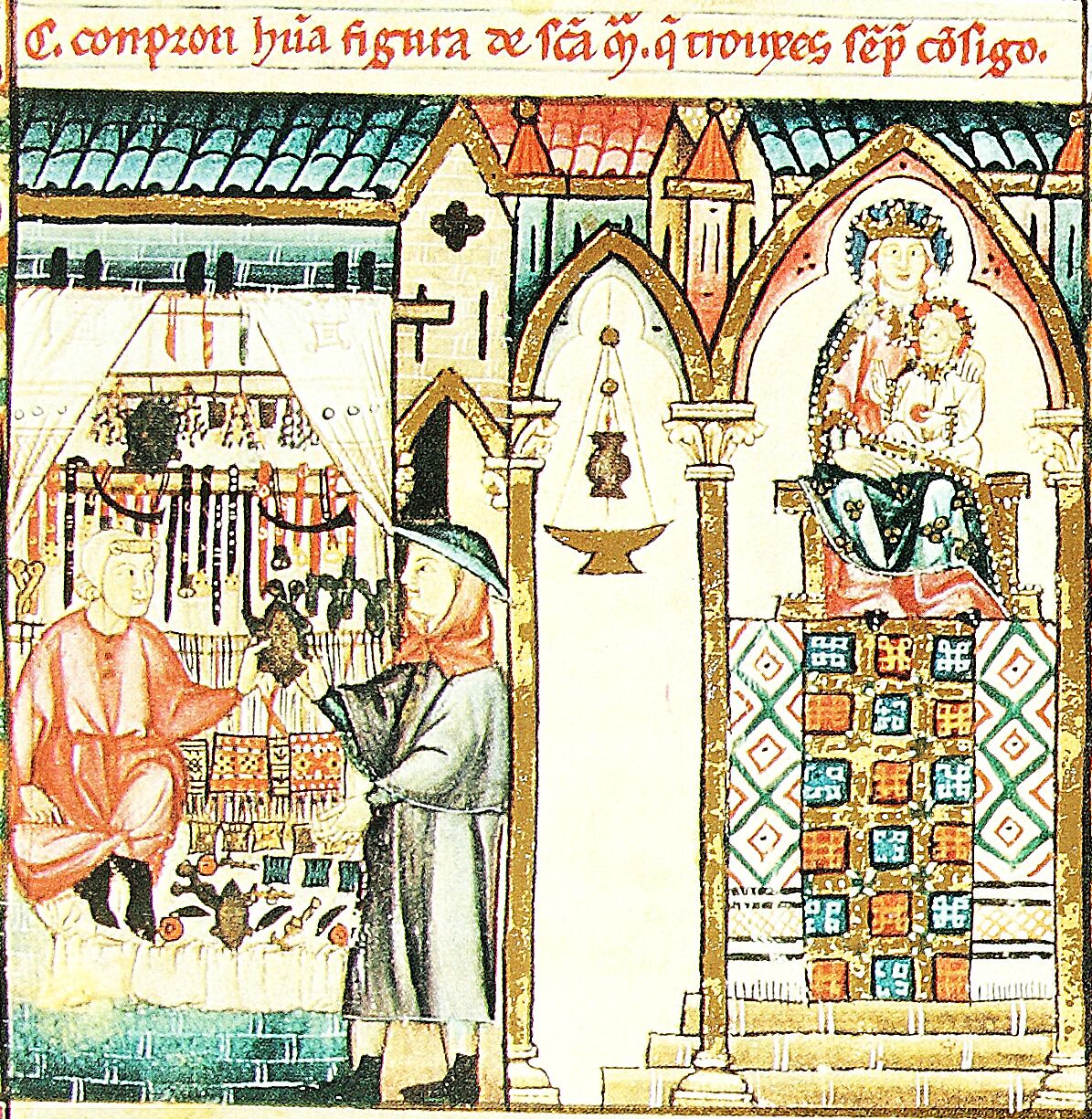
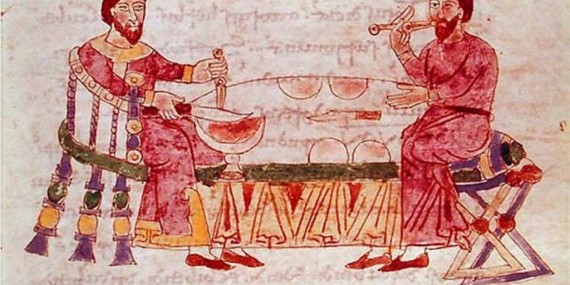
Fig. 11.84 [LDFF] Rabanus Maurus “De Universo”, Biblioteca dell’Abbazia, Montecassino
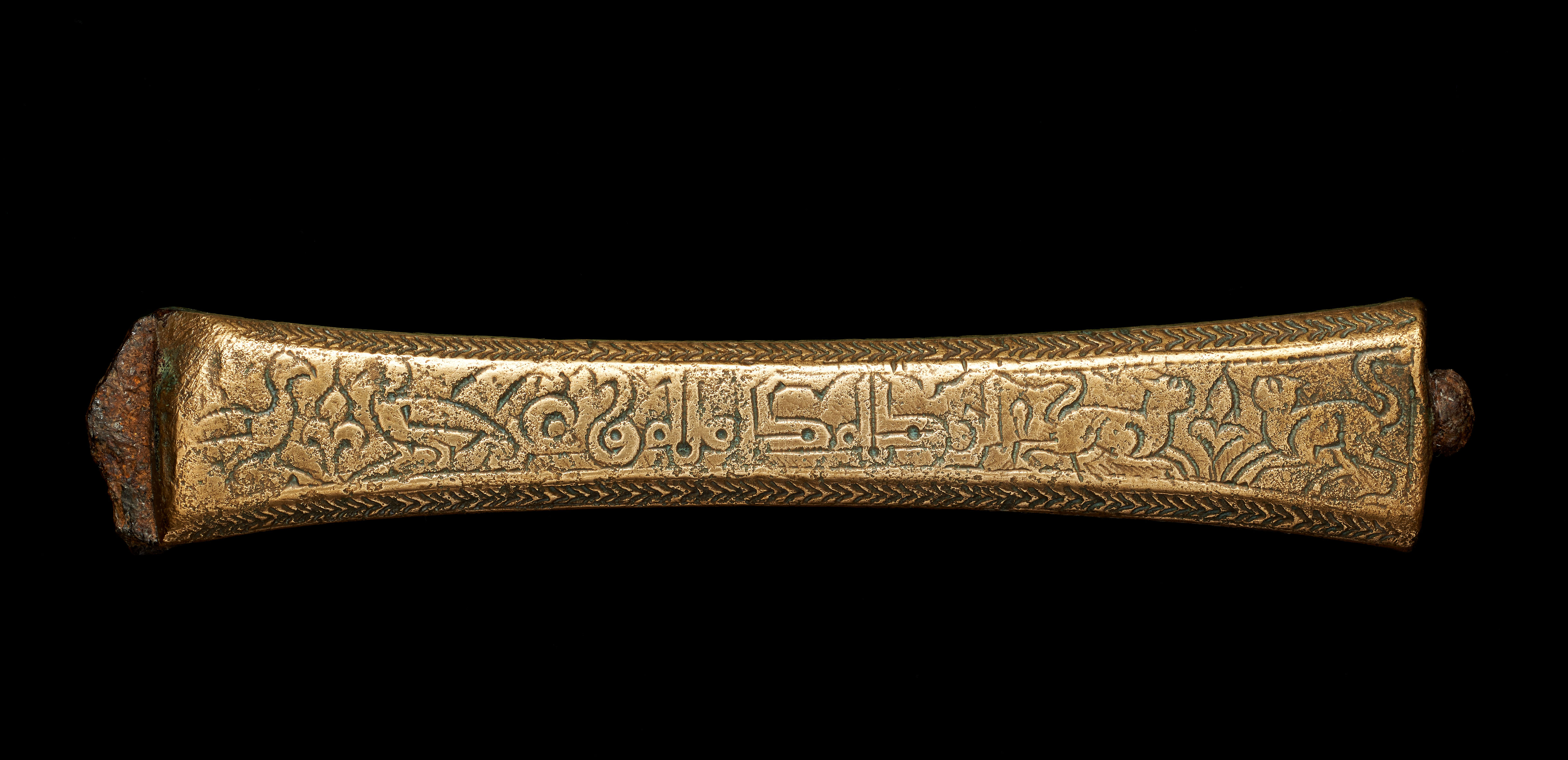
Fig. 11.85 Knife handle, cast and engraved bronze, Spain, Cordoba; 10th century, H:1.7; B: 1; L: 9.3 cm, David Museum Inv. no. 11/2001, http://www.davidmus.dk/en/collections/islamic/materials/metal/art/11-2001
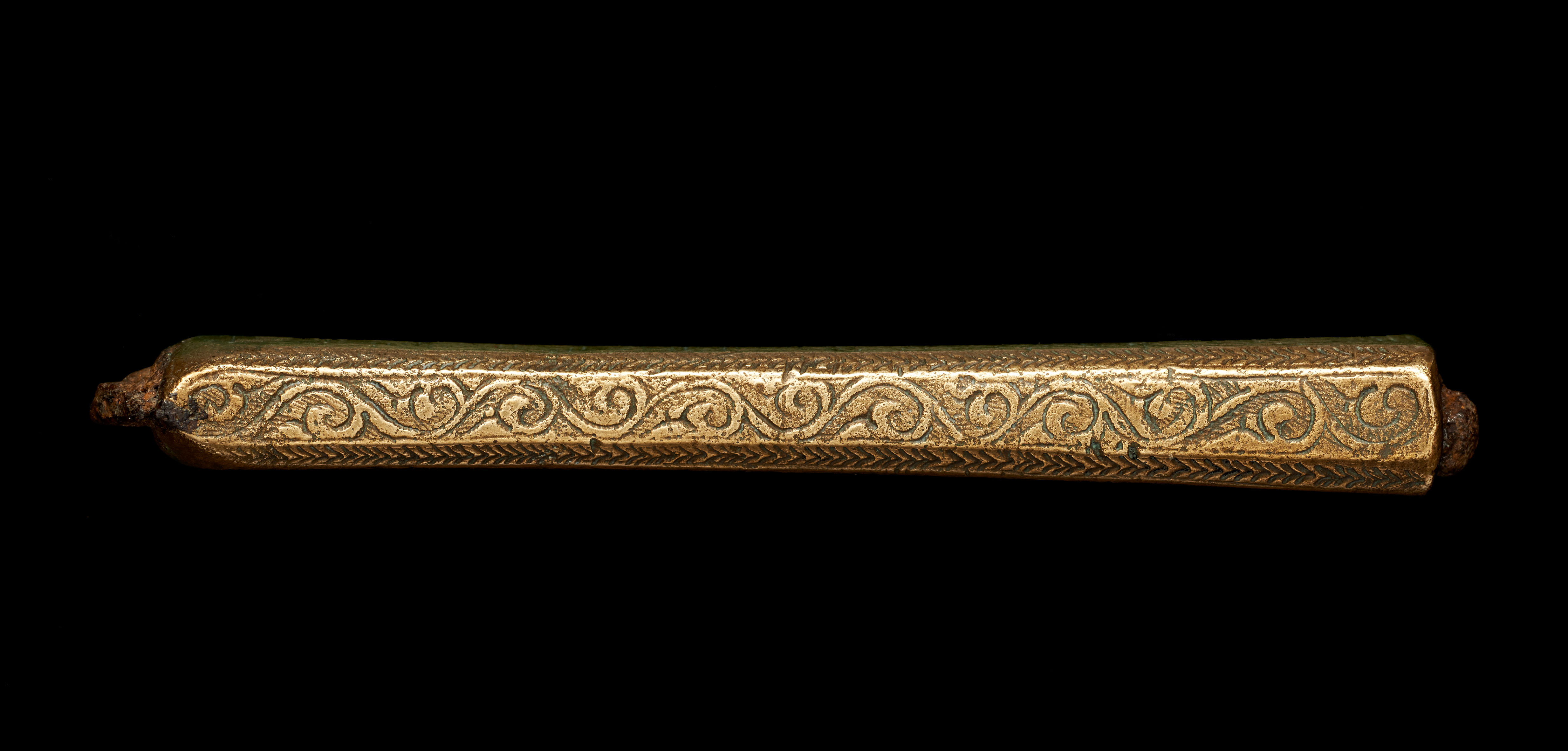
Fig. 11.86 Knife handle, cast and engraved bronze, Spain, Cordoba; 10th century, H:1.7; B: 1; L: 9.3 cm, David Museum Inv. no. 11/2001, http://www.davidmus.dk/en/collections/islamic/materials/metal/art/11-2001
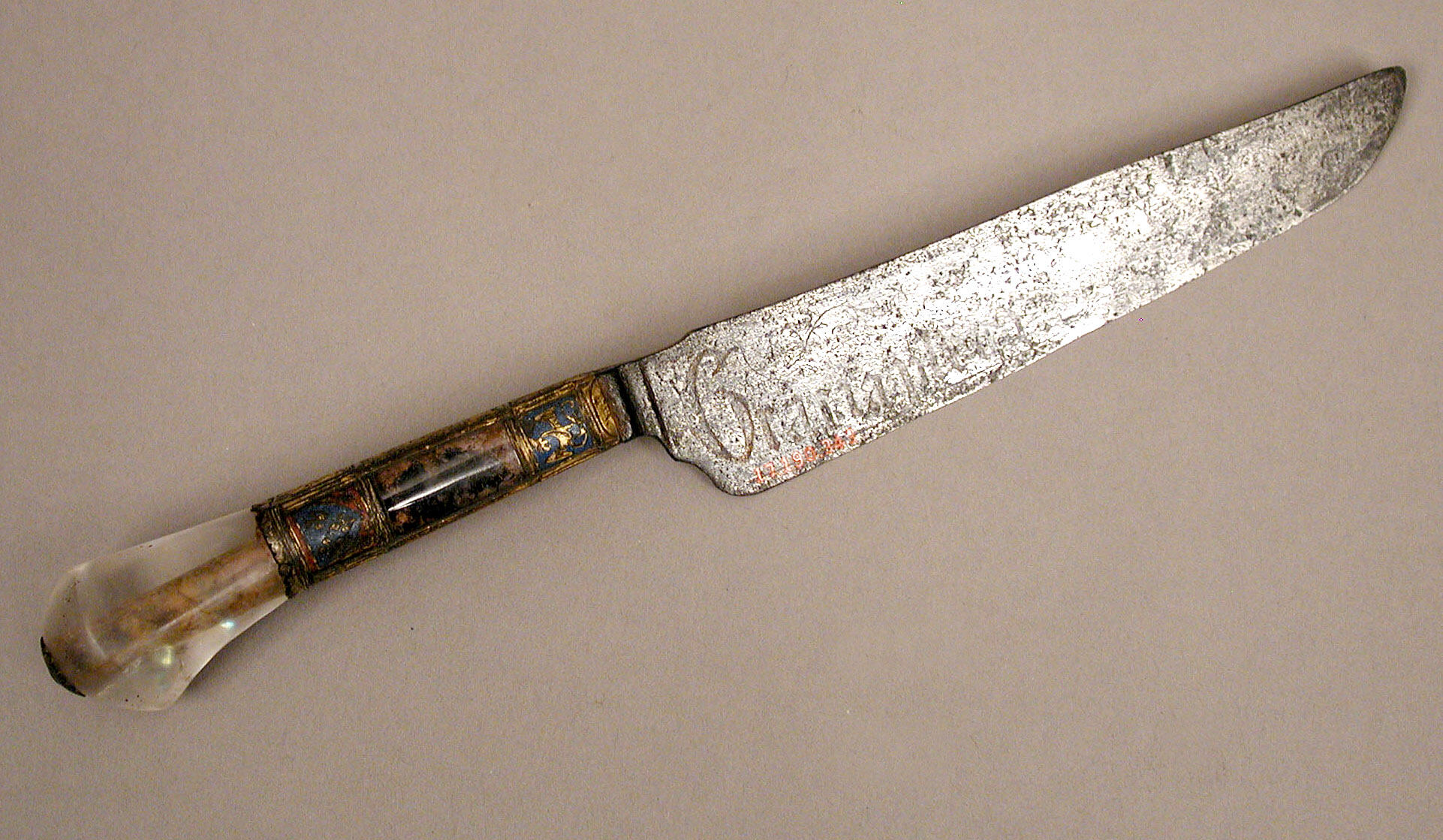
Fig. 11.87 Knife, French or Spanish, ca. 1300–1350, Steel blade, crystal handle, copper-gilt mountings 26 x 4.4 x 2.5 cm, Metropolitan Museum of Arts Accession Number: 17.190.343, https://www.metmuseum.org/art/collection/search/464323
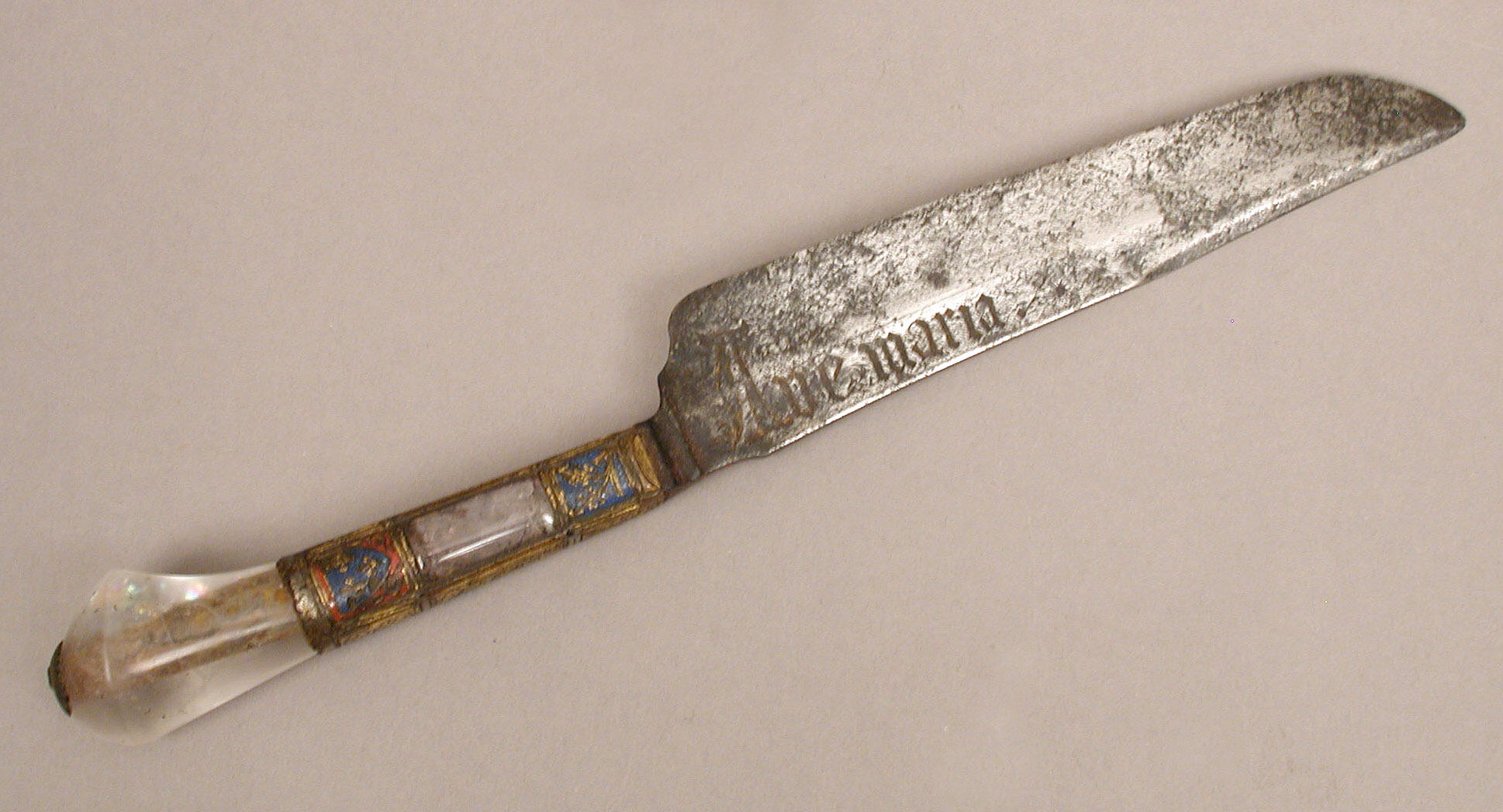
Fig. 11.88 Knife, French or Spanish, ca. 1300–1350, Steel blade, crystal handle, copper-gilt mountings 26 x 4.4 x 2.5 cm, Metropolitan Museum of Arts Accession Number: 17.190.343, https://www.metmuseum.org/art/collection/search/464323
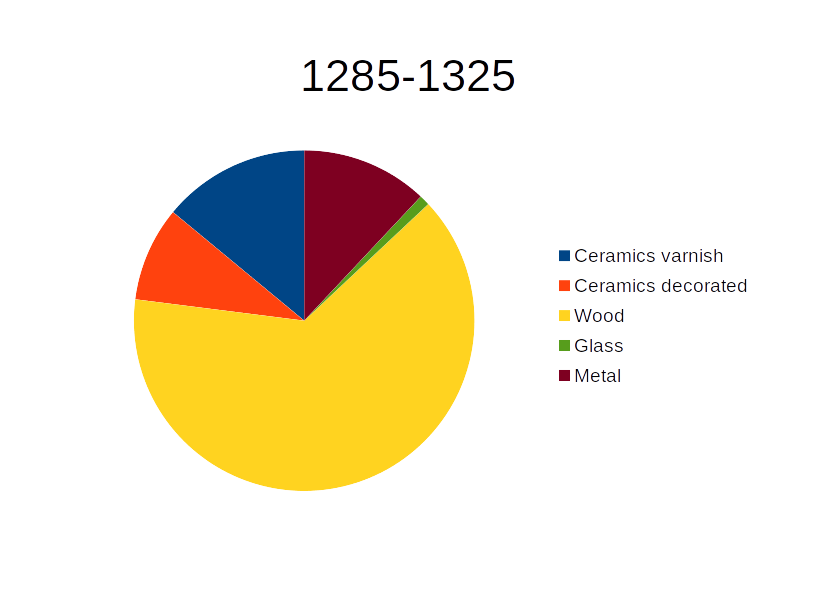
Fig. 11.89 Statistics of materials for dining utensils according to [ELUM] .
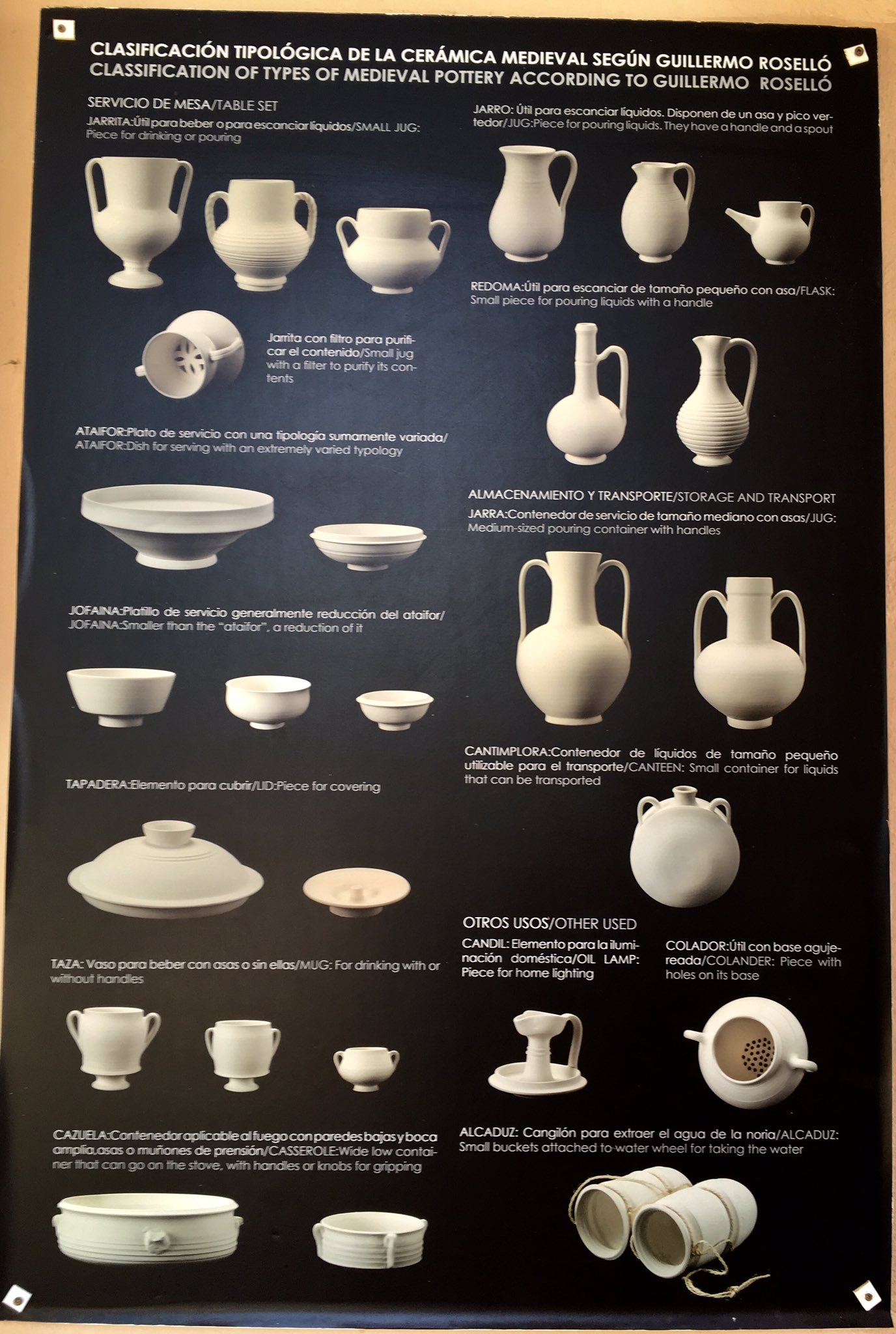
Fig. 11.90 Typological classification of Spanish medieval pottery according to Guillermo Roselló Ramonell, Exposición de Alfarería en la Alcazaba de Málaga. - Cerámica San Telmo.
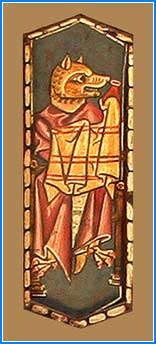
Fig. 11.91 Ceiling of Teruel cathedral, 1275-1300, tabicas 0305, towel and perfume bottle.
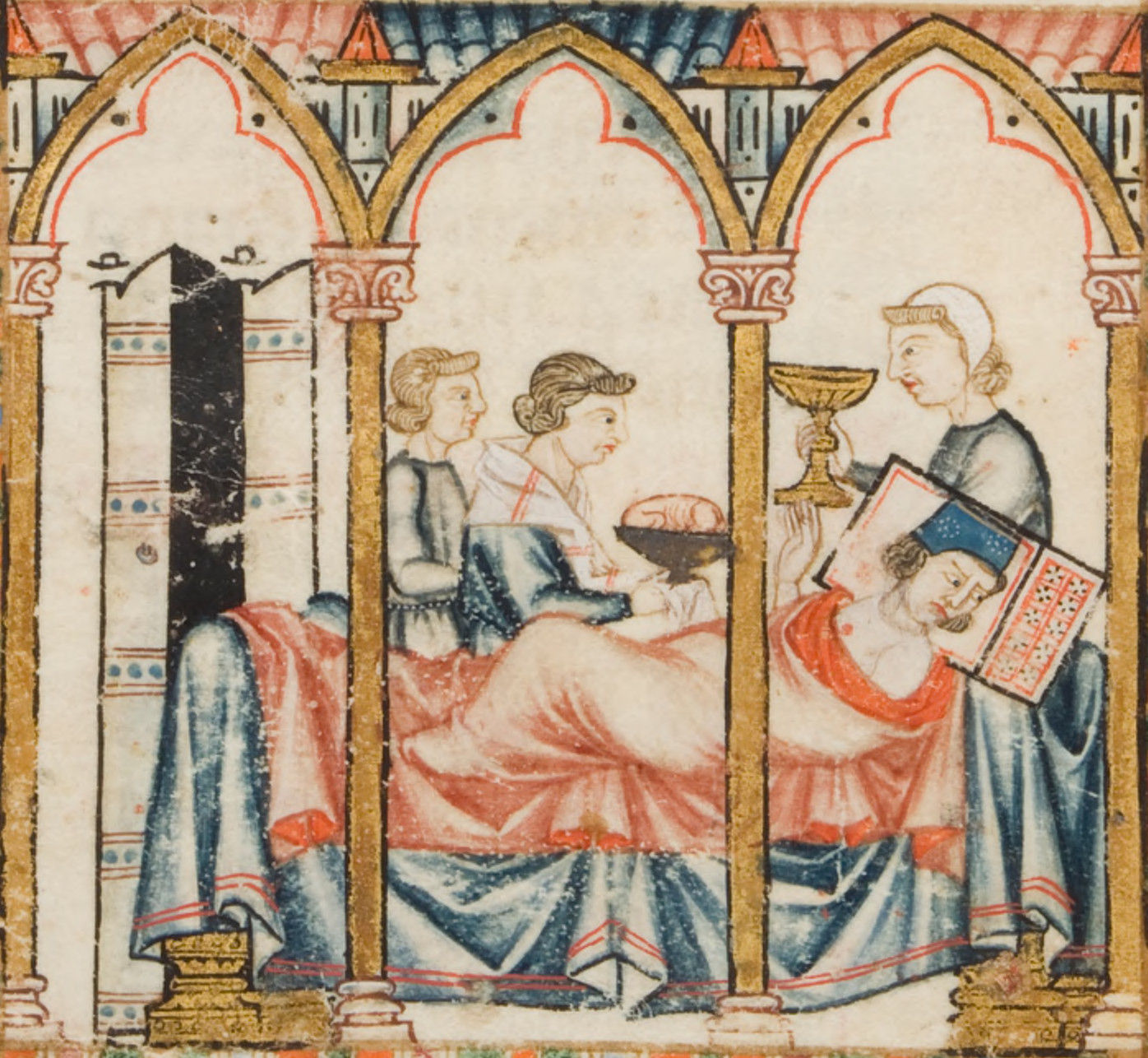
Fig. 11.92 [CSMF], page 119, cantiga 312, patterned towel worn around servants’ neck.
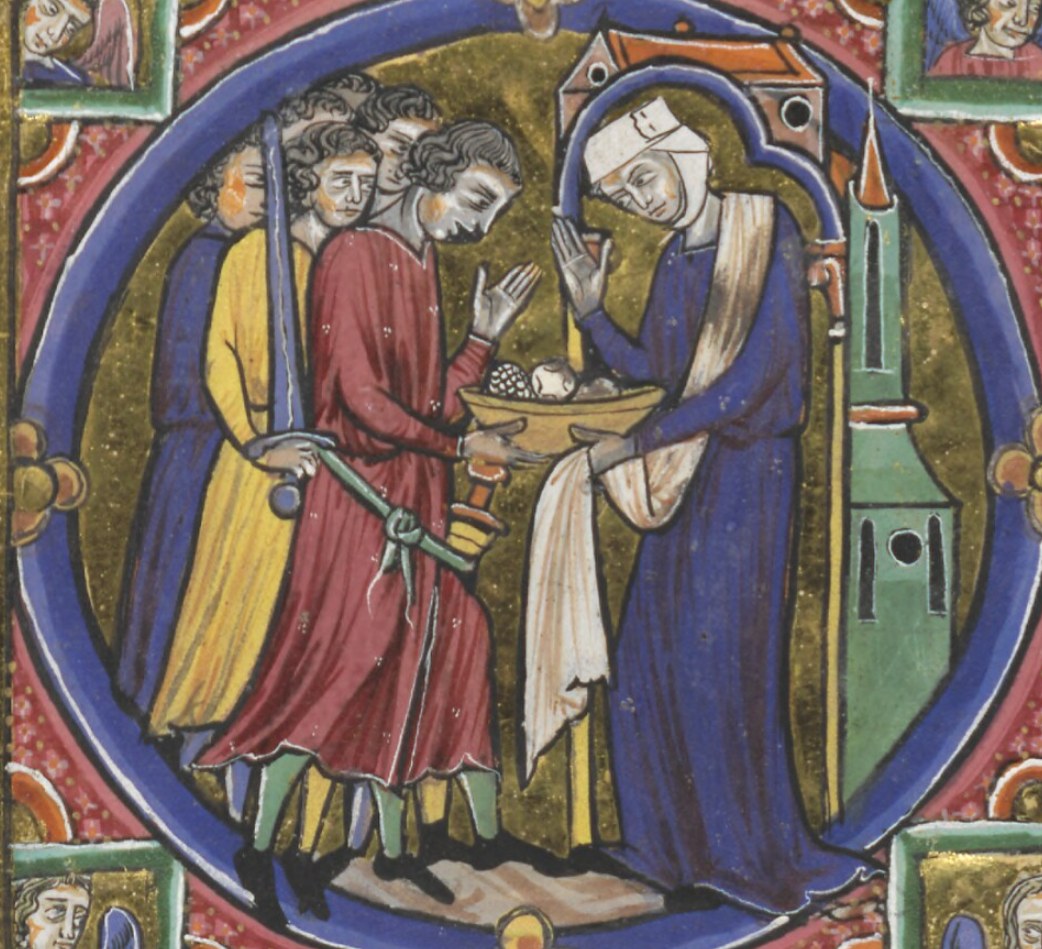
Fig. 11.93 Towel depicted in 1220-1230, France, ÖNB Han.Cod.2554 Bible Moralisée,
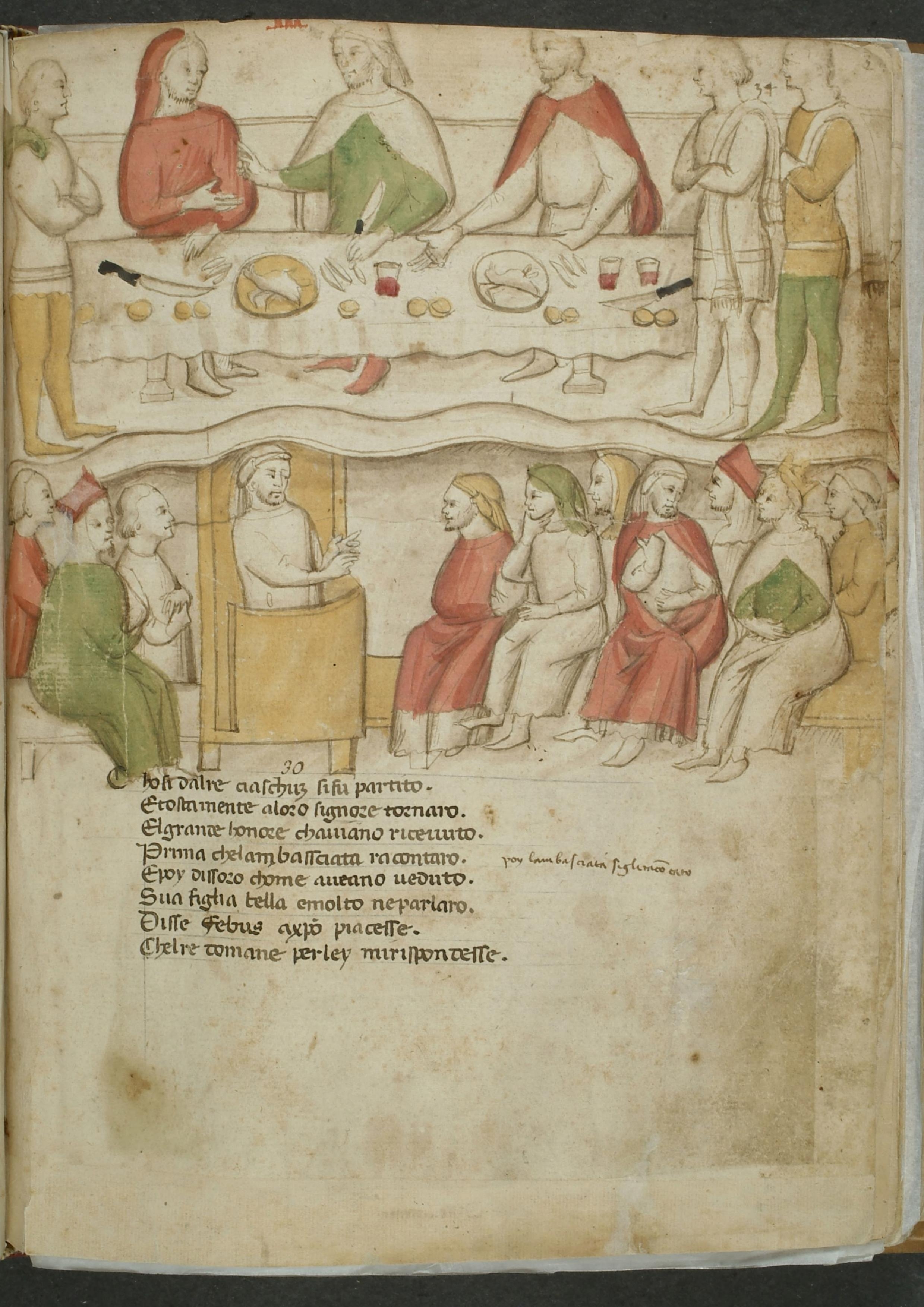
Fig. 11.94 1355 Florence, BNCF Banco rari 45, fol.76, towel around neck.
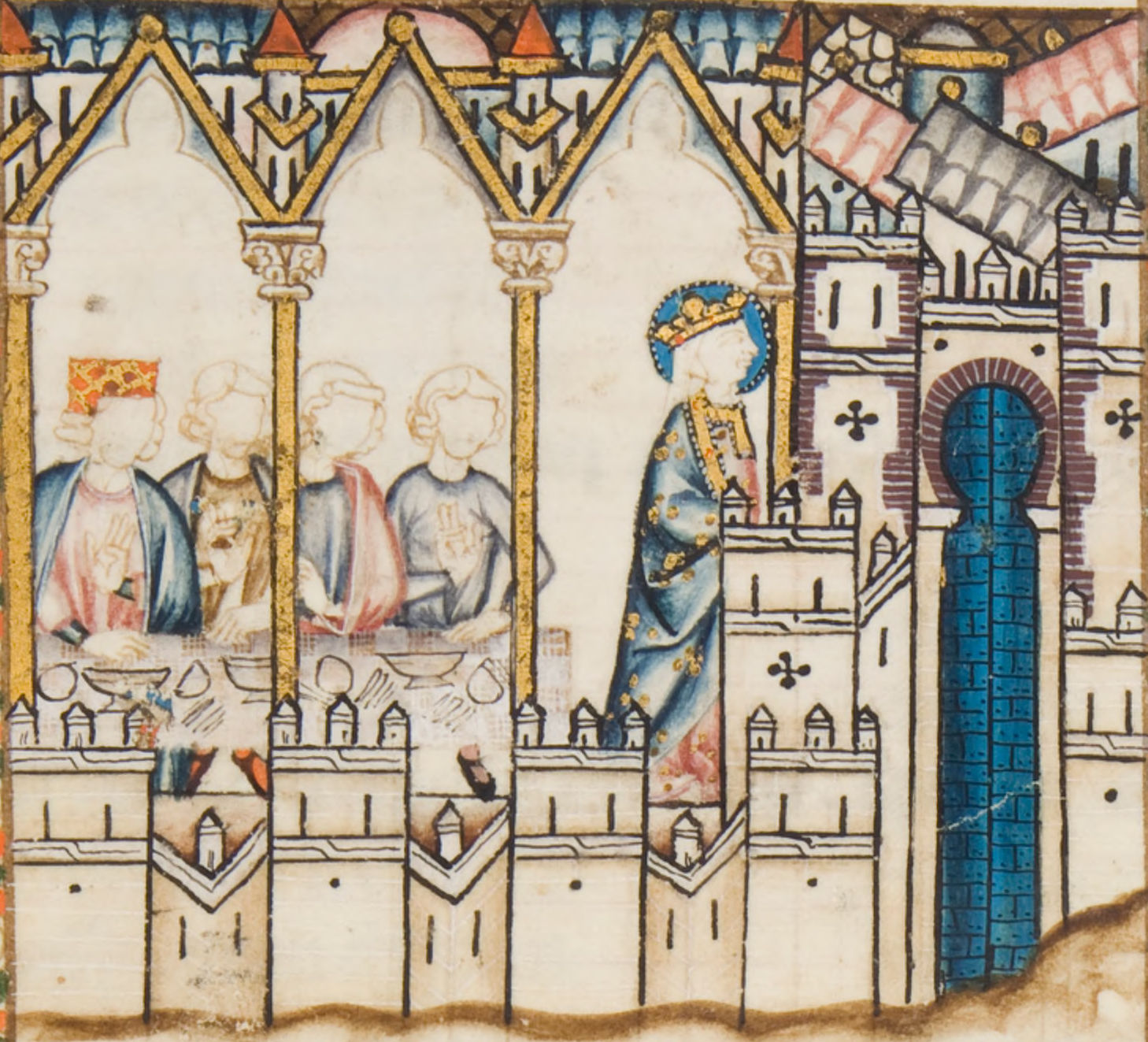
Fig. 11.95 [CSMF], page 140, cantiga 245-1, checked pattern table cloth.
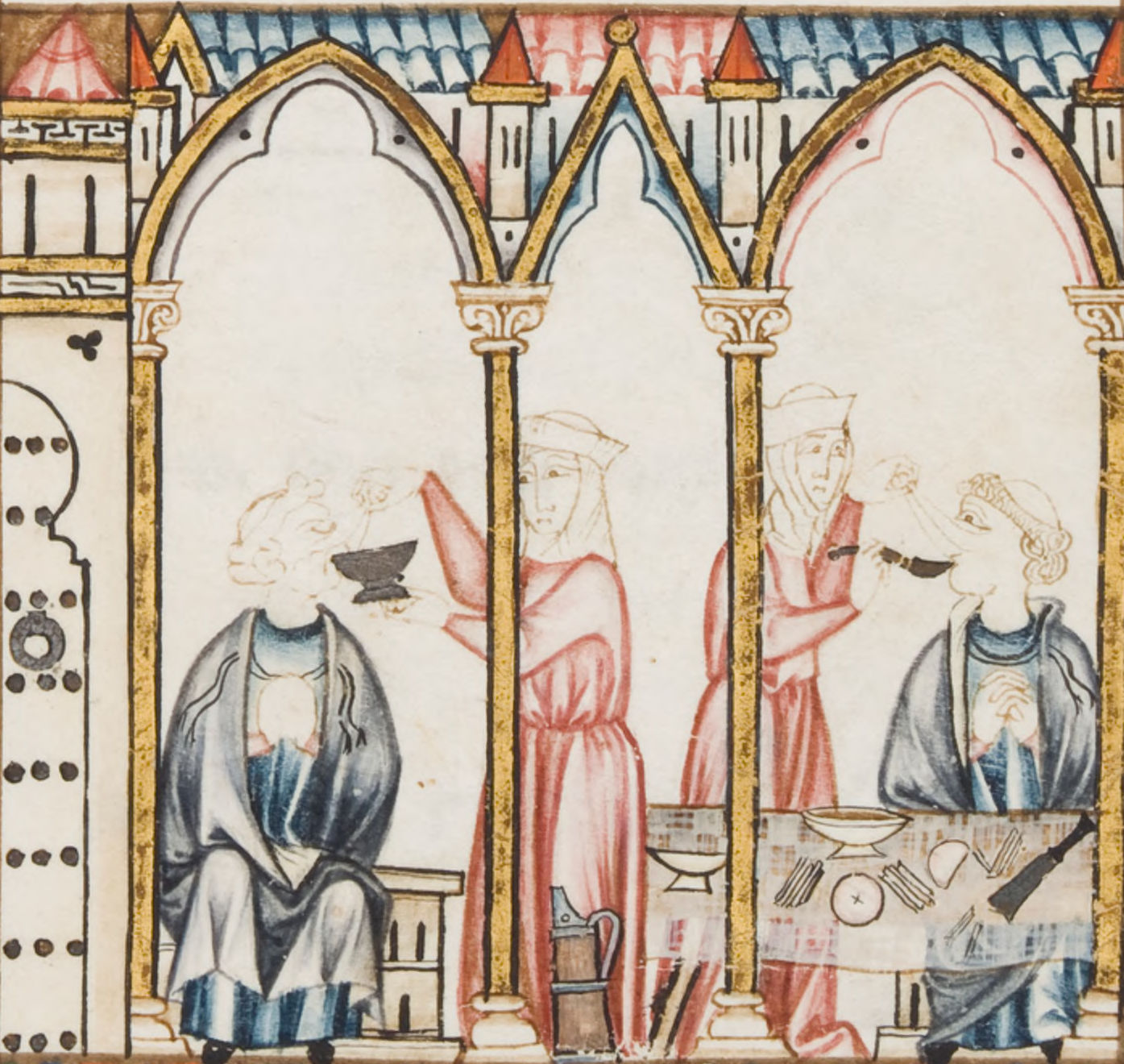
Fig. 11.96 [CSMF], page 130, cantiga 318-6, checked pattern table cloth.
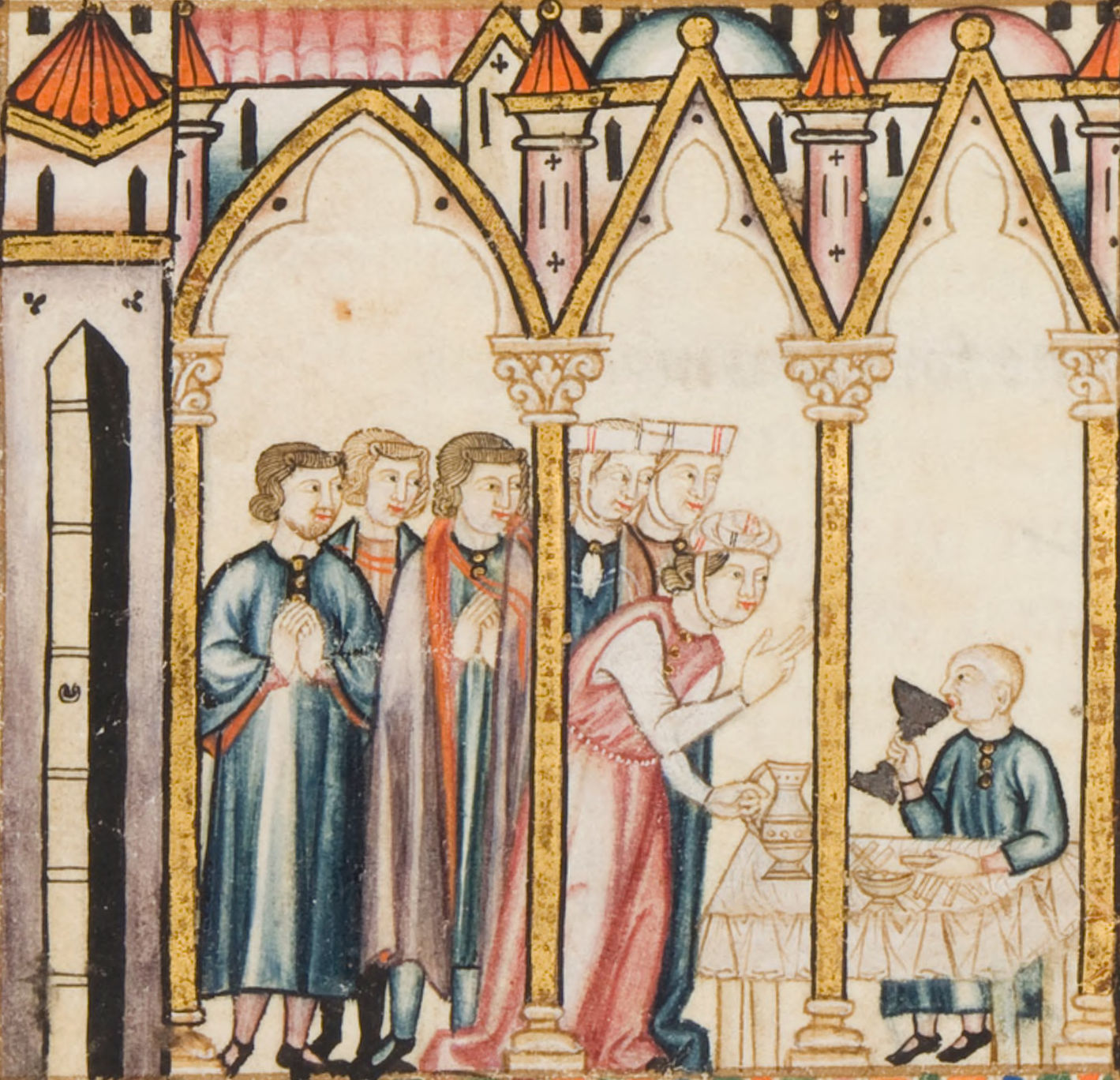
Fig. 11.97 [CSMF], page 250, cantiga 269-5, plain table cloth.
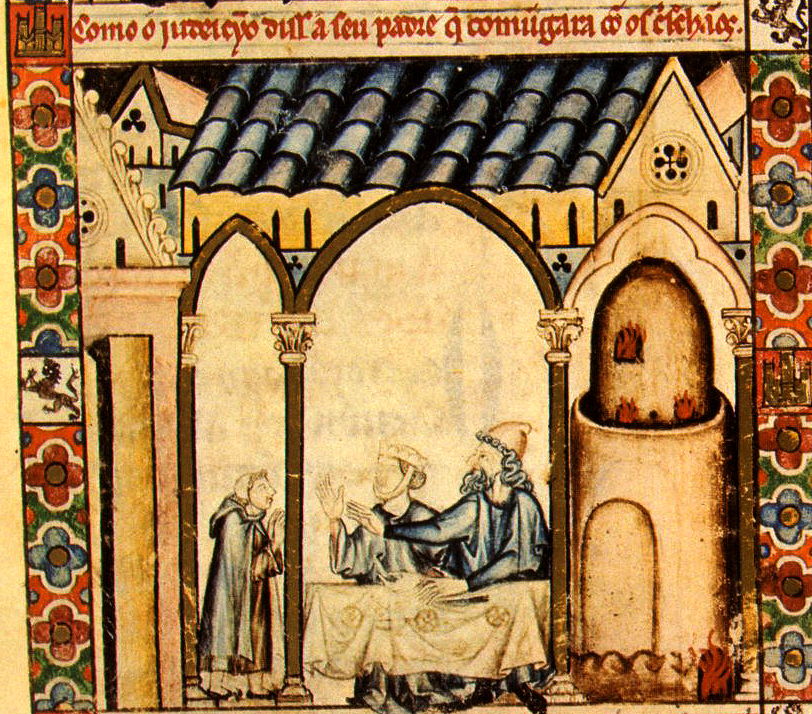
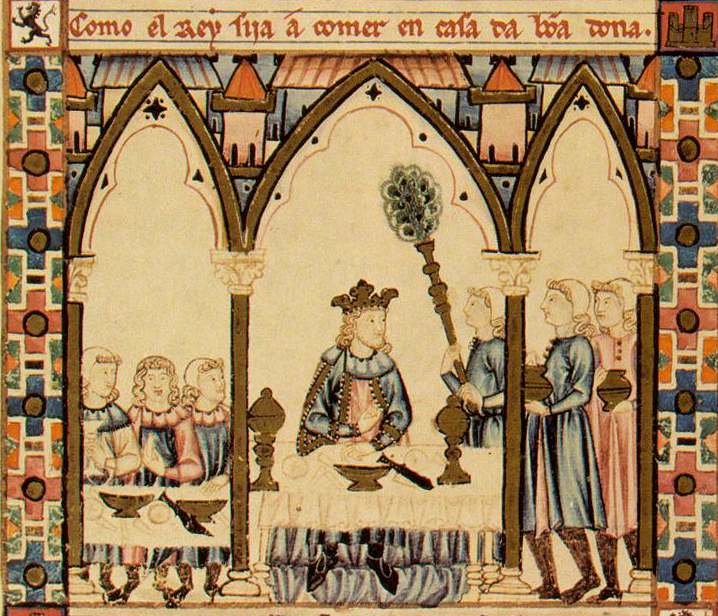
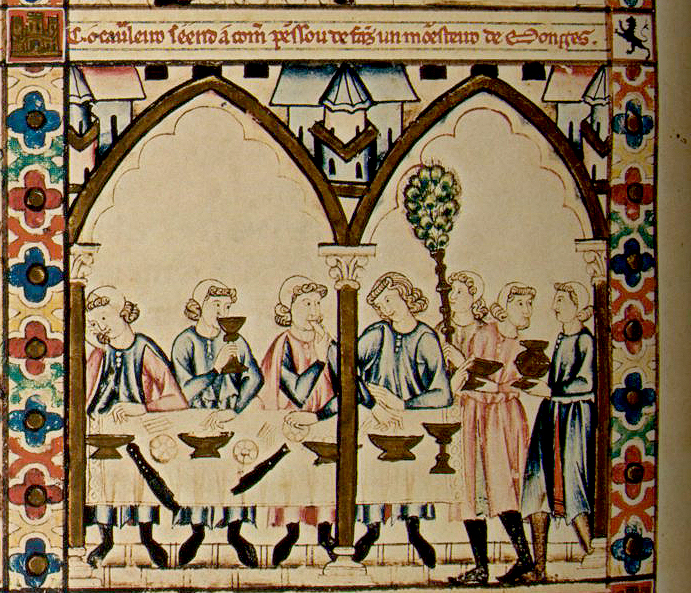
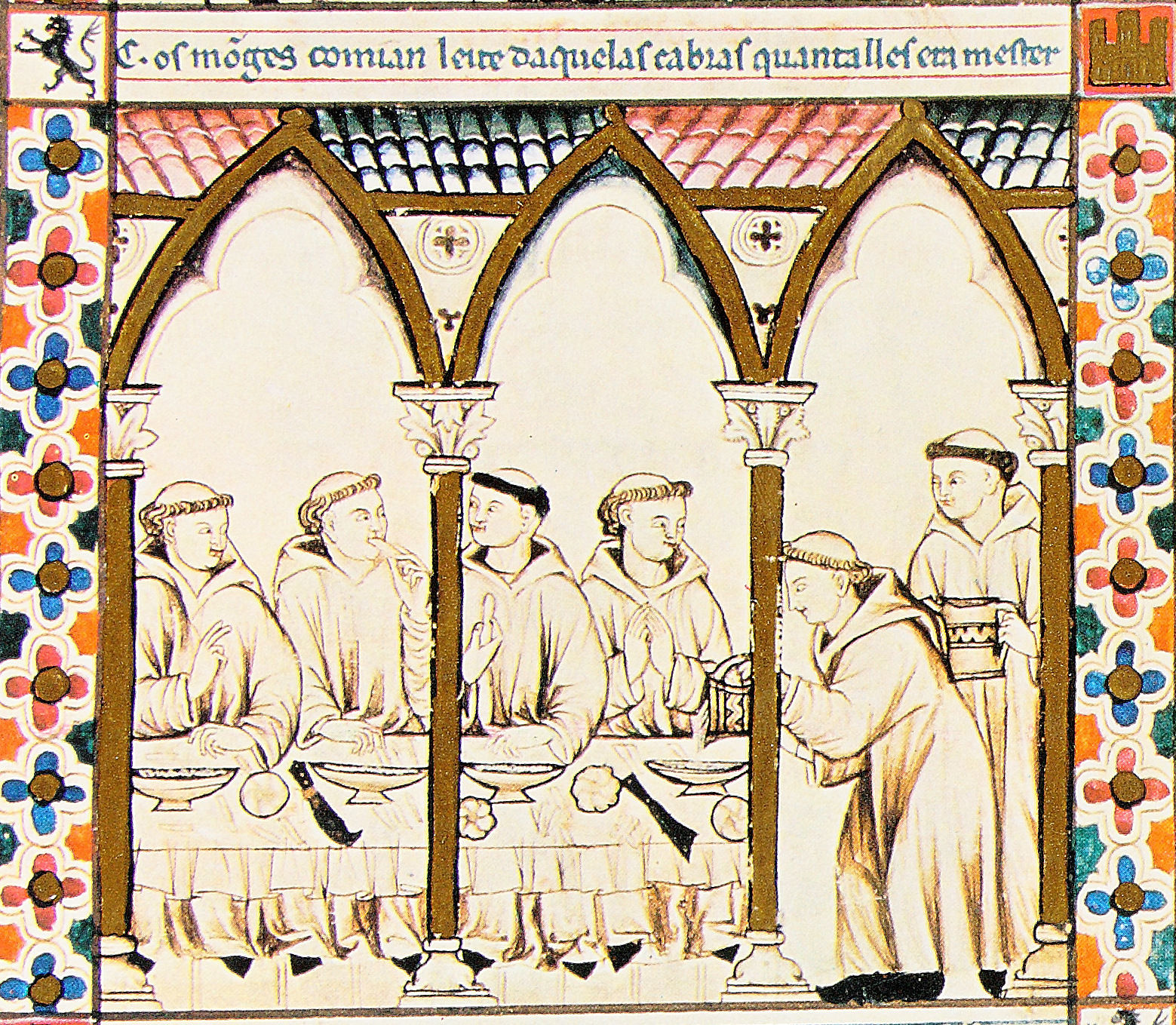
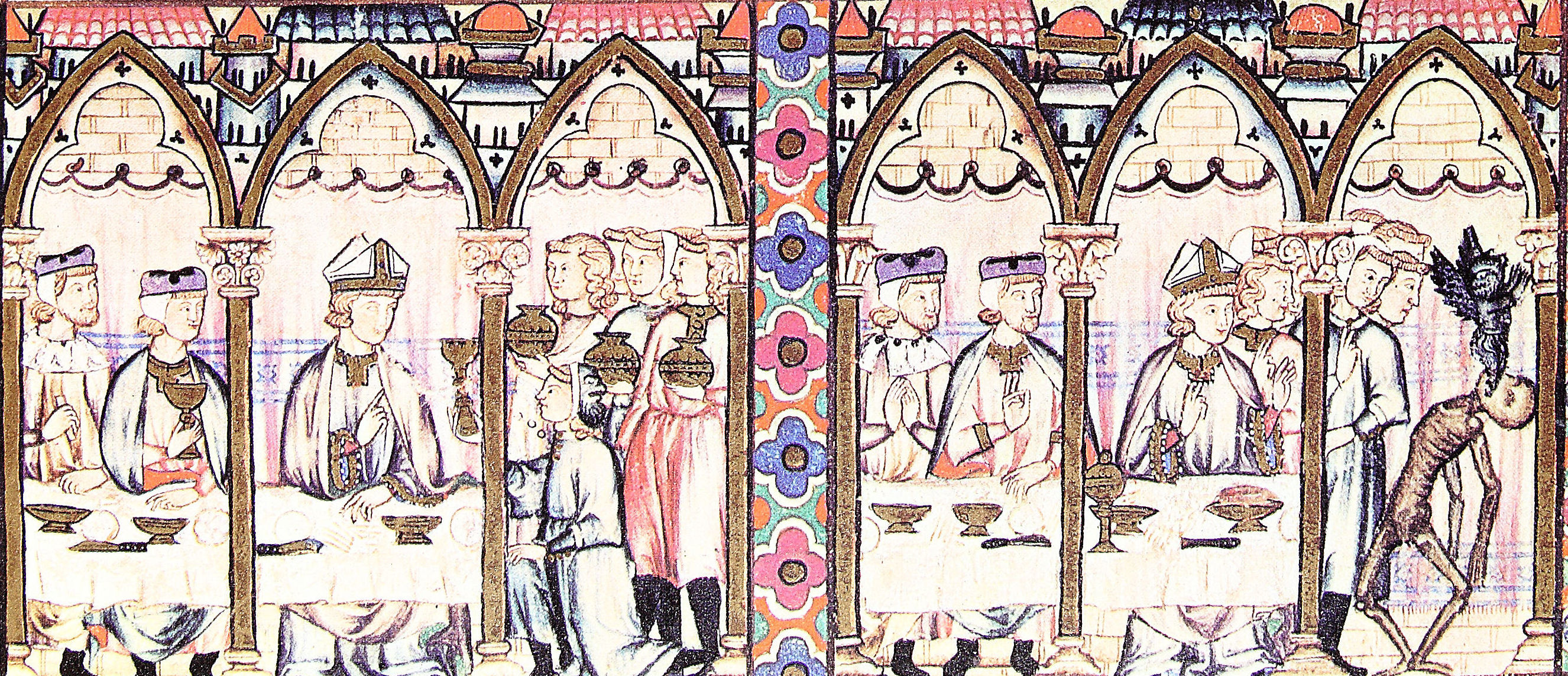
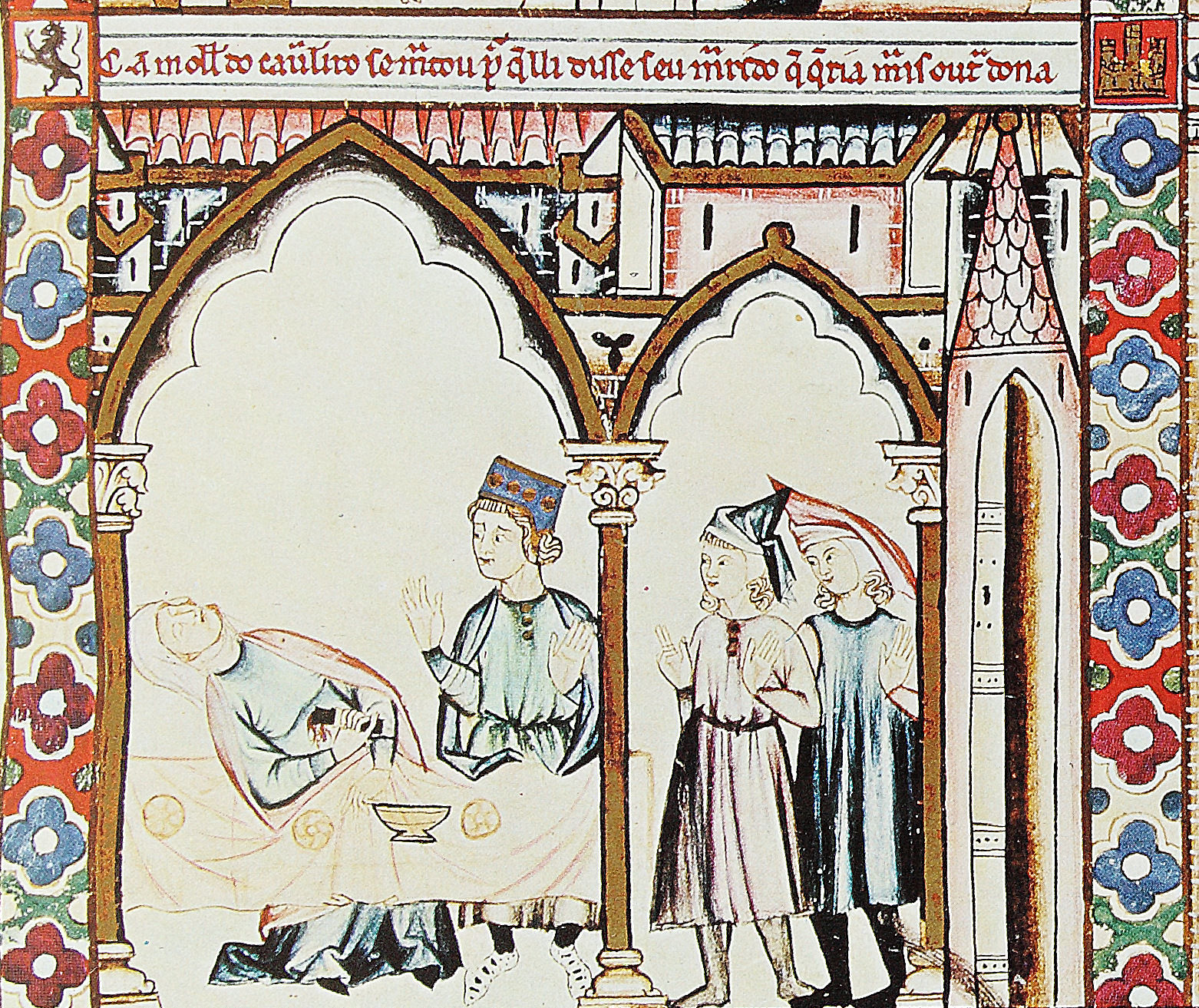
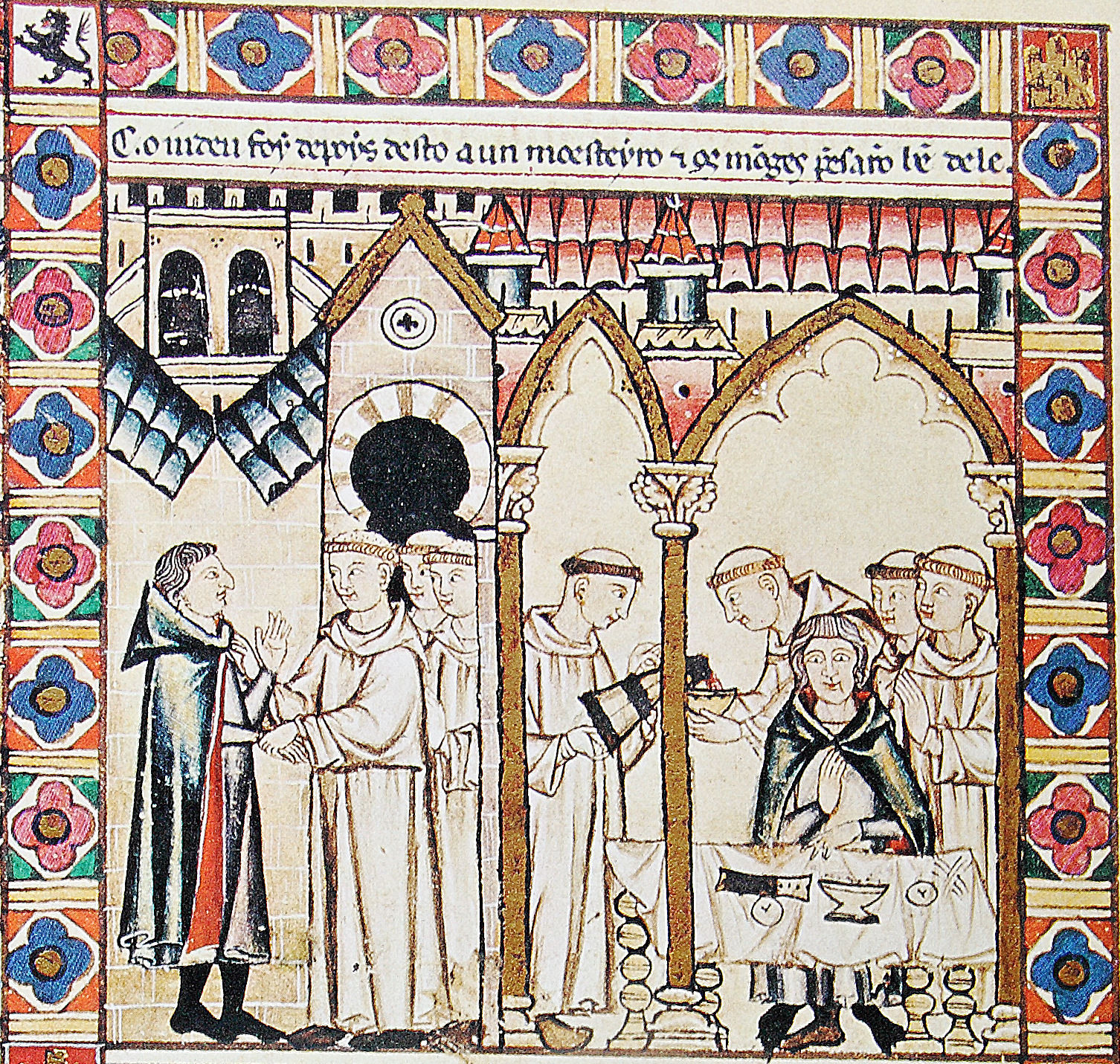
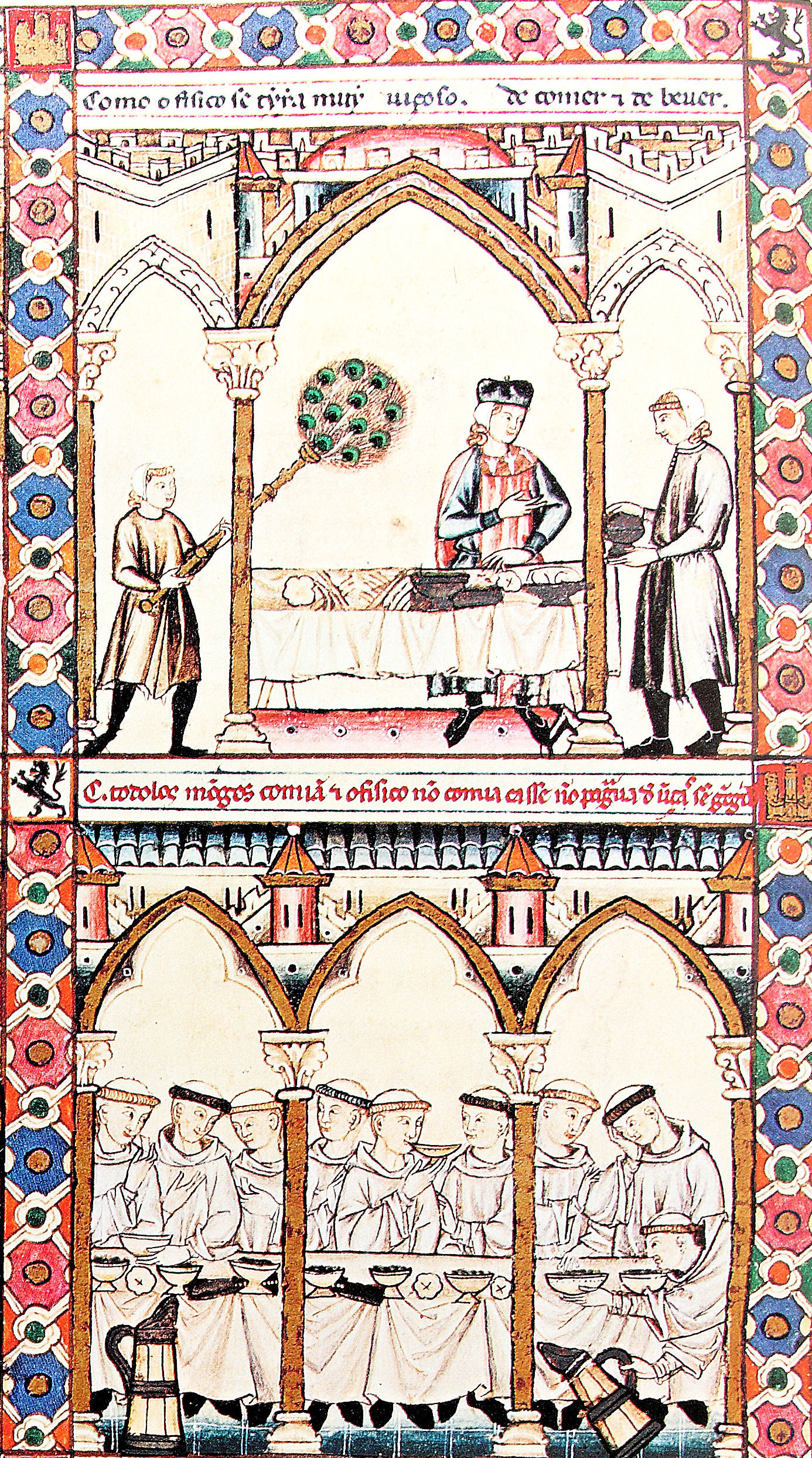
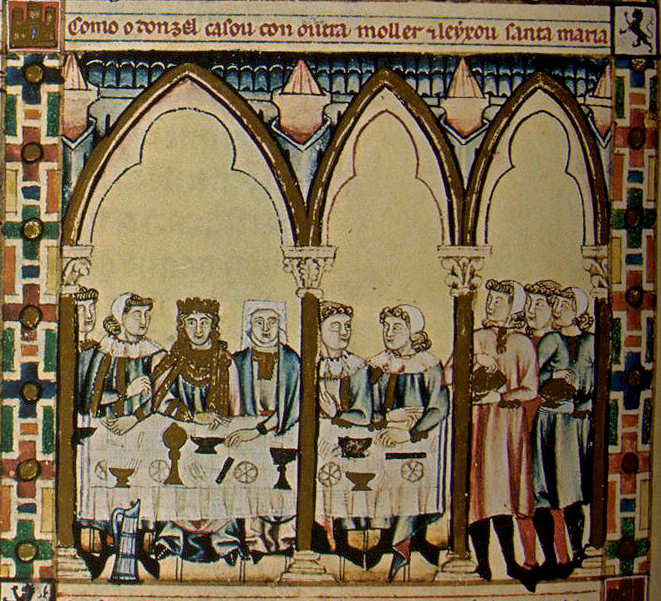
Fig. 11.106 [CSMT] cantiga 42-4, dotted pattern table cloth.
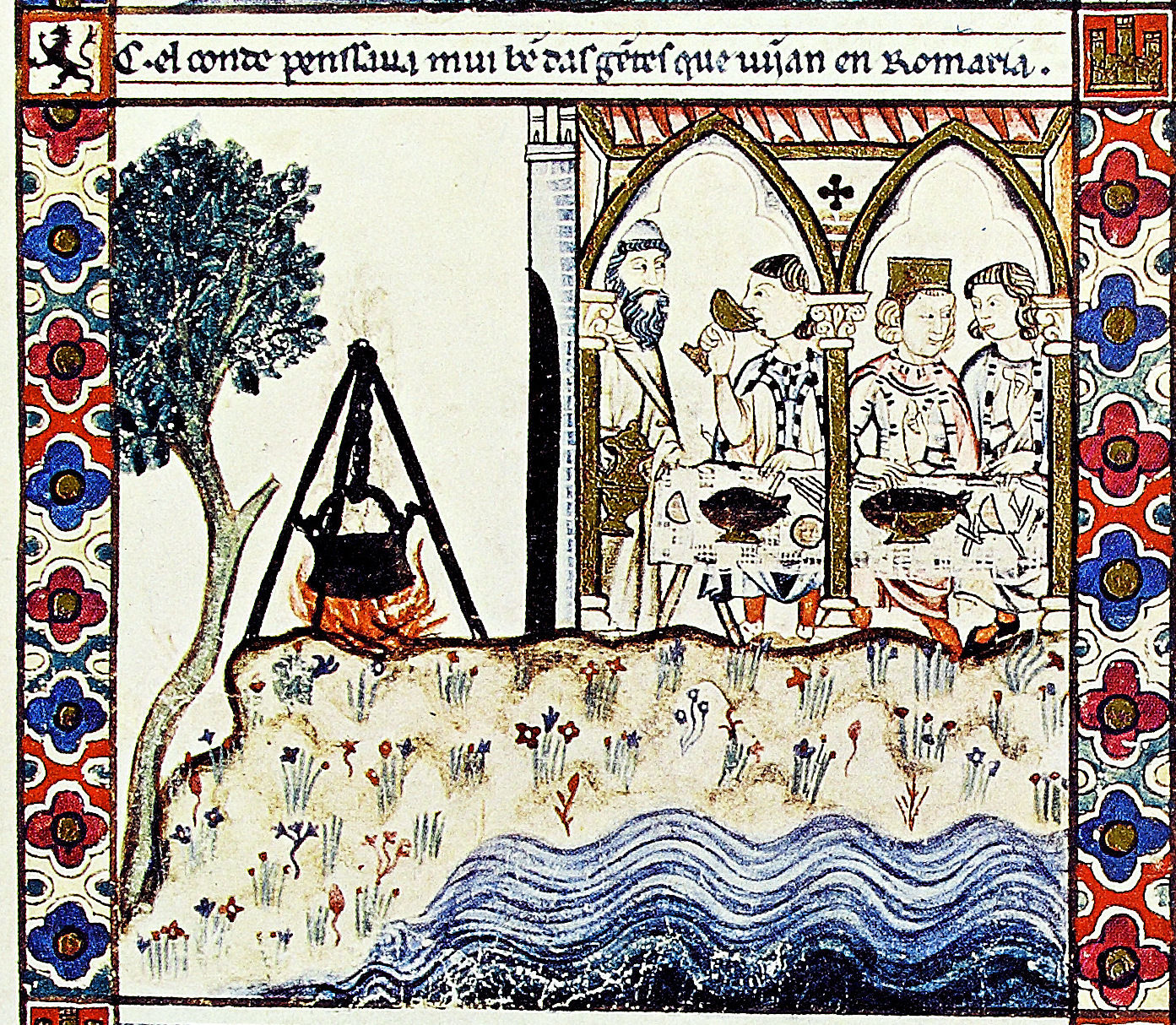
Fig. 11.107 [CSMT] cantiga 95a-4, checked pattern table cloth.
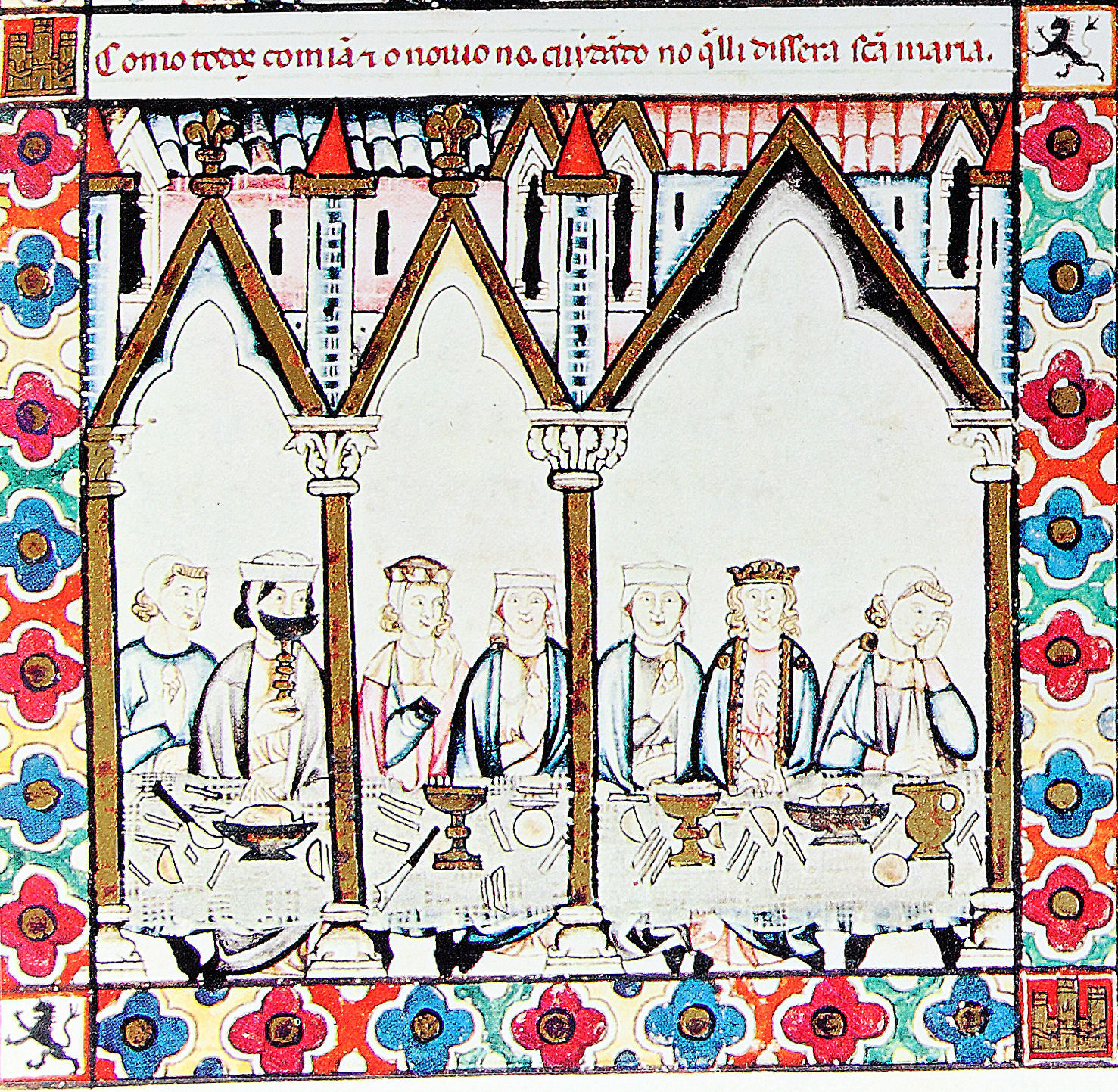
Fig. 11.108 [CSMT] cantiga 132-5, checked pattern table cloth.
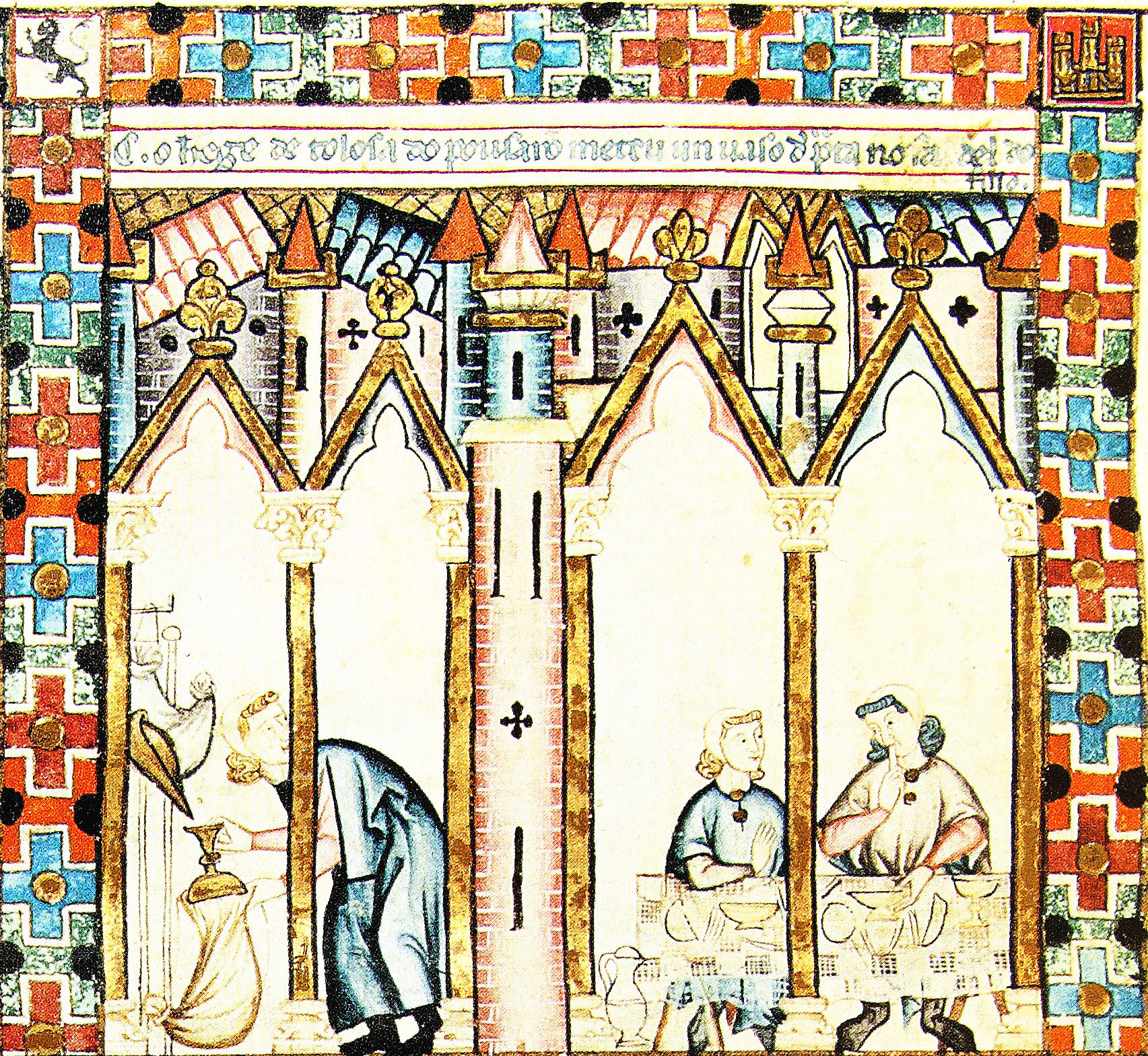
Fig. 11.109 [CSMT] cantiga 175a-1, checked pattern table cloth.
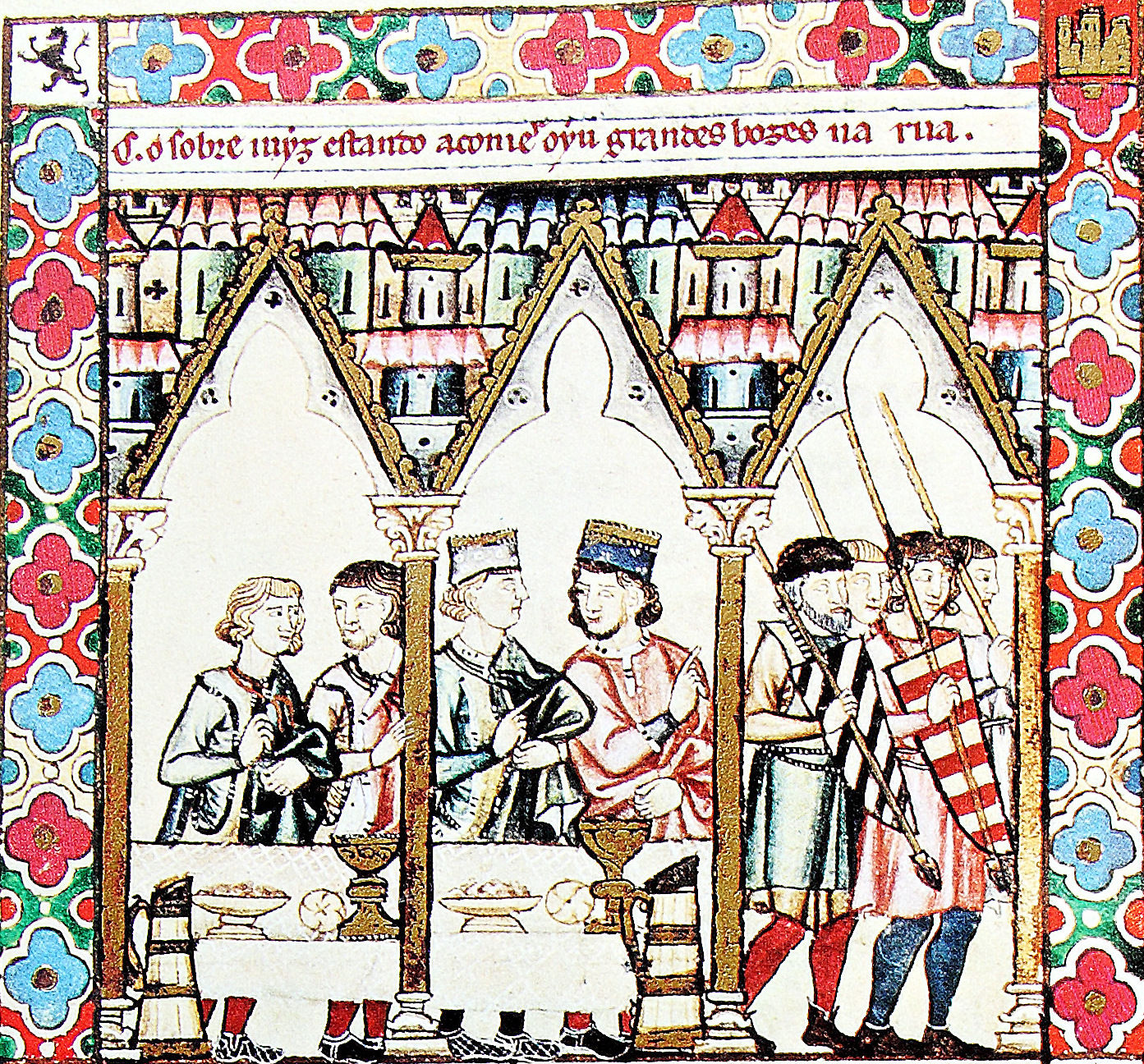
Fig. 11.110 [CSMT] cantiga 119-1, diamond pattern table cloth.
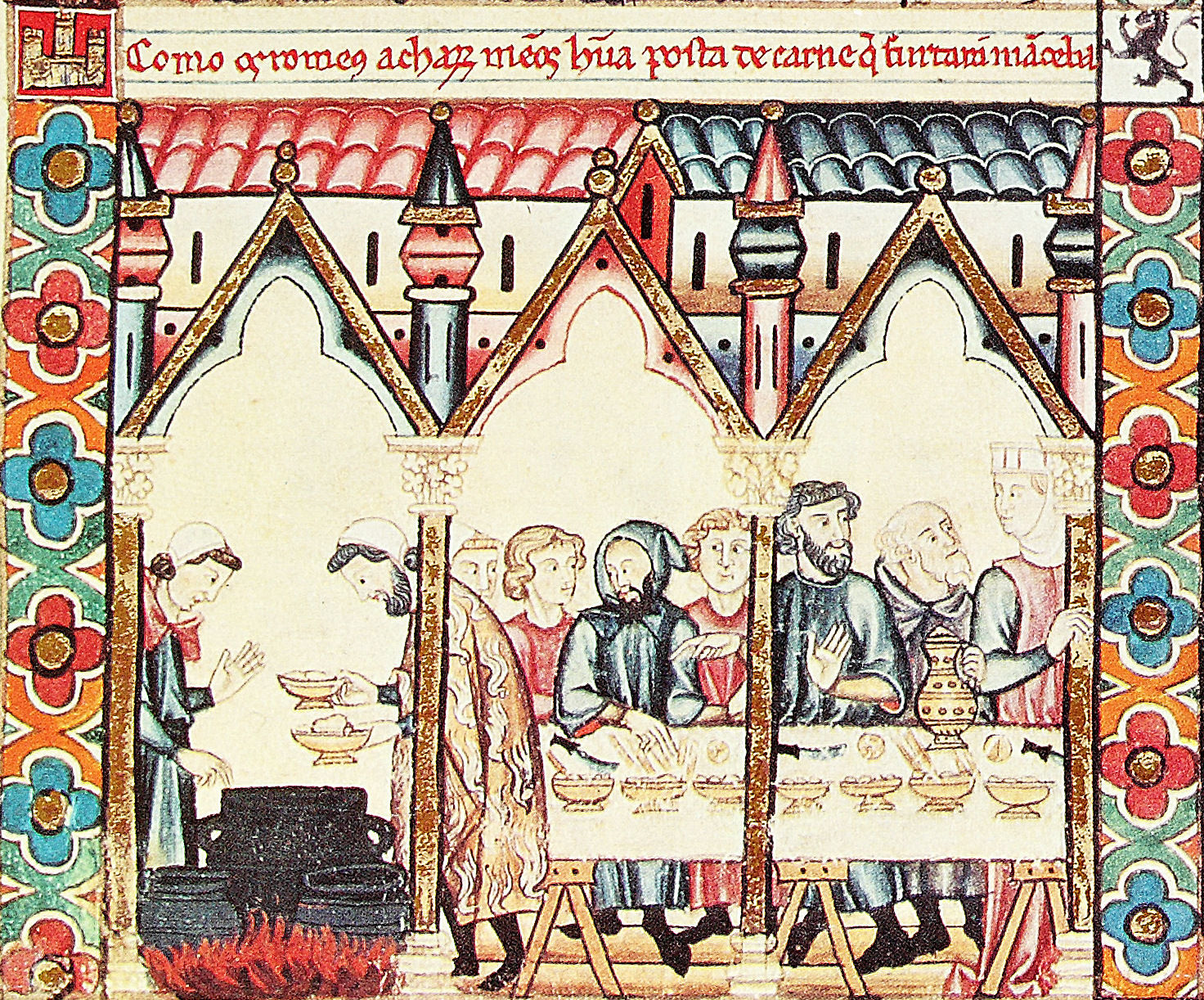
Fig. 11.111 [CSMT] cantiga 159-3, diamond pattern table cloth.
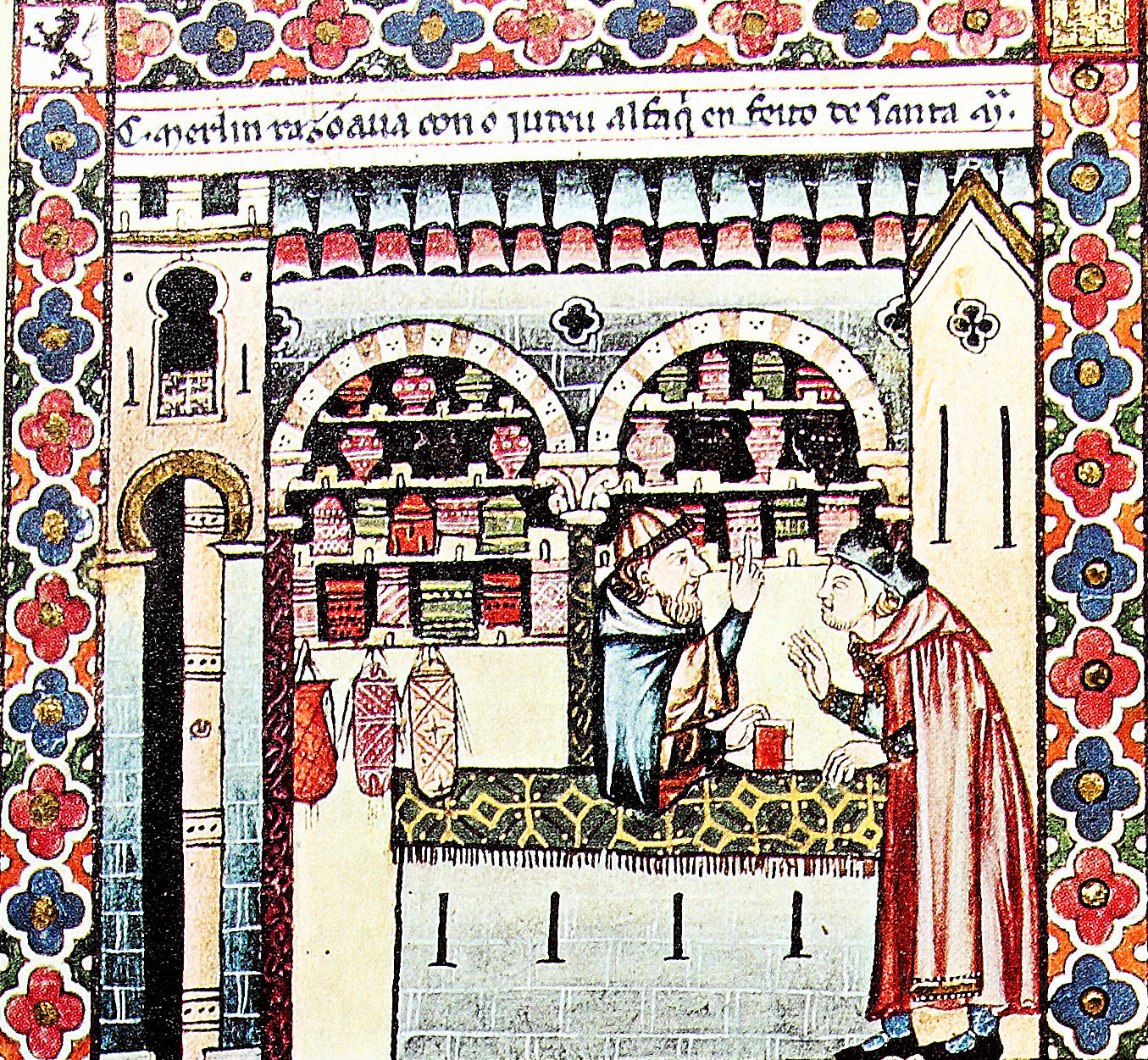
Fig. 11.112 [CSMT] cantiga 180-1, apothecary serving desk cover.
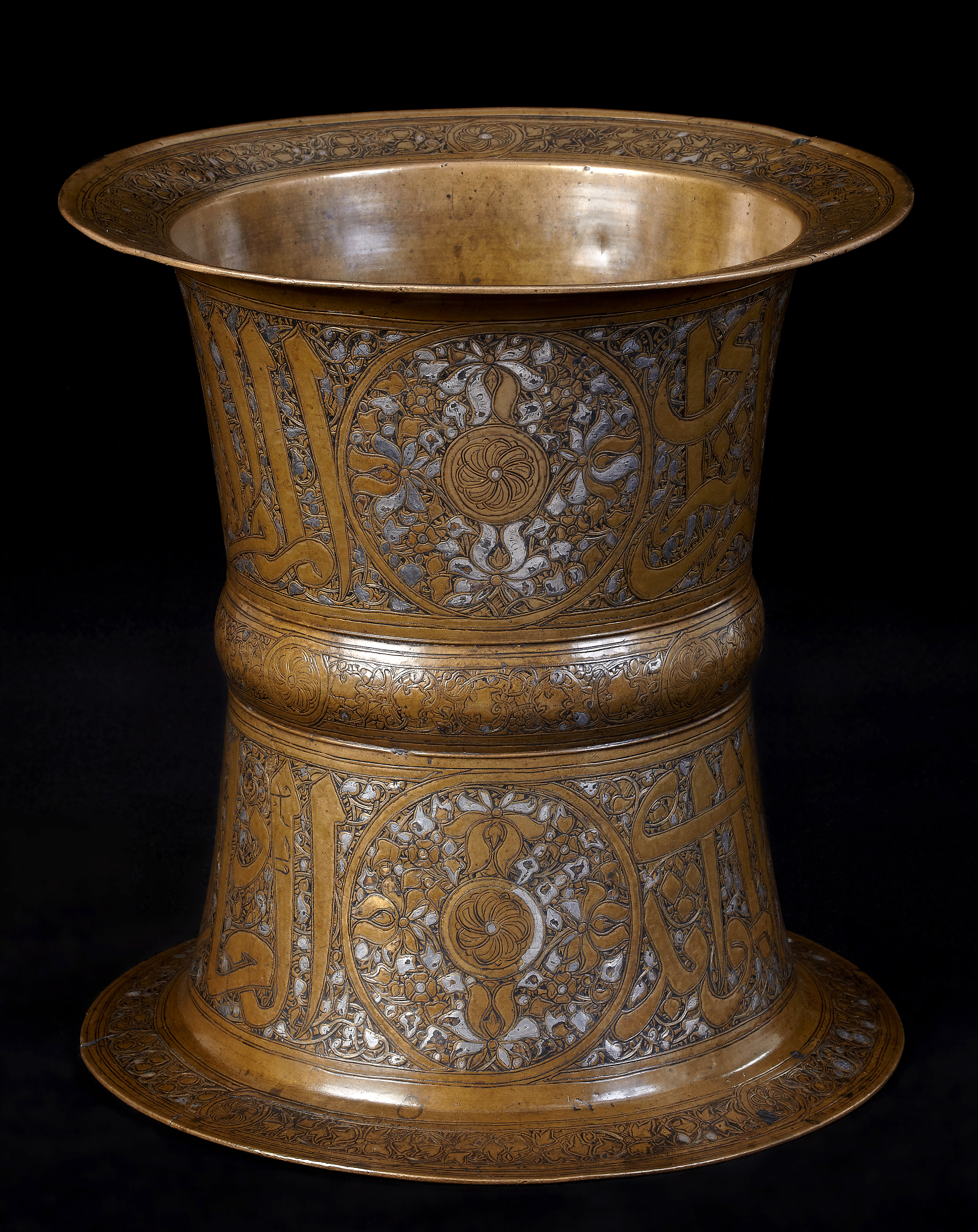
Fig. 11.113 Brass tray stand, engraved and inlaid with silver. Egypt or Syria; 1st half of 14th century. H: 24.4cm; Diam: 23.2 cm. Metropolitan Museum of art. Accession Number: 91.1.601 https://www.metmuseum.org/art/collection/search/444601
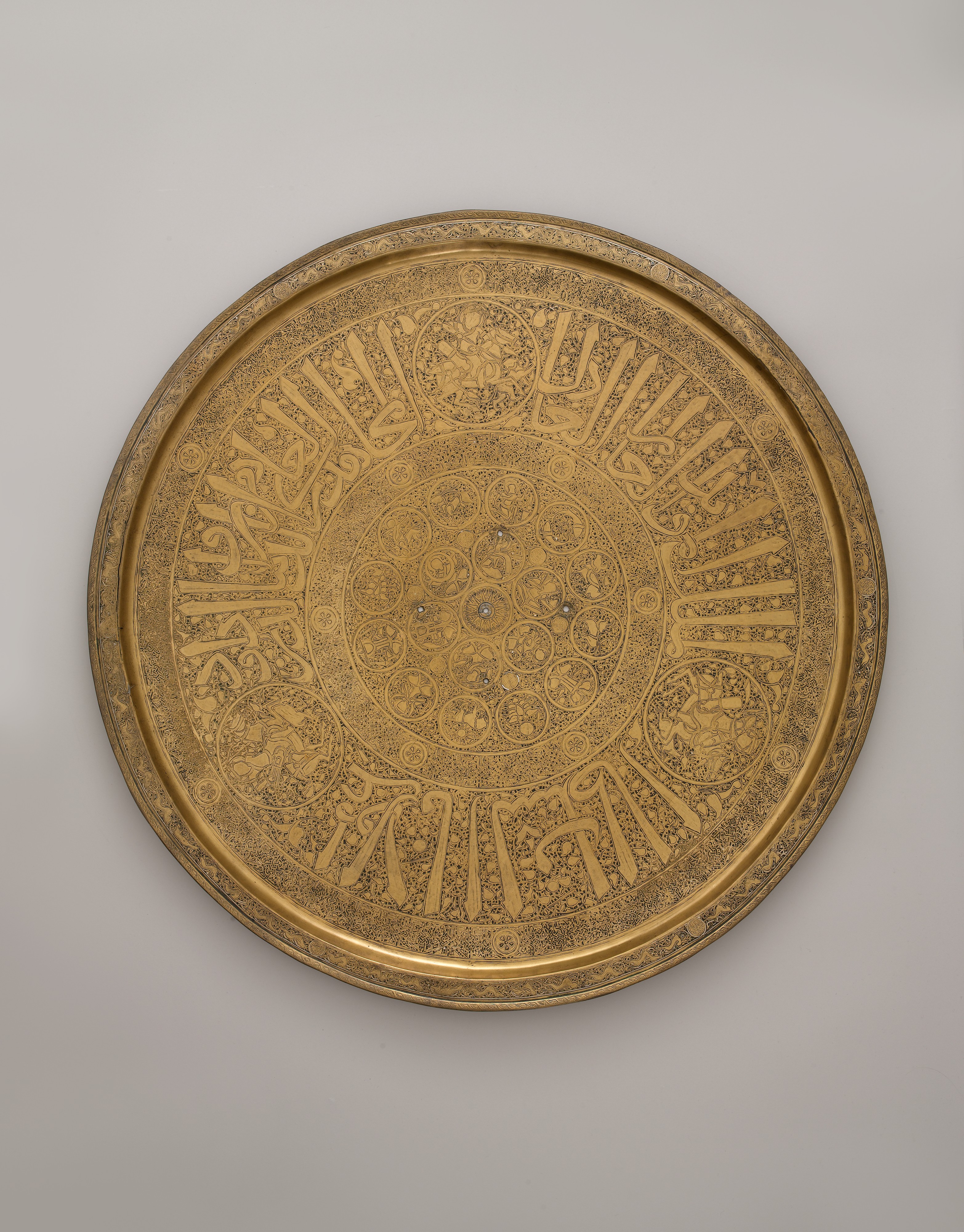
Fig. 11.114 Late 13th–early 14th century brass tray, Egypt; engraved and inlaid with silver and black compound. H:3.8 cm; Diam 76.8 cm. Metropolitan Museum of art. Accession Number: 91.1.604 https://www.metmuseum.org/art/collection/search/444604
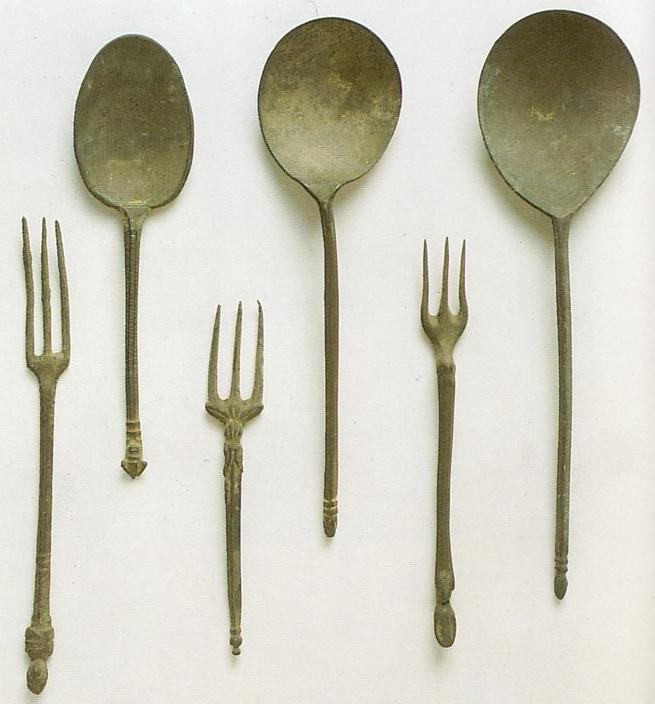
Fig. 11.115 xx
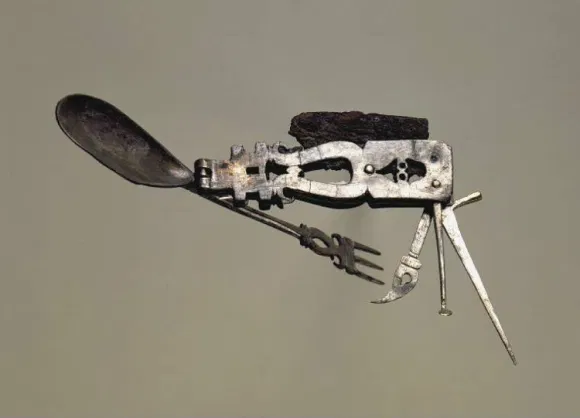
Fig. 11.116 xx
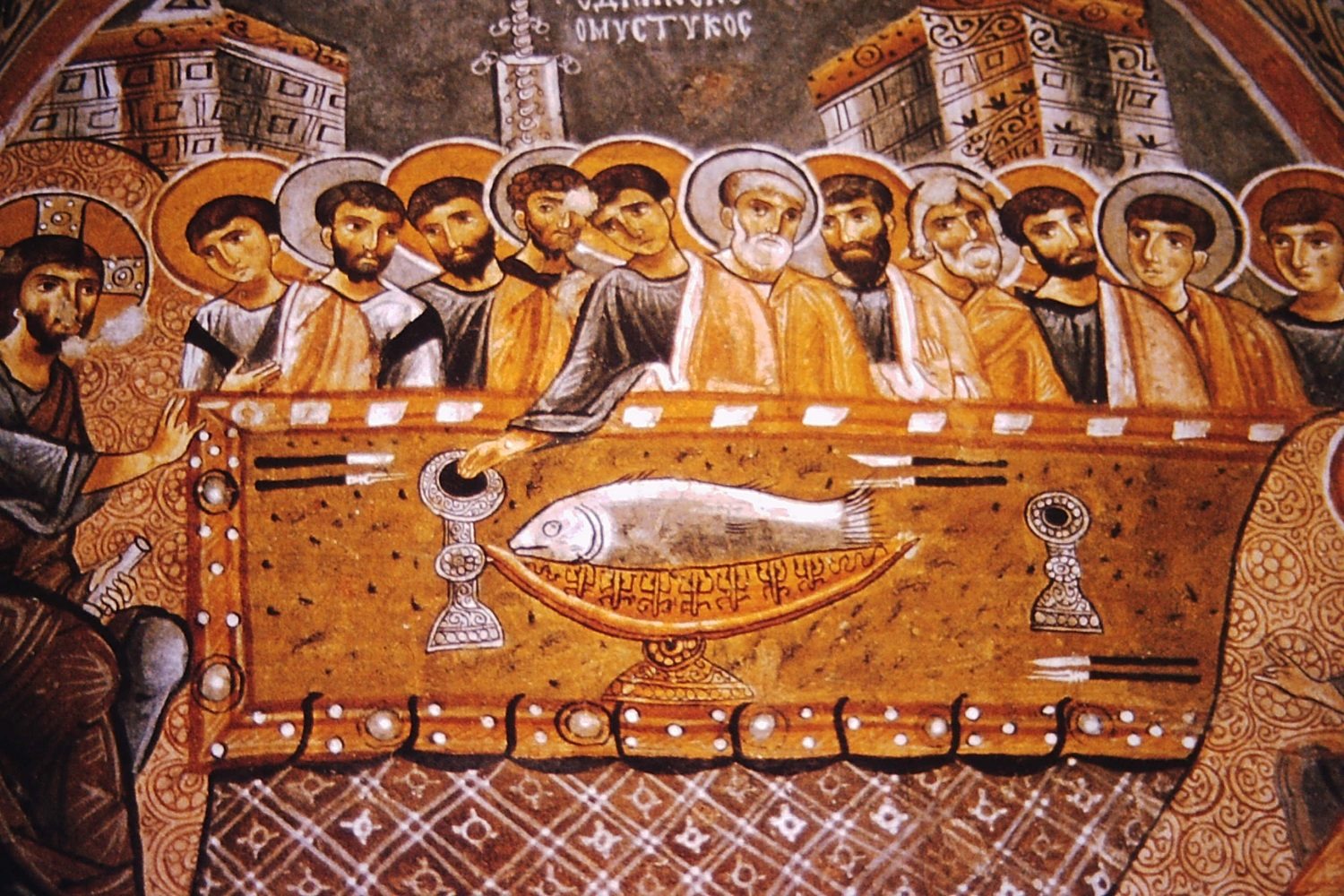
Fig. 11.117 xx
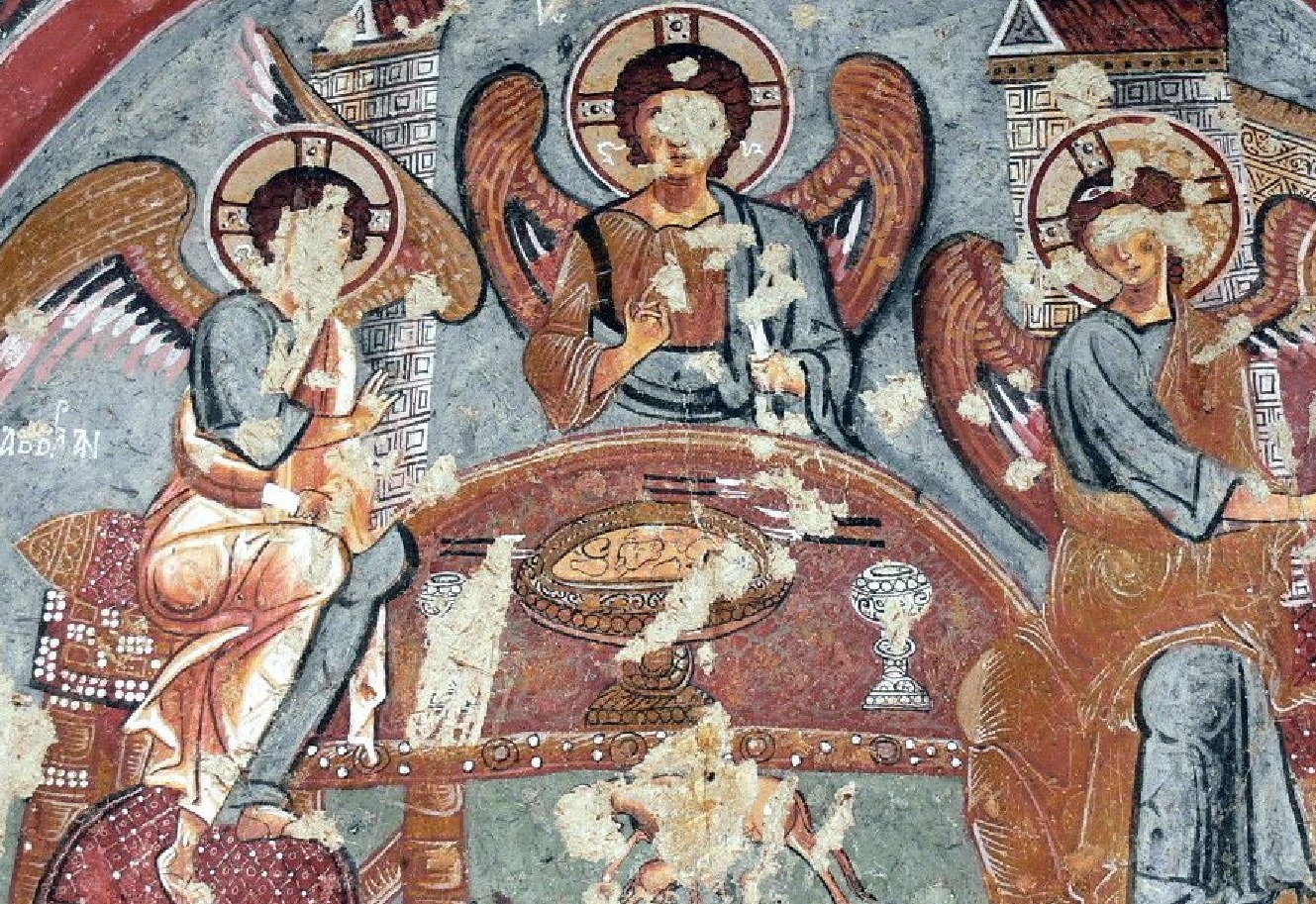
Fig. 11.118 xx
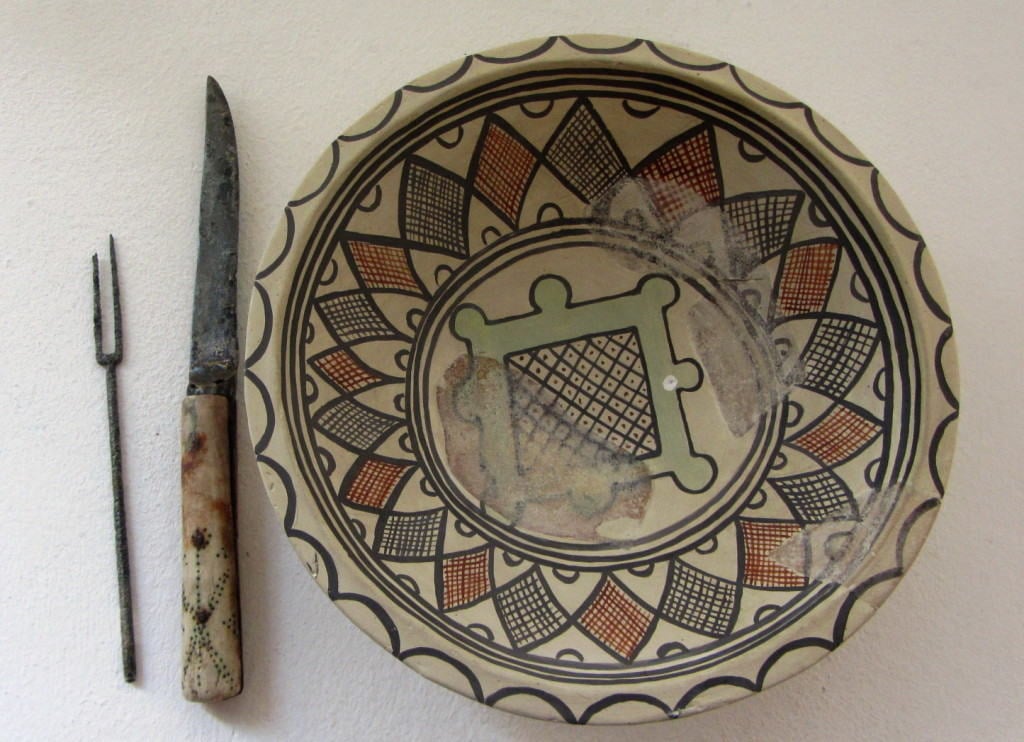
Fig. 11.119 xx
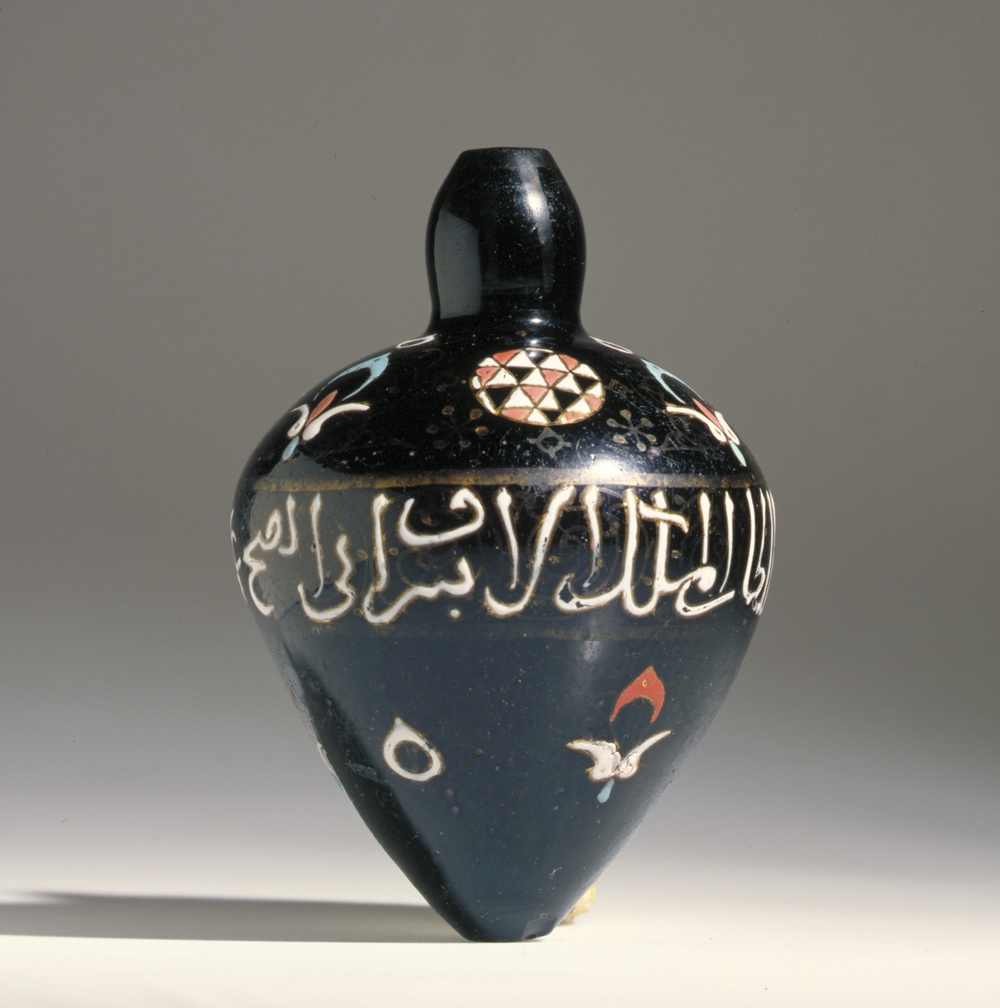
Fig. 11.120 Gilded and enamelled glass perfume sprinkler, 1295–6, probably Syria. Museum no. C.153-1936, Victoria & Albert Museum
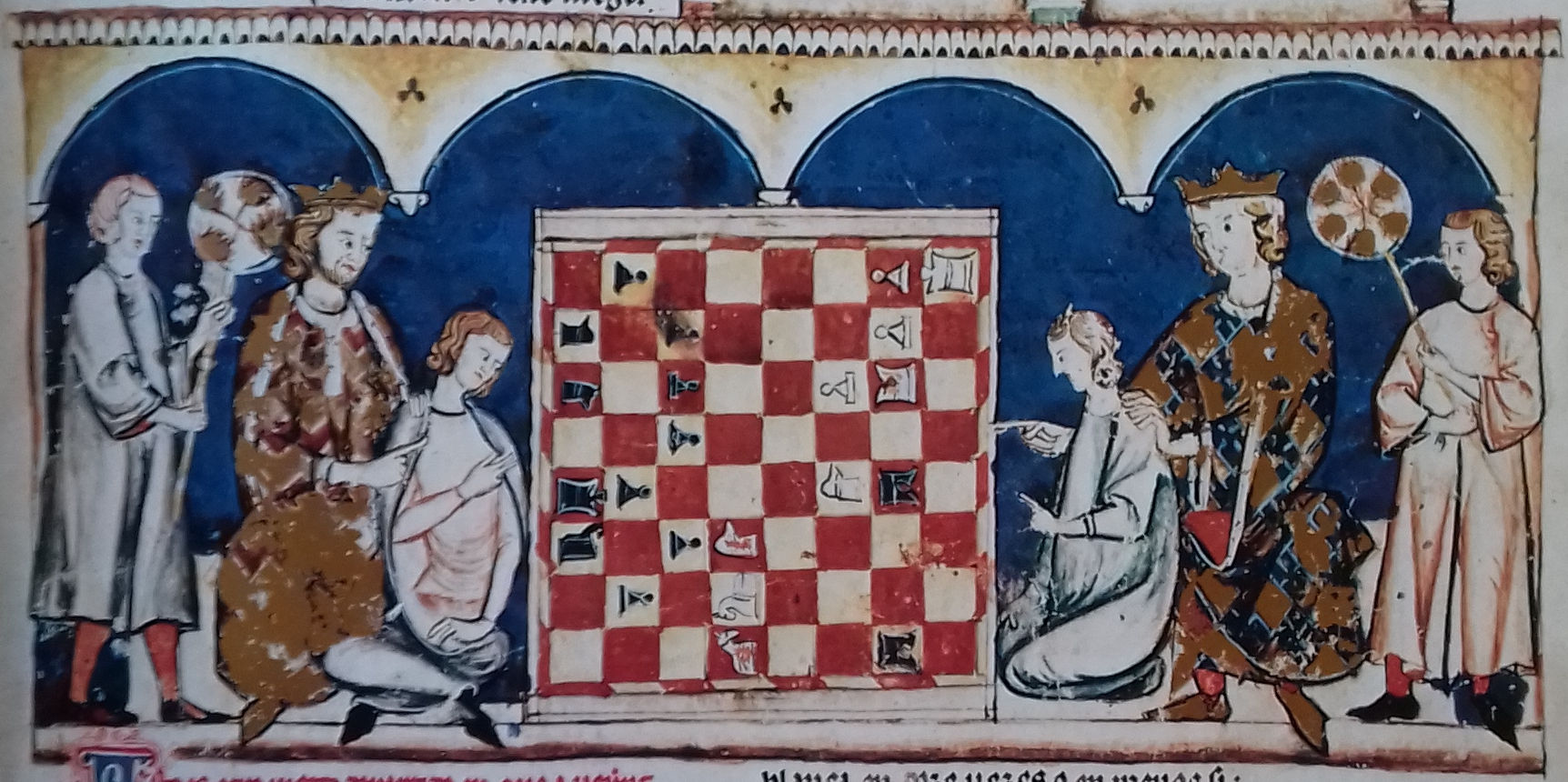
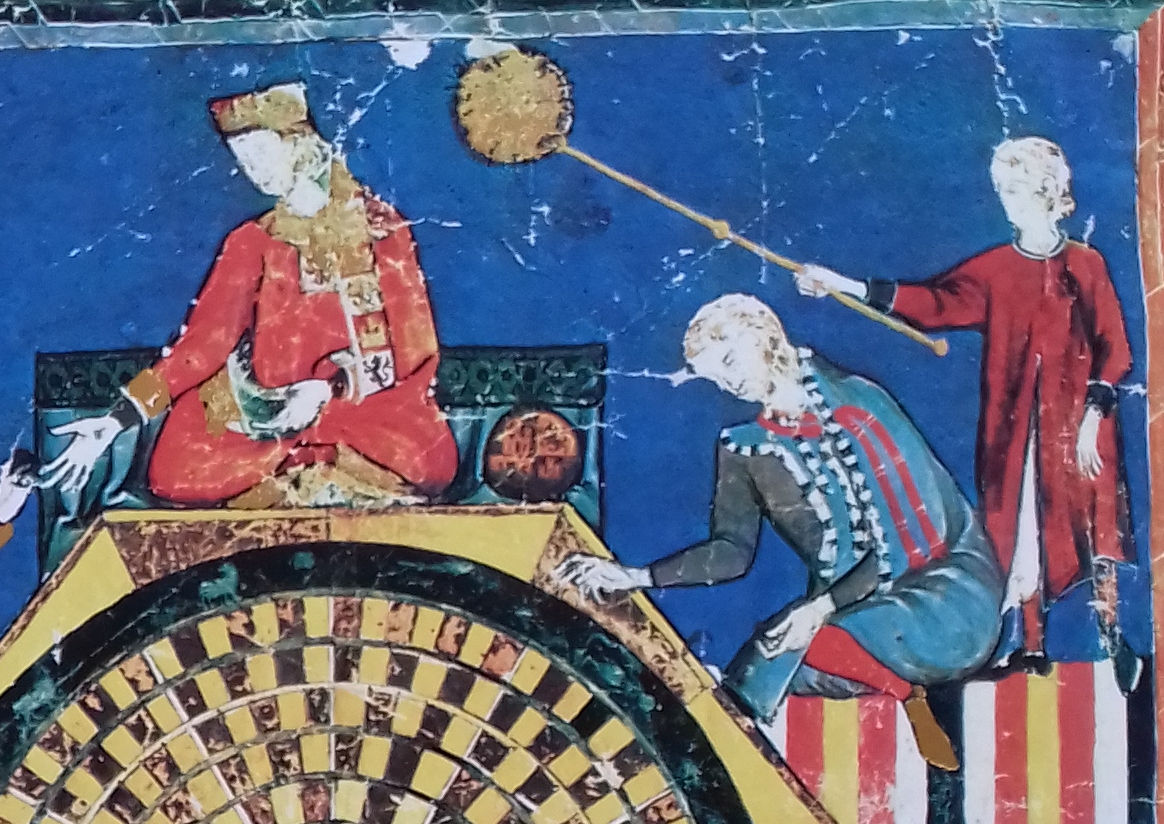
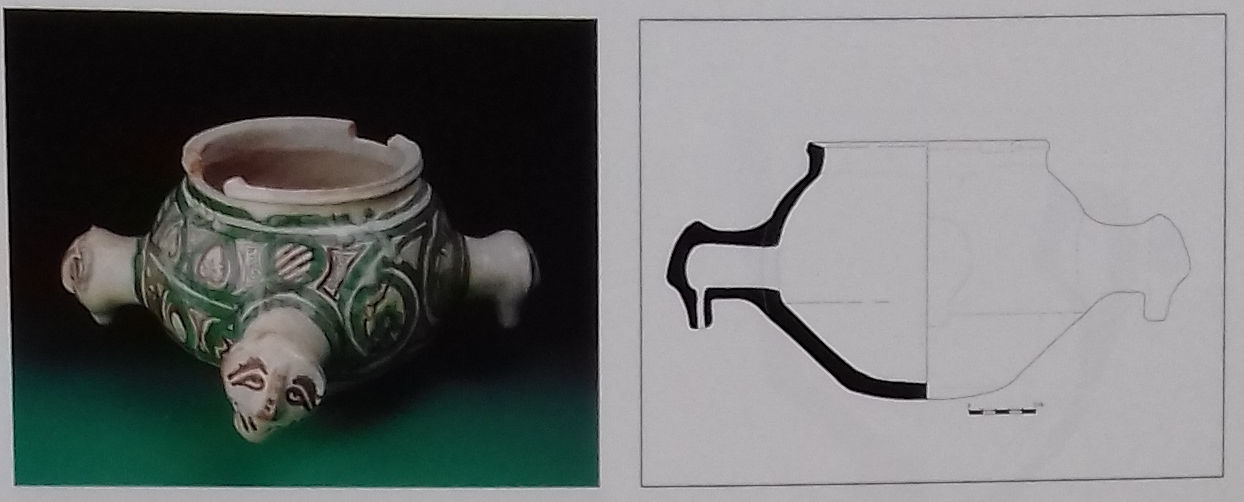
Fig. 11.123 1325-1350, Spain, Teruel, aquamanile 20x18x13cm, Museo Provincial de Teruel No. inv 8365. Published in Ortega Ortega: Opera terre Turroli
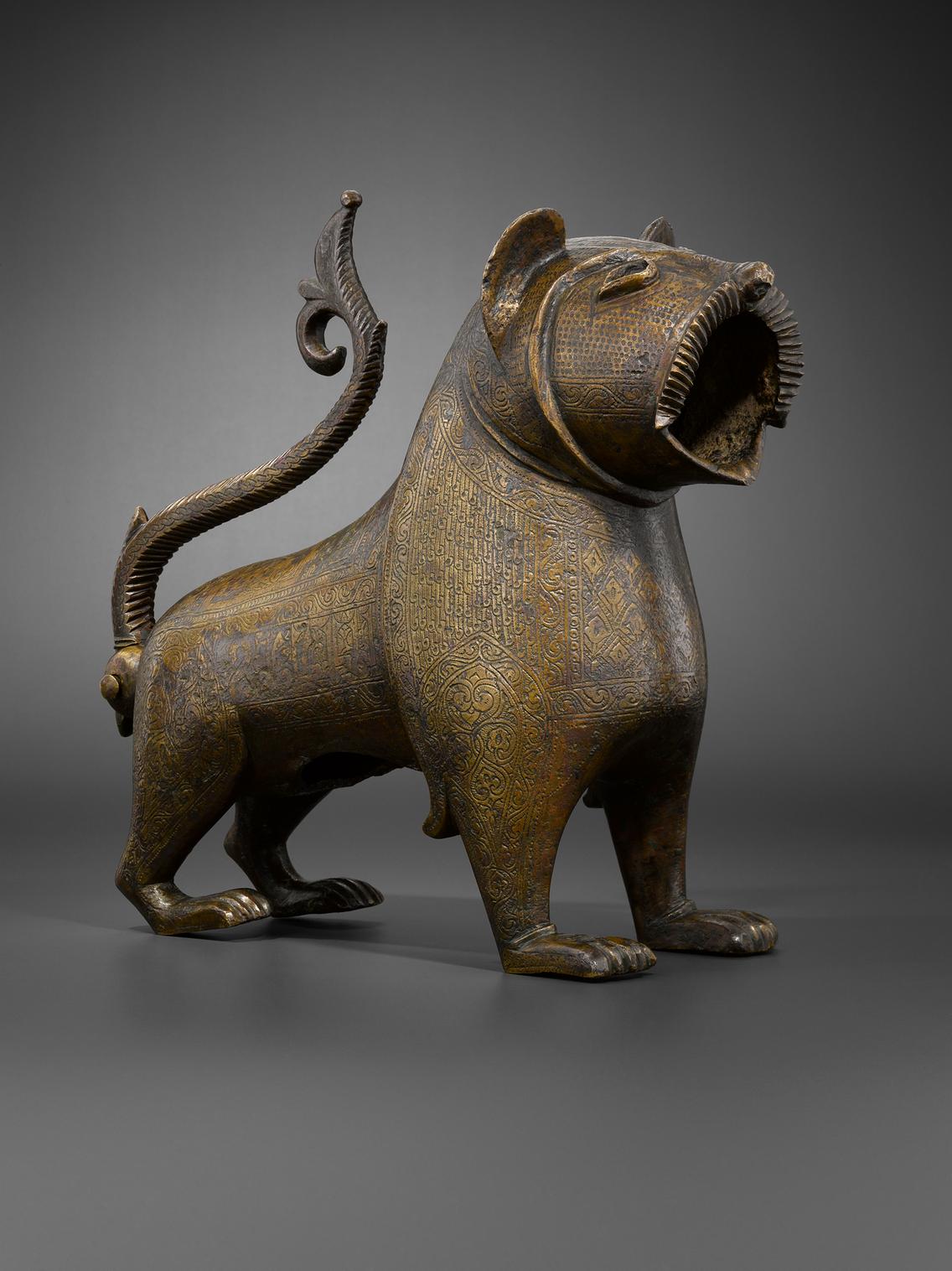
Fig. 11.124 12-13th century AD, Spain, bronze aquamanile, Musée de Louvre
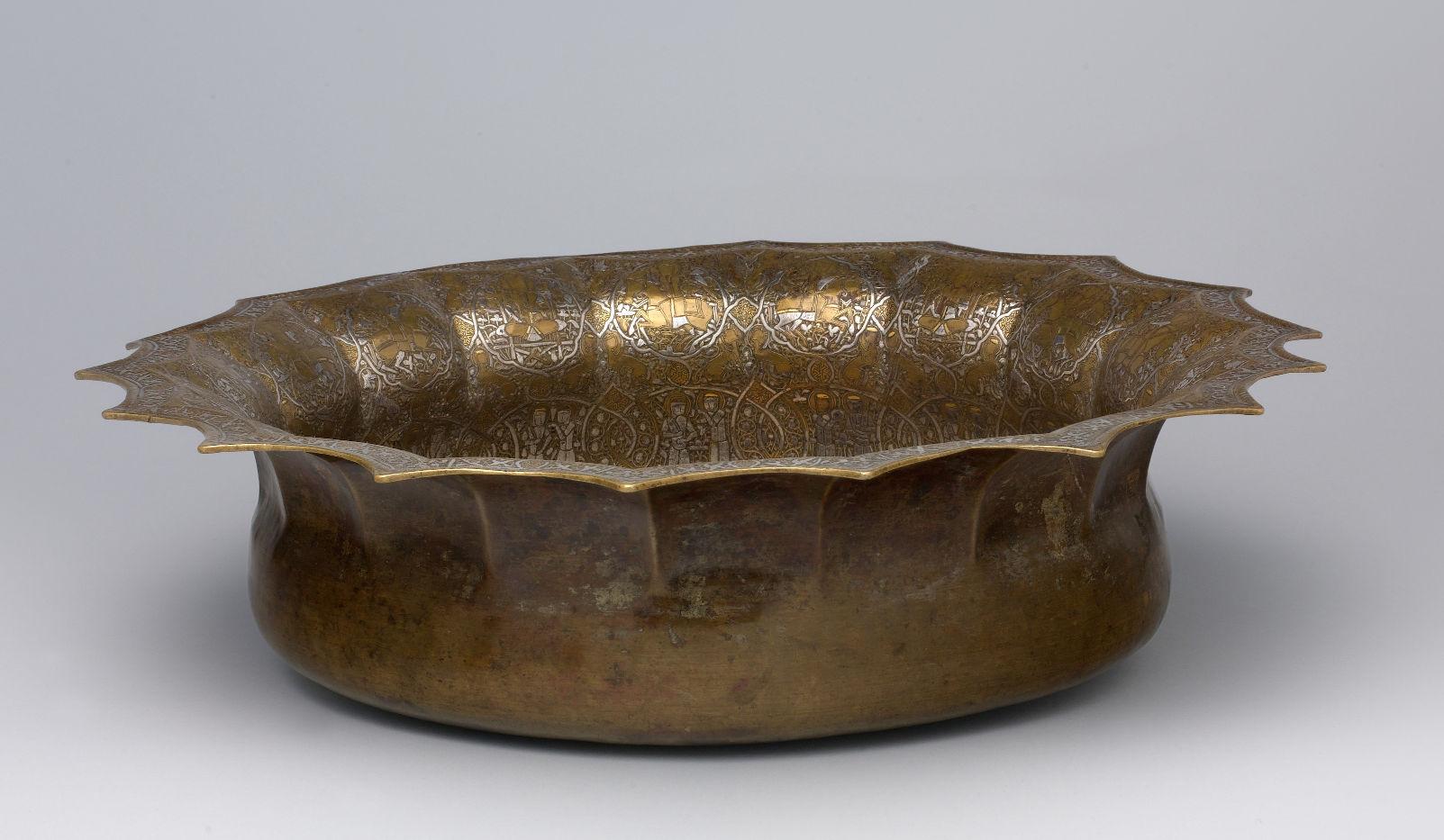
Fig. 11.125 14c Iran, brass basin, Metropolitan Museum https://www.metmuseum.org/art/collection/search/444523
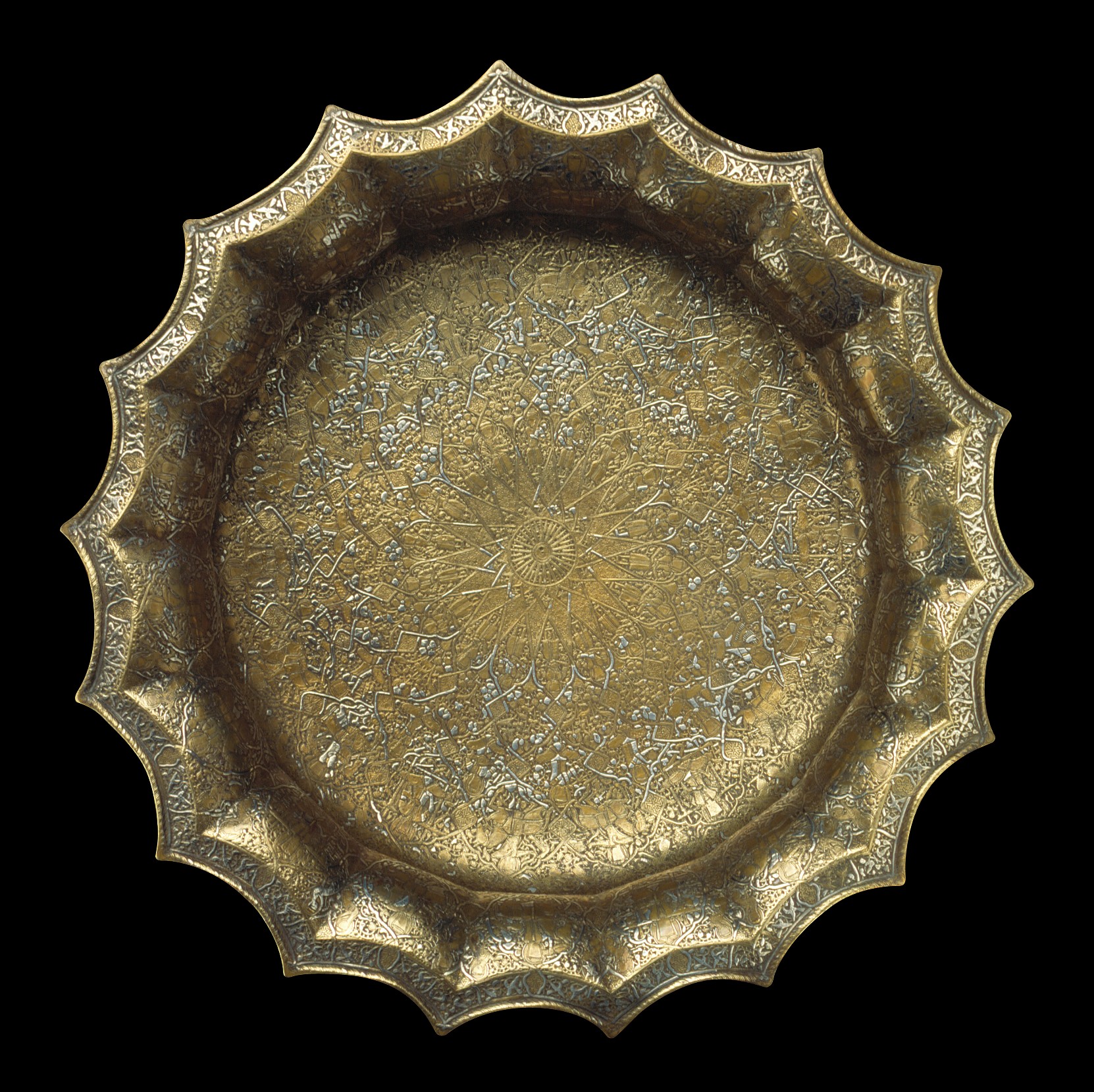
Fig. 11.126 14c Iran, brass basin, Metropolitan Museum https://www.metmuseum.org/art/collection/search/444523
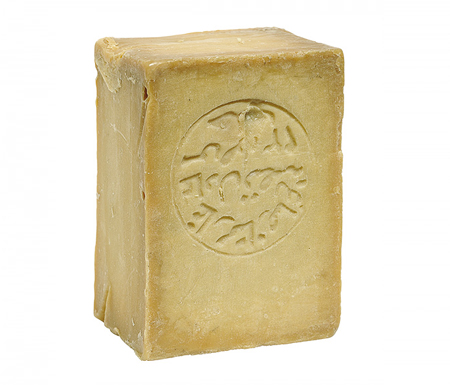
Fig. 11.127 Aleppo bar soap
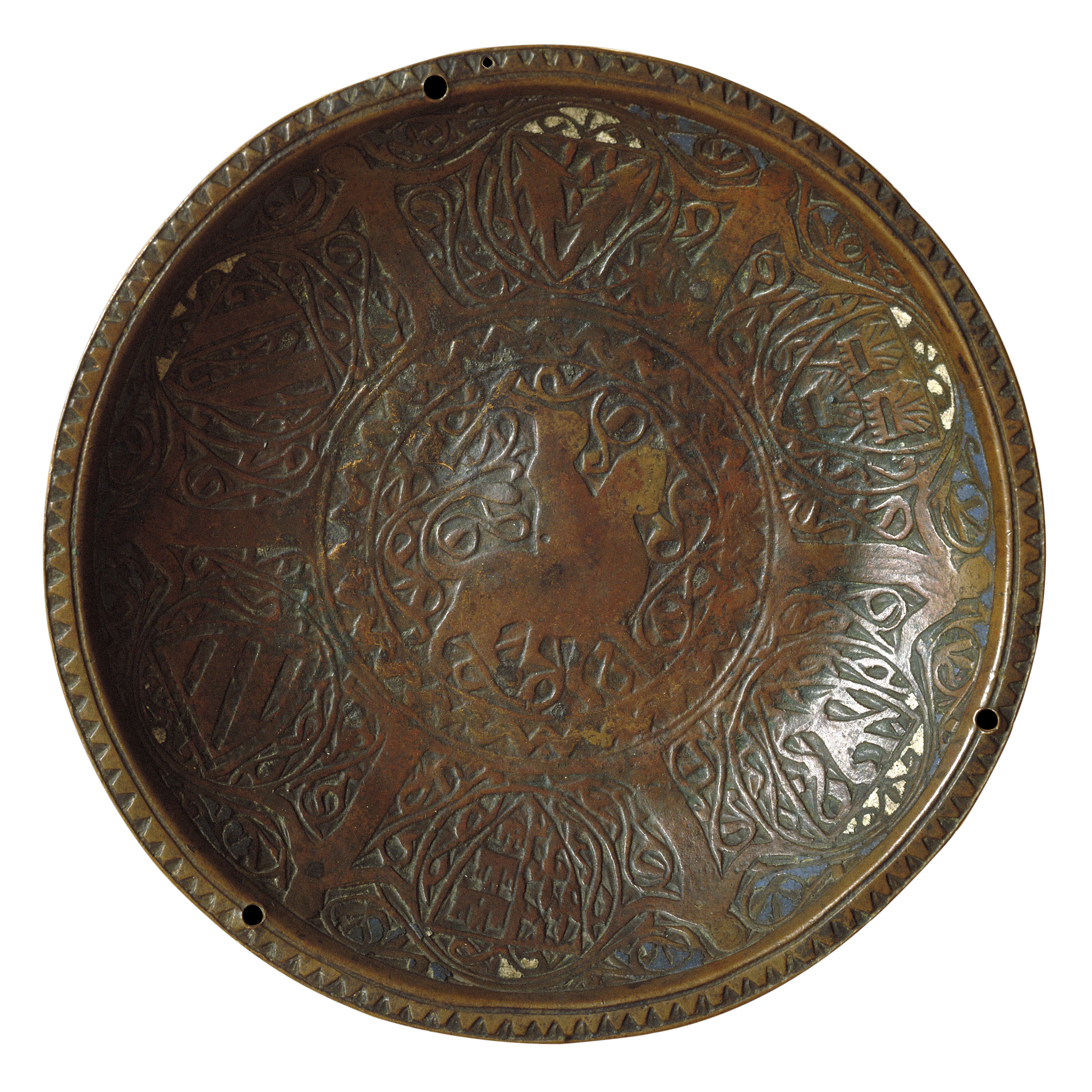
Fig. 11.128 End of 13th century, unknown provence, Basin with horseman and heraldry, Chased copper with decoration of ‘champlevé’ enamel, 22.3 x 3.8 cm, Museu Nacional d’Art de Catalunya, Barcelona, 004575-000
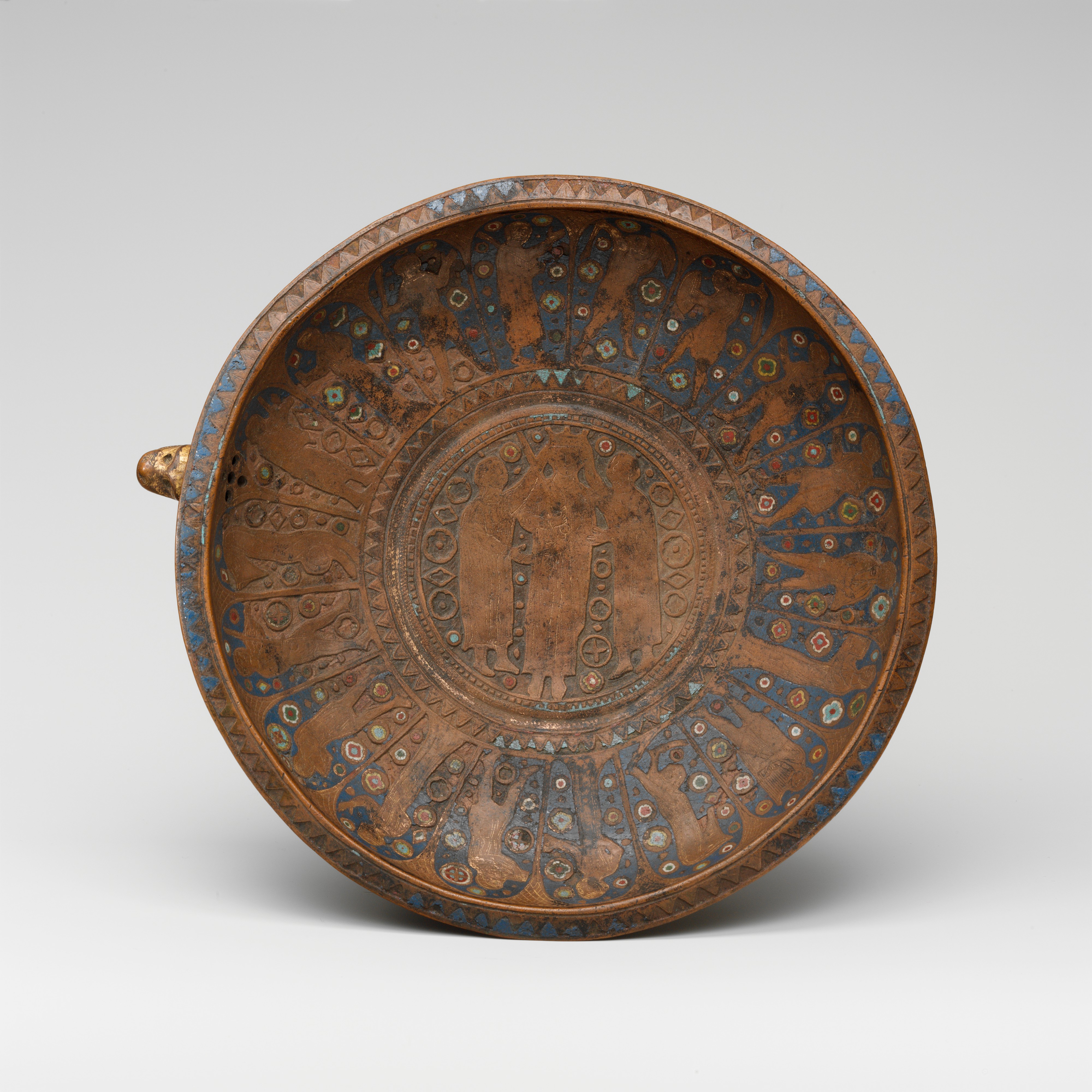
Fig. 11.129 1260-75, France, Gemellion (hand basin) with spout, a Coronation Scene, Copper, wrought, gilt and Champlevé enamel, 25.7 x 4.8 cm, Metropolitan museum of art, 47.101.41
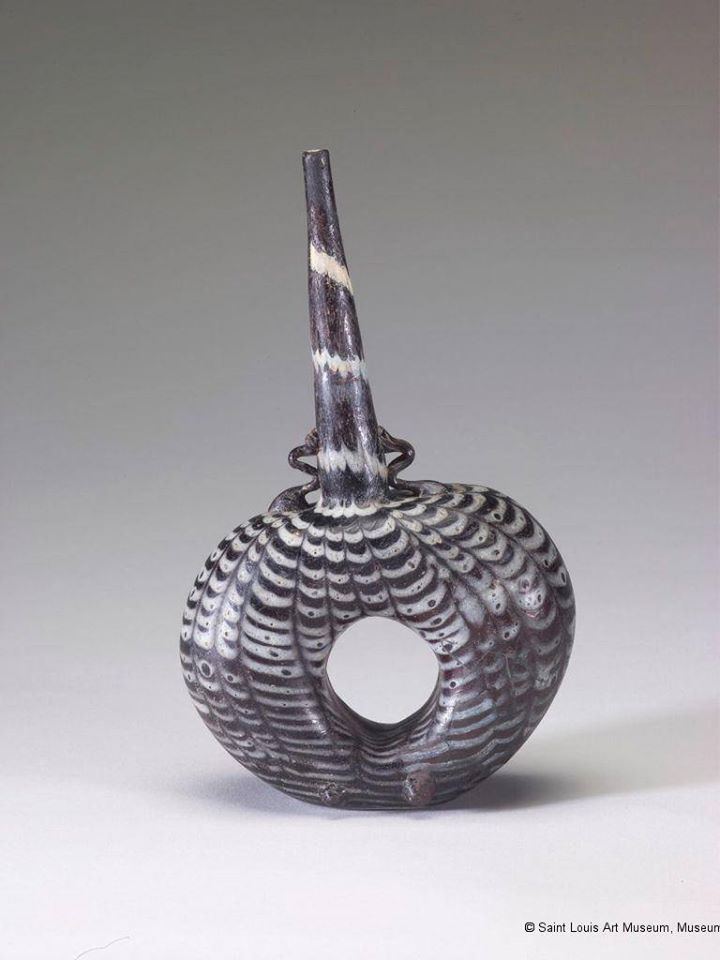
Fig. 11.130 12-13c Egypt, glass perfume sprinkler with design of marvered white-trail feather pattern, Height: 16.2cm, Width: 9.8cm, Depth: 4.1cm, Saint Louis Art Museum 250:1923, U.S.A.
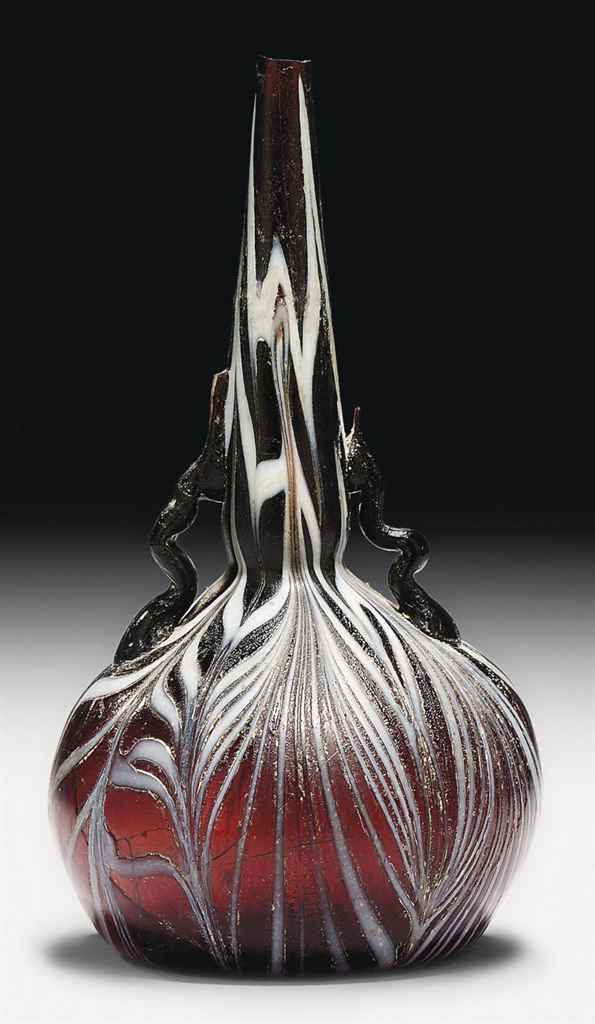
Fig. 11.131 13c Syria, a mamluk manganese glass sprinkler (qumqum), 16.6cm high, Christies id 5421925,
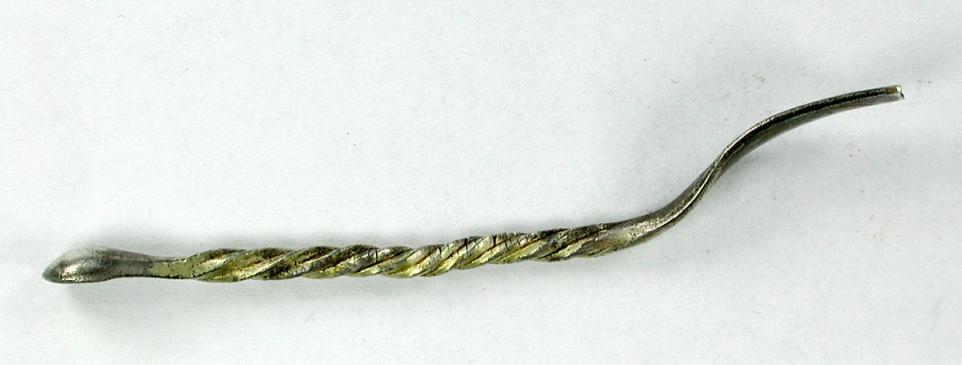
Fig. 11.132 14c England, silver ear scoop and toothpick, 7cm long. Source: https://www.yorkpress.co.uk